 10 October, 2026 |
  Admin
Admin
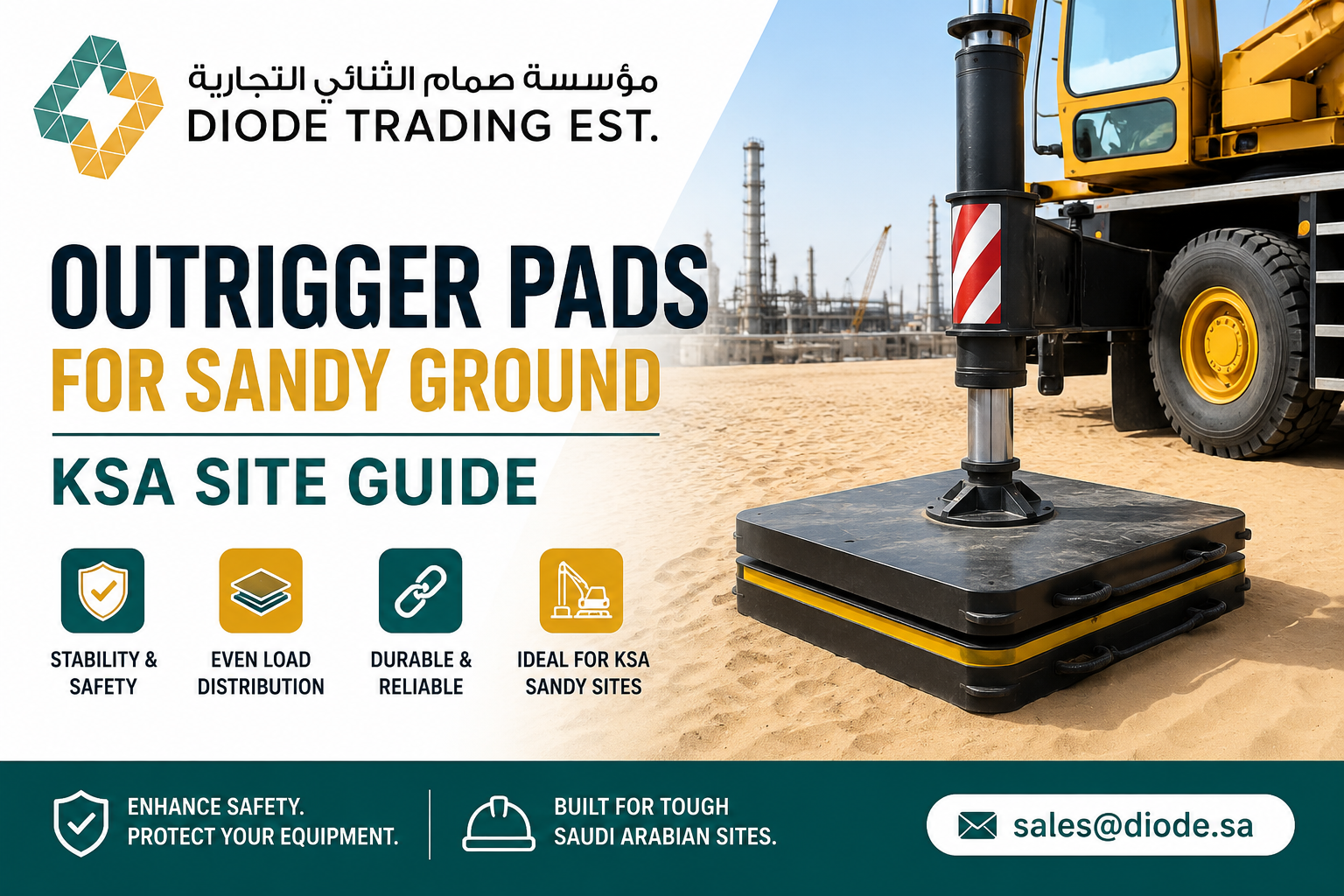
Crane Hire and Outrigger Pads
Planning a crane lift in Qatar means solvi
Read more
Enquire Now
 09 October, 2026 | Admin
Short answer: UHMWPE and HDPE are both polyethylene, but UHMWPE has extremely long molecular chains. That gives it far better abrasion and impact resistance and lower friction, so it is the choice for wear parts, liners and guides. HDPE is cheaper, easier to weld and fabricate, and good enough for tanks, cutting boards, fabricated parts and general components. In the Gulf, heat, UV and sand abrasion often decide the choice.
Both materials are made from ethylene. HDPE (high-density polyethylene) has relatively short chains, so it melts and flows easily and can be extruded, moulded and welded. UHMWPE (ultra-high molecular weight polyethylene) has chains many times longer. It does not flow like a normal thermoplastic, so it is compression moulded or ram extruded into sheets and rods, then machined.
| Property | UHMWPE | HDPE |
|---|---|---|
| Abrasion resistance | Excellent, among the best of all plastics | Good |
| Impact strength | Excellent, even at low temperature | Good |
| Friction | Very low, self-lubricating | Low |
| Stiffness | Lower | Slightly higher |
| Typical maximum service temperature | Around 80°C | Around 80°C |
| Weldability | Difficult | Easy (hot-gas, butt and extrusion welding) |
| Machinability | Good | Good |
| Water absorption | Negligible | Negligible |
| Relative cost | Higher | Lower |
Values are typical and grade-dependent. Check the datasheet for your exact grade.
HDPE is cheaper per kilogram, but in abrasive service UHMWPE often costs less over its life because it is replaced far less often. For light, non-abrasive duty, HDPE is usually the economical choice.
Both machine well with sharp tools. HDPE can be welded into tanks and ducts; UHMWPE generally cannot be welded with standard methods and is joined mechanically. Both have high thermal expansion, so machined parts need clearance.
For a wider comparison with POM, nylon and PTFE, read POM vs nylon vs UHMWPE vs PTFE. For the full selection process, see our guide on how to choose engineering plastic. Products: UHMWPE sheets and rods and HDPE sheets and rods. Every order from Diode Trading EST is supplied with a Material Test Certificate.
UHMWPE has much better impact and abrasion resistance, though HDPE is slightly stiffer. For wear parts, UHMWPE is the stronger performer.
Not with standard hot-gas or butt welding. UHMWPE parts are usually joined mechanically.
UHMWPE, because of its abrasion resistance and low friction, which helps material flow.
Both need black or UV-stabilised grades for long sun exposure. UHMWPE is preferred where sand abrasion is present.
See our range of high-visibility safety mats and markers designed to reduce trip hazards across your site.
 10 October, 2026 | Admin
Planning a crane lift in Qatar means solvi
Read more