 30 October, 2026 |
 Admin
Synthetic Turf in Saudi Arabia
Short answer: Synthetic t
Read more
Enquire Now
 30 October, 2026 | Admin
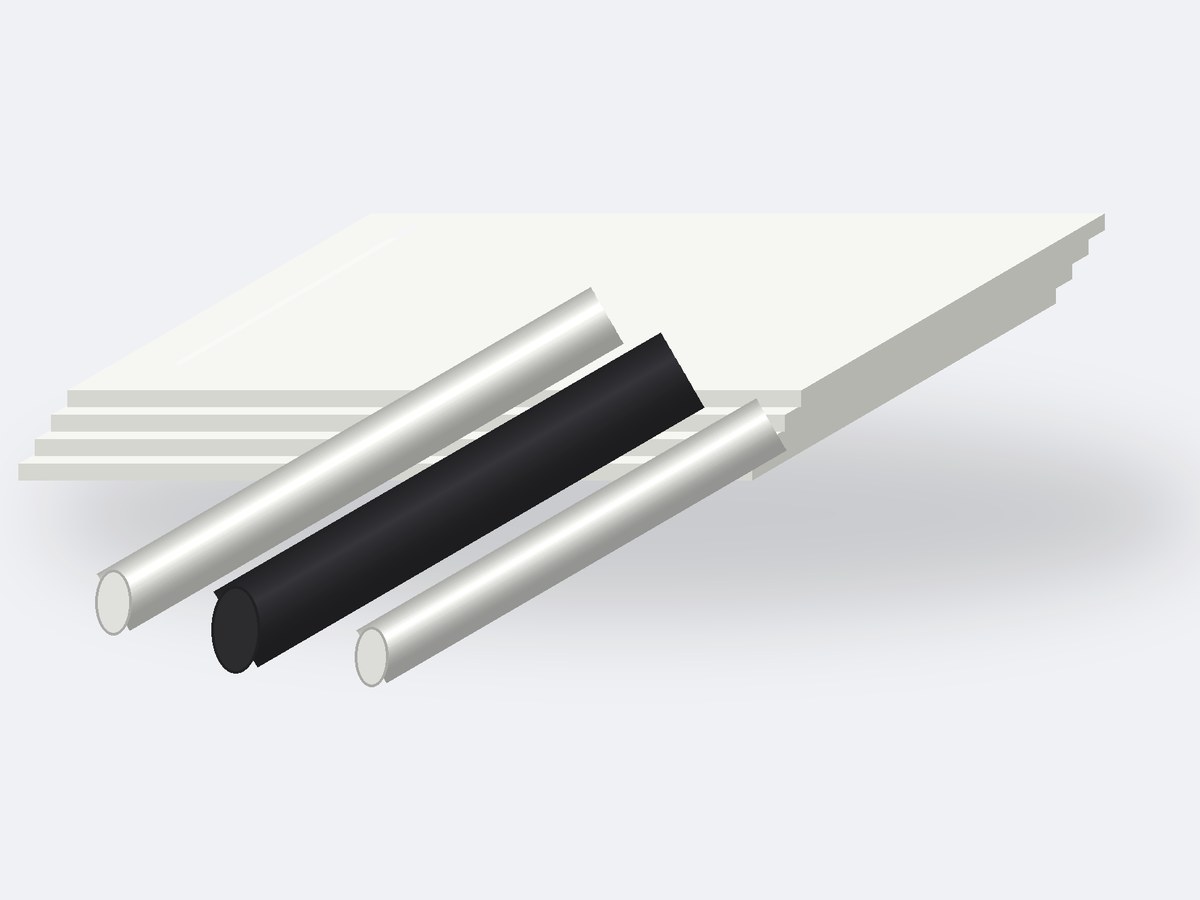
Short answer: Engineering PET (often sold as PET-P)
is a rigid, wear-resistant plastic with good dimensional stability and
very low moisture absorption. It suits precision parts, gears, bushes,
rollers and food-contact equipment (in suitable grades) and is a good
alternative to nylon where the part must not swell with moisture.
PET is best known as bottle plastic, but the semi-crystalline
engineering grade in sheets and rods is a different product made for
machined parts.
Free engineering tools
Standard PET-P is available in natural and coloured versions. Some
grades contain solid lubricants for lower friction and better wear. Ask
for the grade you need.
| Application | Why PET |
|---|---|
| Precision gears and rollers | Stable and smooth |
| Bushes and wear parts | Good sliding behaviour |
| Food-contact parts (in suitable grades) | Easy to clean, stable |
| Valve and pump parts | Dimensional stability |
| Conveyor guides | Wear resistance |
PET machines cleanly with sharp tools. Keep it cool and take care
with thin sections. Allow stress to relax for precision parts.
Form, size, grade, application, temperature, chemical contact, and
whether food contact is needed. If it is, ask for supporting
documentation before ordering. Diode Trading EST supplies PET sheets and
rods in Saudi Arabia, and every order ships with a Material Test
Certificate. request a quote
Send a short brief with your sizes, quantity, and delivery location
in Saudi Arabia, and we will reply with availability, lead time and a
quotation. If you are unsure of the right grade, describe the working
conditions and we will help you choose.
PET is a good fit when a part must hold its size in damp conditions
and also wear well. Conveyor guides, rollers, precision bushes and pump
parts are examples. It has good creep resistance, so it keeps its shape
under steady load better than many plastics. Where nylon swells and POM
is too stiff or notch-sensitive, PET can be the practical answer.
Is the sheet or rod standard PET-P or a lubricated grade? Is it
suitable for food contact, and what documents support that? What is the
thickness tolerance? Can you supply it in the colour you need, since
natural and black can differ slightly in properties?
A conveyor guide in a bottling line, a precision roller in a humid
washdown area, a bush in a water pump and a wear pad in a packaging
machine all benefit from PET’s stable size and good wear behaviour. It
is also used where parts are cleaned often and must not swell.
Is engineering PET the same as bottle PET? It is the
same polymer family but processed differently for machined parts.
Does PET absorb water? Very little, so it holds its
size.
Is PET good for gears? Yes, especially where nylon
would swell.
Is PET food-safe? Only specific grades. Ask for
documentation.
Related: Nylon Guide · POM Acetal · Engineering Plastics Guide

See our range of high-visibility safety mats and markers designed to reduce trip hazards across your site.
Diode Trading EST supplies these Engineering Plastics from stock in Dammam, with delivery across Saudi Arabia and the GCC.