 14 September, 2026 |
  Admin
Admin
What to Look for in an Outrigg
Most Read more

 07 September, 2026 | Admin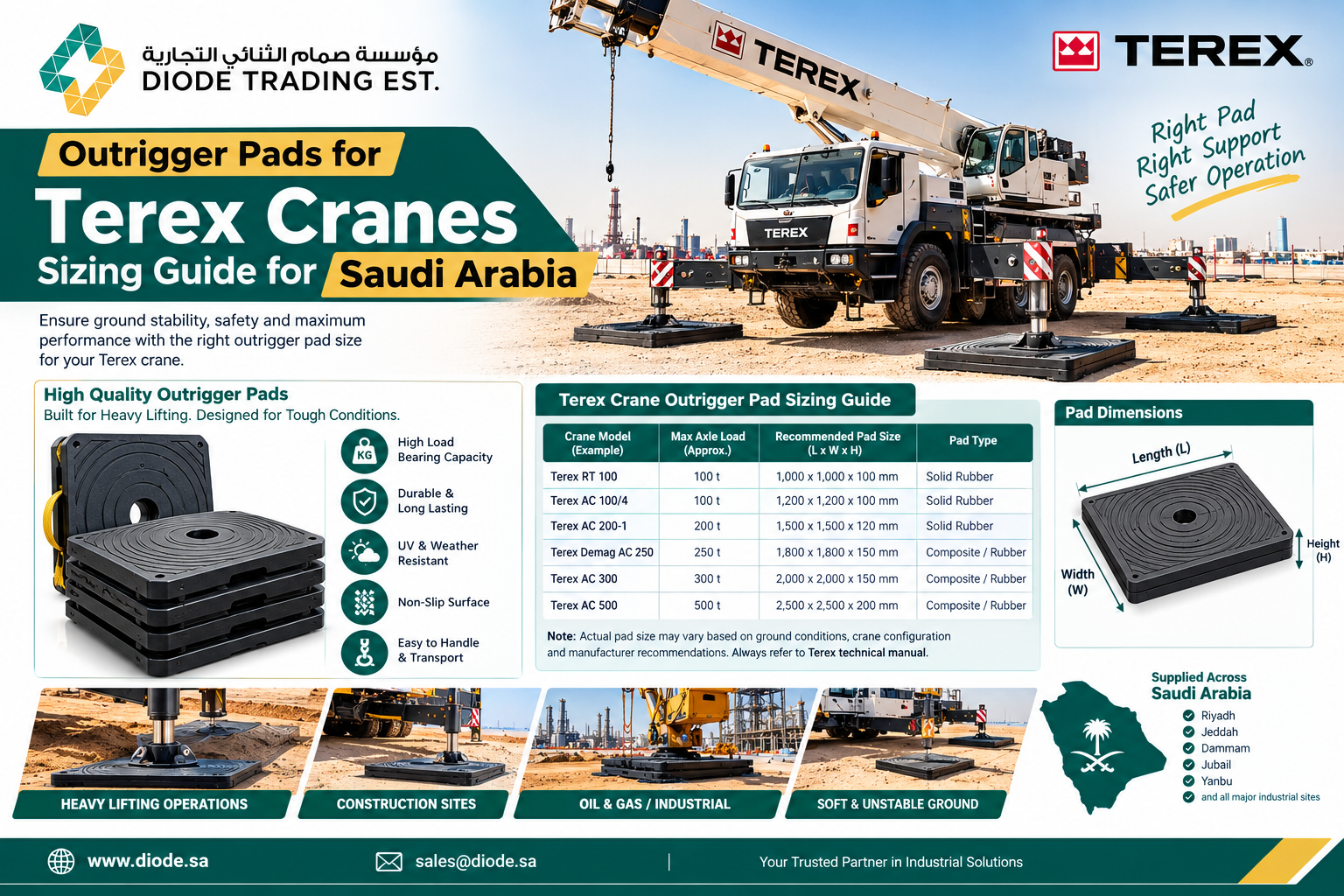
Outrigger pads for Terex cranes need to match the outrigger reaction forces of Terex’s rough-terrain and truck crane ranges, which are a familiar sight on Saudi general construction sites and mid-size infrastructure projects.
Terex’s rough-terrain models are frequently used on ground that isn’t fully prepared, which makes ground condition — not just the machine’s outrigger load — a bigger factor in pad sizing than on a typical hard-standing site. The outrigger pad size calculator lets you check pad size against your specific unit’s load chart and the ground bearing pressure found during a site survey, rather than assuming a standard pad size fits every job.
Because Terex rough-terrain cranes are often the first heavy equipment onto a site, the ground beneath the outriggers may not have been compacted or tested the way it would be on a finished hard-standing area. A conservative approach is to size the pad against the loosest ground condition found anywhere the crane is expected to set up, rather than the average condition across the site.
UHMWPE pads tend to hold up well on Terex rough-terrain cranes because they resist cracking when set down on uneven or rocky ground, and their lighter weight makes them easier for a two-person crew to reposition between lifts on a site without a dedicated support vehicle. Timber remains an option for lighter truck crane classes on shorter jobs, though it wears faster under repeated point loading from the same outrigger float.
Because Terex cranes are dispatched to many different site conditions across a general contracting fleet, it helps to work with a outrigger pads supplier who can confirm load ratings consistent with general crane safety guidance from OSHA’s crane and derrick standards, and who carries enough stock to match whichever Terex model is dispatched to a given job.
Contractors running several Terex models across different sites often find it more practical to standardize on two or three pad sizes rather than matching a unique pad to every crane variant, sized around the heaviest reaction force in each class and the softest ground condition the fleet regularly encounters. This keeps pad inventory manageable at the yard while still giving crews a safe option no matter which Terex unit gets dispatched to a job.
A general contracting fleet running Terex cranes alongside other brands benefits from keeping a simple reference sheet of which outrigger pad size and material was approved for each Terex model and ground condition. This saves the dispatch team from re-deriving the same load chart calculation every time a familiar unit goes back out to a similar site, and it gives new crew members a quick way to check they’re sending the right pad with the right crane before it leaves the yard.
Rough-terrain models in the Terex RT range and boom truck cranes are among the more common Terex equipment found on Saudi construction and infrastructure projects, each with its own outrigger footprint and load chart. Even within the same model line, boom angle and load radius can change the effective reaction force at each pad position, which is why checking the specific configuration in use — not just the model name — matters when selecting a pad size for a given lift on any Terex unit dispatched to site.
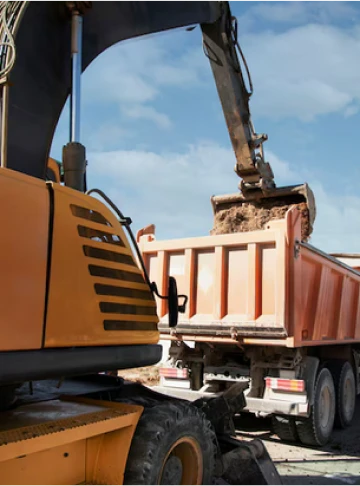
See our range of high-visibility safety mats and markers designed to reduce trip hazards across your site.

 12 September, 2026 | Admin
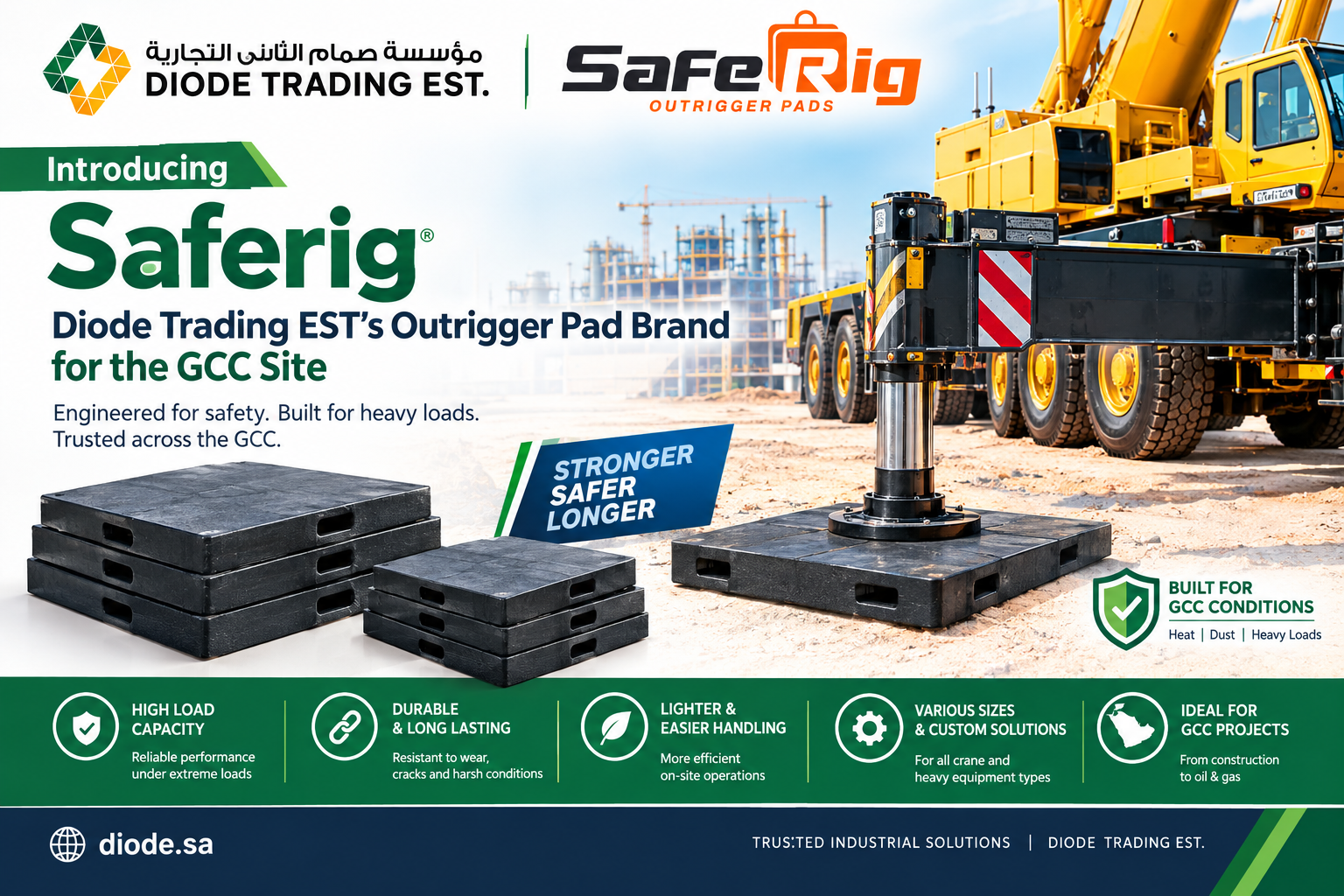
Saferig is Diode Trading EST's outrigger pad
Read more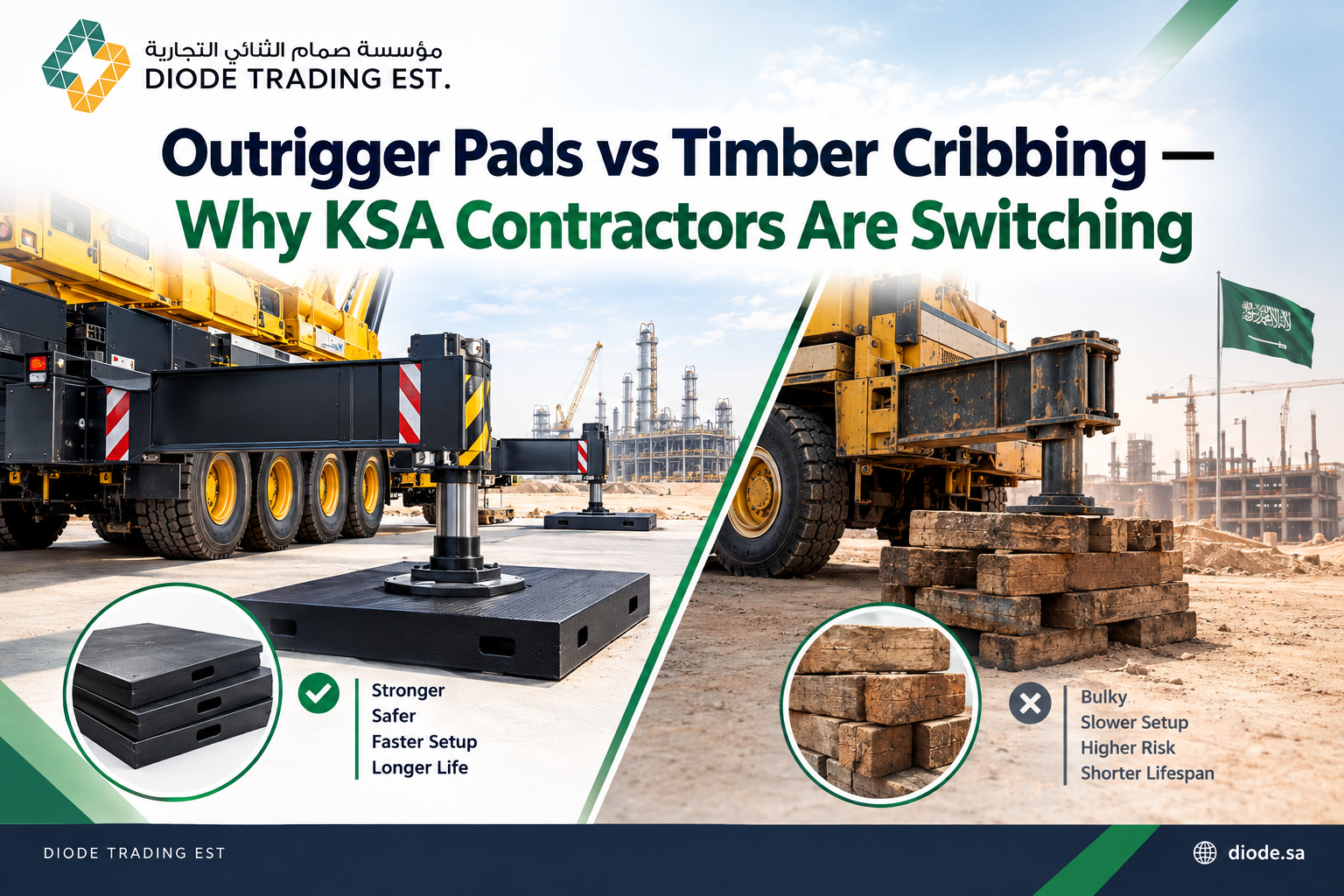 12 September, 2026 | Admin
Timber cribbing was the default for decades.
Read more