 30 October, 2026 |
 Admin
Synthetic Turf in Saudi Arabia
Short answer: Synthetic t
Read more
Enquire Now
 30 October, 2026 | Admin
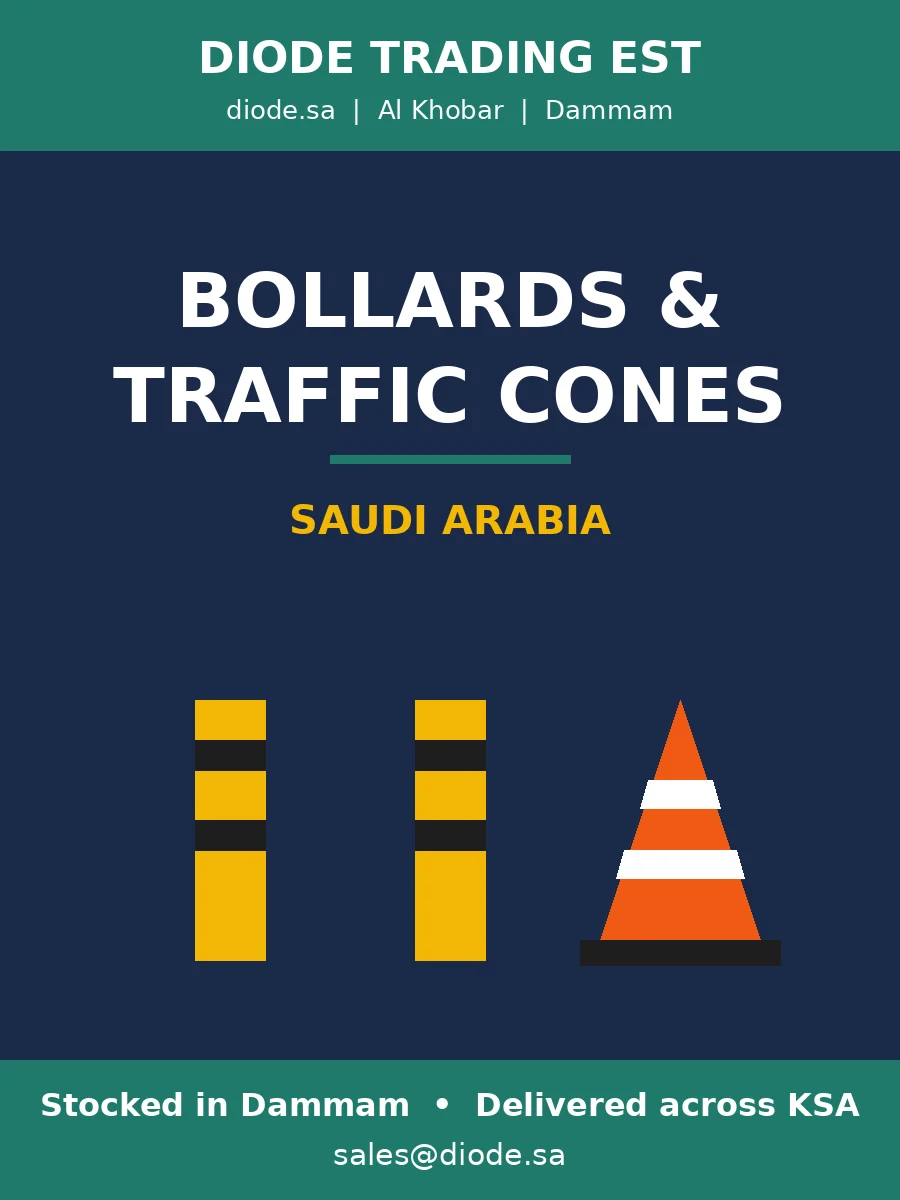
Short answer: Bollards are posts used to guide
traffic, protect equipment and buildings, separate pedestrians from
vehicles and restrict access. The right bollard depends on the job:
simple traffic guidance needs a light flexible bollard, while real
vehicle protection needs a strong fixed bollard that is designed and
fixed for impact. Choose by purpose, impact risk, material and
fixing.
Fixing is as important as the bollard. Surface-mount bollards bolt to
the floor and suit lighter protection. In-ground bollards are set in a
footing and handle more impact. Check for buried services before
drilling or digging. Follow the manufacturer’s method, and use the
correct anchors and concrete.
Use bright colours, reflective tape and good lighting so drivers see
bollards at night. Replace faded or damaged covers.
What types and sizes are available? What material and finish are
used? What fixing method and anchors are recommended? Do you have
performance data for impact protection? What colours and reflective
options are available?
Diode Trading EST supplies bollards across Saudi Arabia, and every
order ships with a Material Test Certificate. request a quote
Place bollards where they protect the most valuable or vulnerable
item: electrical panels, gas meters, racks, pedestrian crossings and
building corners. Space them so a vehicle cannot pass between, while
leaving room for the access you need. At pedestrian crossings, place
bollards so they do not block sight lines. Draw a simple layout, and we
can suggest quantities and types.
Inspect bollards regularly for impact damage, loose fixings,
corrosion and fading of covers. Repaint or replace as needed, and
refresh reflective tape so visibility remains good at night.
What is a bollard? A post used to guide traffic,
protect assets or control access.
Can flexible bollards stop vehicles? No. They guide
traffic but do not stop heavy vehicles.
How are bollards fixed? By bolting to the floor or
setting in a concrete footing.
Can bollards be removable? Yes, with sockets and
locks.
Related: Wheel Stoppers and Chocks · Rubber Wall Guard · PVC Strip Curtains
See our range of high-visibility safety mats and markers designed to reduce trip hazards across your site.

Diode Trading EST supplies these Dock, Port & Parking Safety from stock in Dammam, with delivery across Saudi Arabia and the GCC.