
 12 September, 2026 |
  Admin
Admin
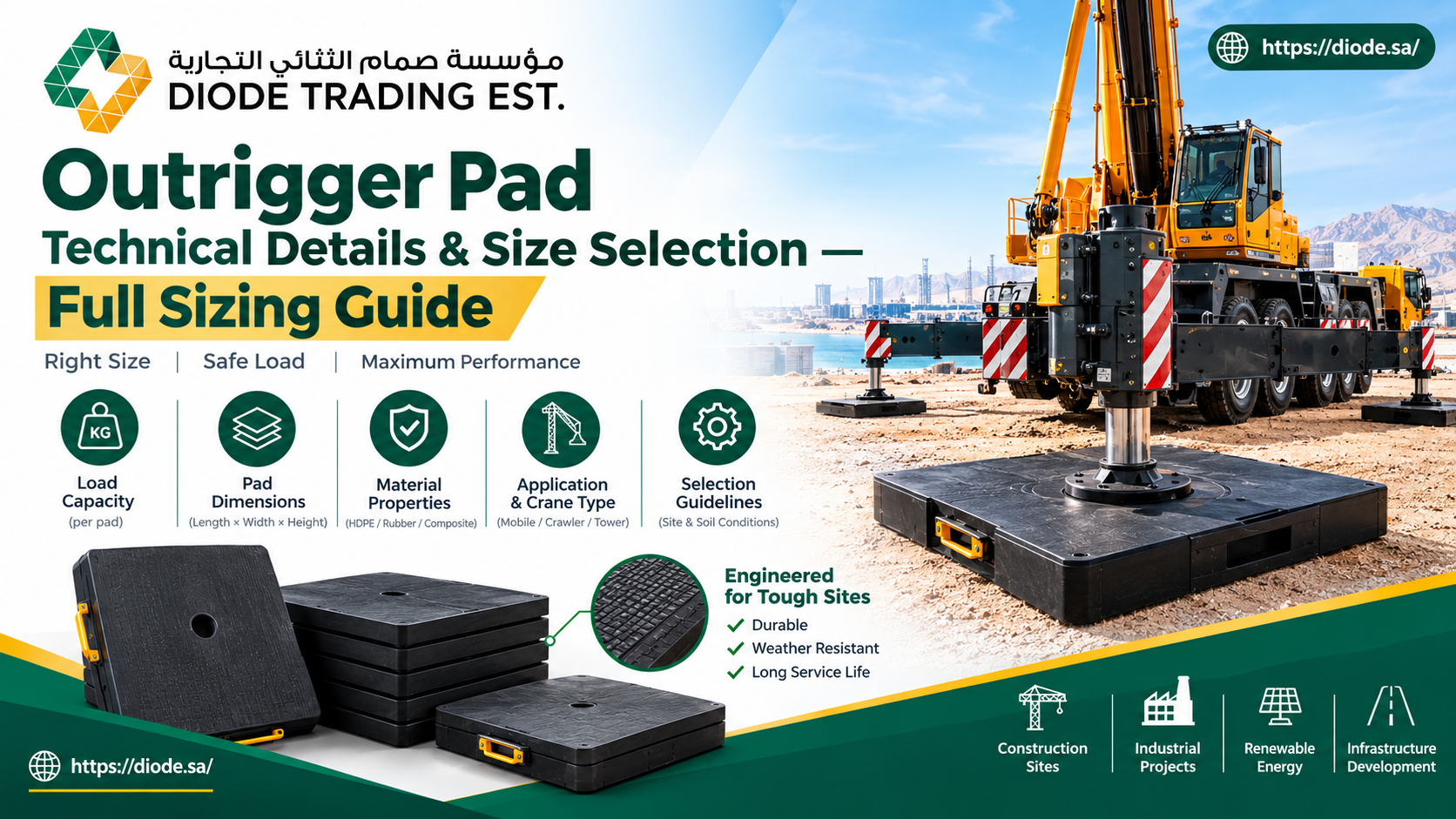
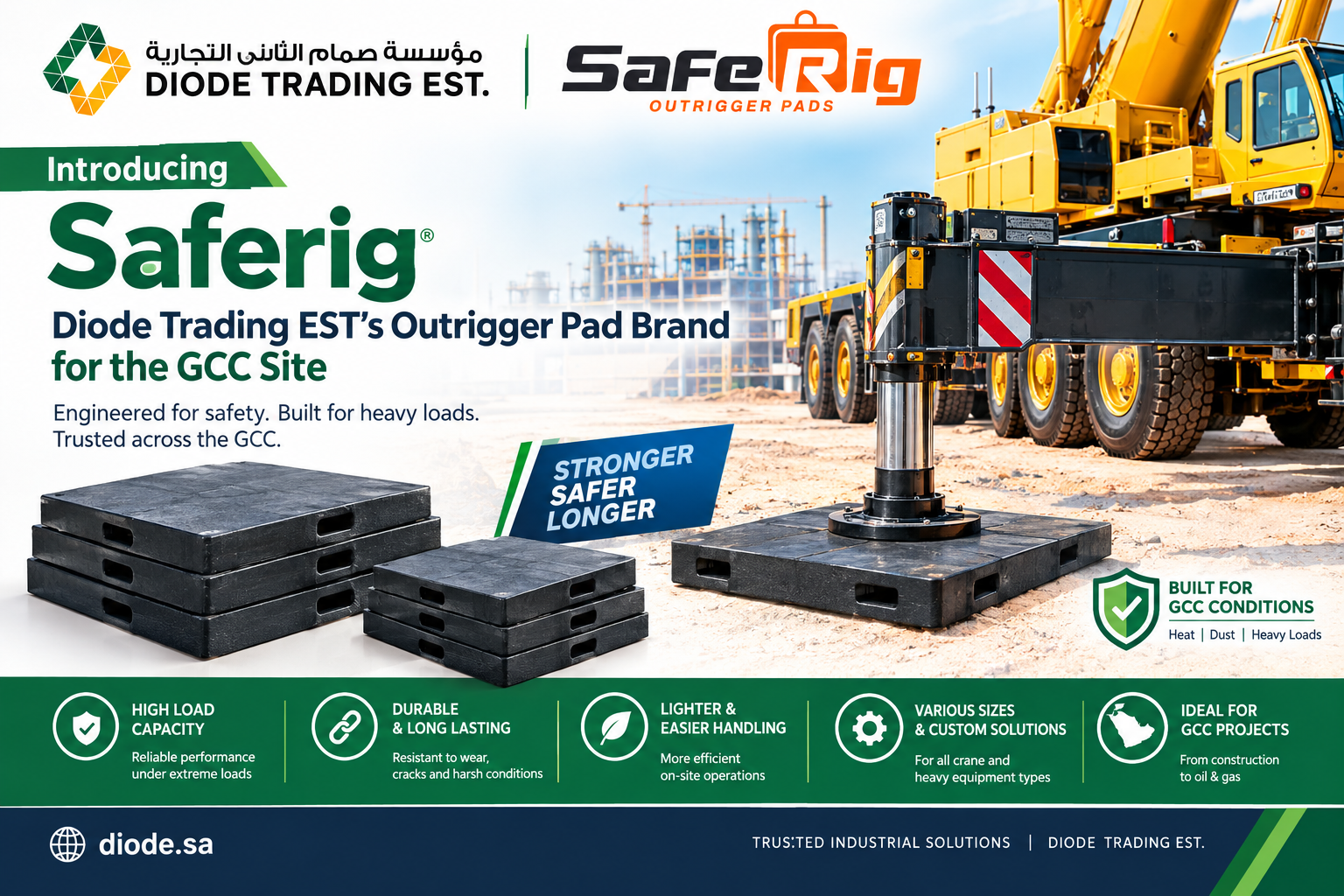
Introducing Saferig — Diode
Saferig is Diode Trading EST's outrigger pad
Read more
 08 May, 2025 | Admin
Vehicle restraint systems are what keep a trailer or truck from creeping away from the dock while it’s being loaded or unloaded — a small gap opening up under a forklift can turn into a serious accident in seconds. Whether you’re specifying equipment for a logistics hub, an airport apron, or an industrial yard in Saudi Arabia, getting the restraint system right comes down to a handful of practical decisions rather than picking whatever is cheapest to ship.
Most vehicle restraint systems used on Saudi sites are wheel-chock based rather than the hydraulic dock-mounted arms common in colder climates, largely because chocks are simpler to deploy across varied yard surfaces and vehicle types. Polyurethane (PU) chocks hold up well under high ambient heat, resist fuel and oil exposure, and keep their shape after repeated loading, which is why they’re the common choice for PU wheel chocks on airport ramps and petrochemical sites. Rubber chocks cost less up front and still perform reliably for lighter-duty yards and warehouses, though they wear faster under constant sun exposure and heavy axle loads than PU.
A chock sized for a light delivery van won’t hold a fully loaded 40-tonne trailer, and oversizing a chock for a small vehicle just makes it awkward to deploy quickly. Confirm the gross vehicle weight and tire diameter range you need to cover before ordering, since most manufacturers publish a working range rather than a single fixed capacity. Sites that handle a mix of trucks, forklifts, and light vehicles often keep two or three chock sizes on hand rather than trying to standardize on one.
Vehicle restraint systems at loading docks sit alongside broader material-handling safety requirements, including the equipment and traffic-control provisions in standards such as OSHA’s powered industrial truck standard (1910.178), which many Saudi logistics operators reference alongside local civil defense and municipal safety requirements. Keeping a simple log of chock inspections and replacement dates makes it easier to demonstrate that restraint equipment was in good condition at the time of an incident, and it also flags chocks that are cracking or losing grip before they fail in service.
Chocks degrade from UV exposure, chemical contact, and the simple wear of being run over and dragged across rough concrete. Check the wedge face for smoothing or rounding — a chock that’s lost its grip pattern will let a tire ride up over it under load. Replace any chock with visible cracking, since a fracture that starts at the surface can propagate through the block and cause it to fail without warning.
A reliable wheel chock manufacturer in Saudi Arabia should be able to tell you the working weight range, temperature tolerance, and expected service life of their product without vague marketing language. Ask for the specification sheet, not just a product photo, and confirm lead times up front if you’re outfitting a large yard with dozens of chocks at once. For sites running a mix of vehicle types, ordering a small trial batch of two chock sizes before committing to a full yard rollout is usually the safest way to confirm fit before a bulk purchase.
If you’re standardizing vehicle restraint systems across multiple gates or loading bays, map out how many chocks each bay actually needs, including spares for chocks that are out being cleaned or inspected. Sites with high vehicle turnover, such as cross-dock logistics hubs, tend to lose chocks to misplacement faster than sites with a fixed fleet, so budgeting a small buffer stock avoids a bay sitting idle while a replacement chock is sourced. Color-coding chocks by size or by zone is a simple way to keep a large yard organized once you’re running more than a handful of restraint points.
See our range of high-visibility safety mats and markers designed to reduce trip hazards across your site.
 12 September, 2026 | Admin
Saferig is Diode Trading EST's outrigger pad
Read more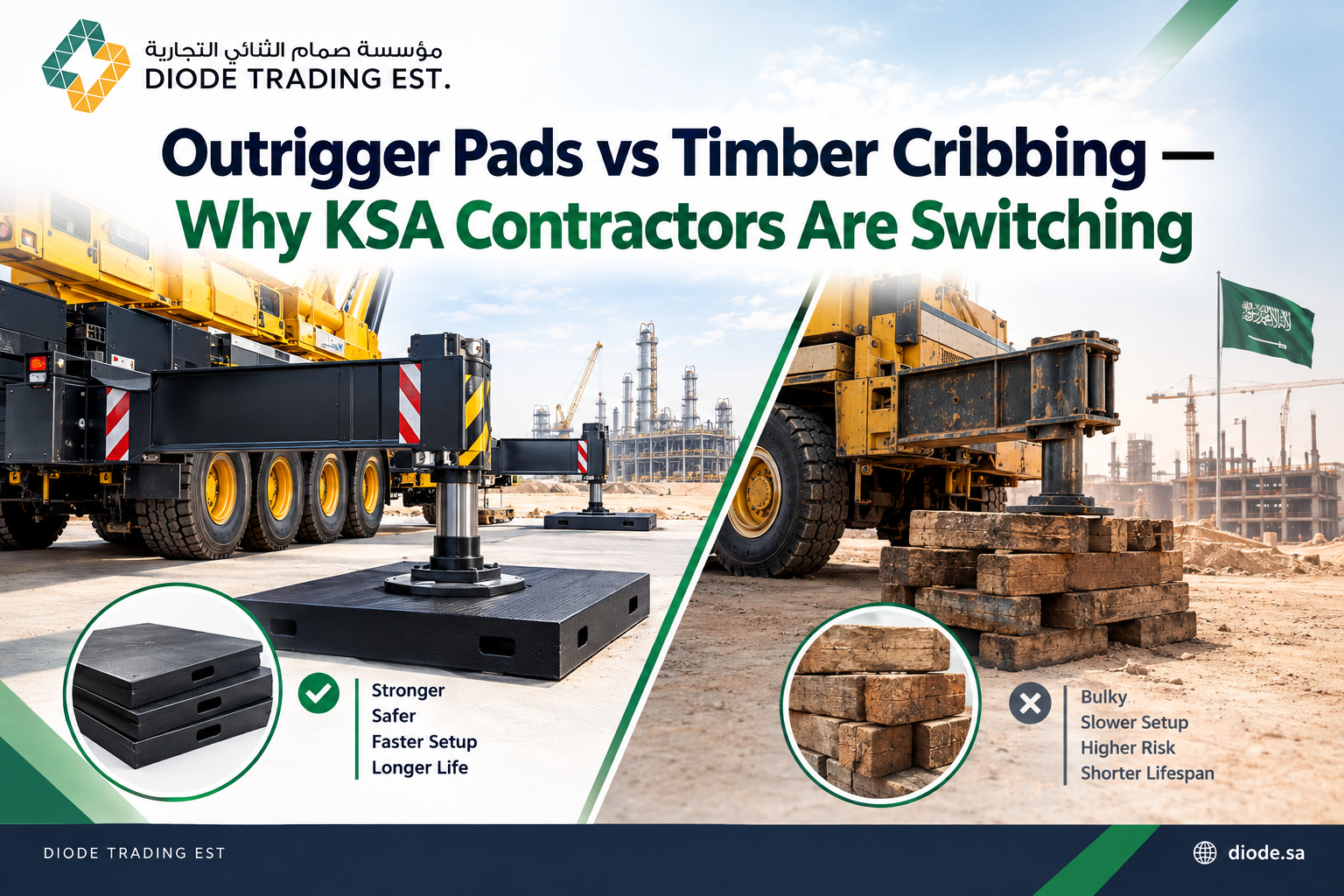 12 September, 2026 | Admin
Timber cribbing was the default for decades.
Read more