 14 September, 2026 |
  Admin
Admin
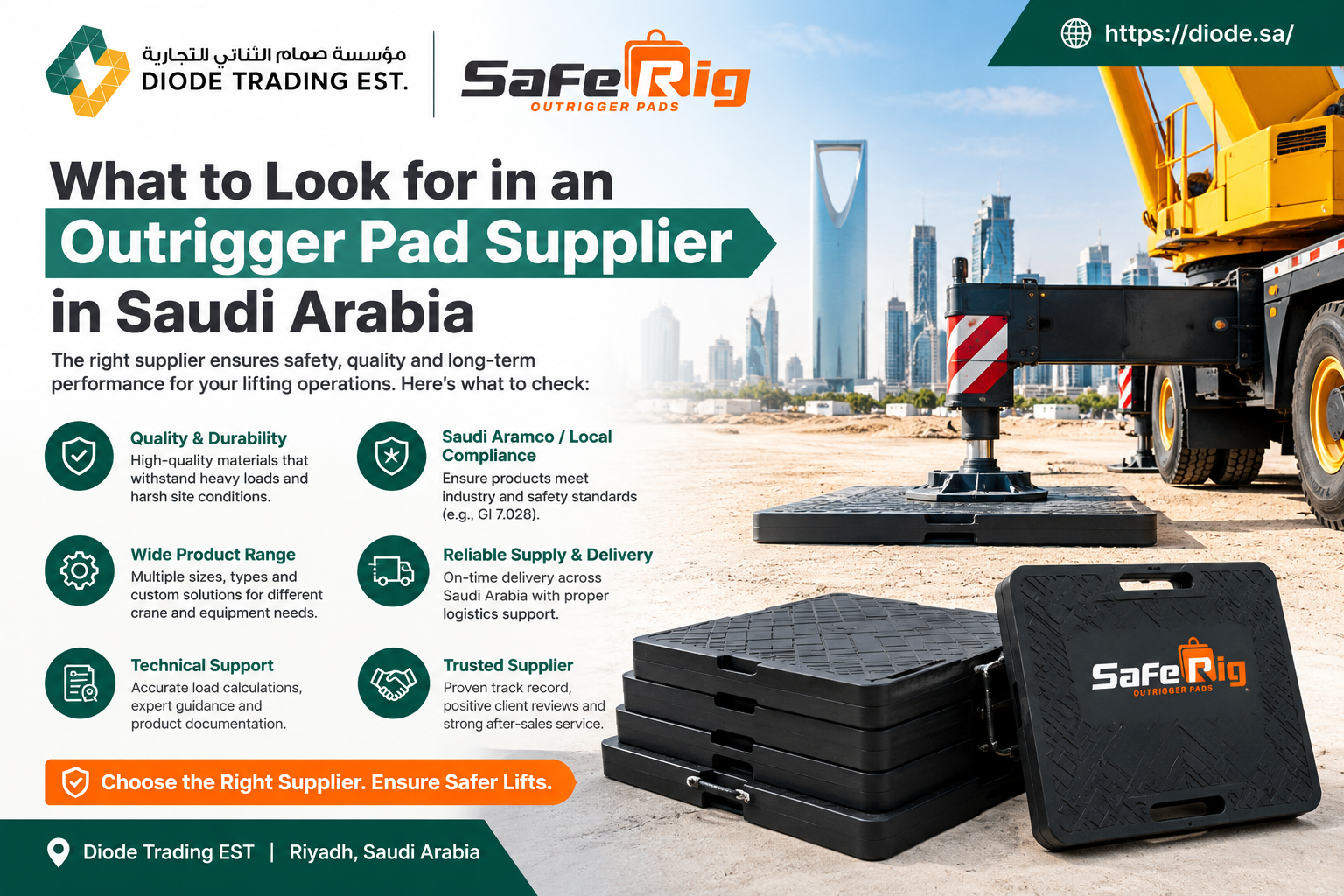
What to Look for in an Outrigg
Most Read more

 02 September, 2026 | Admin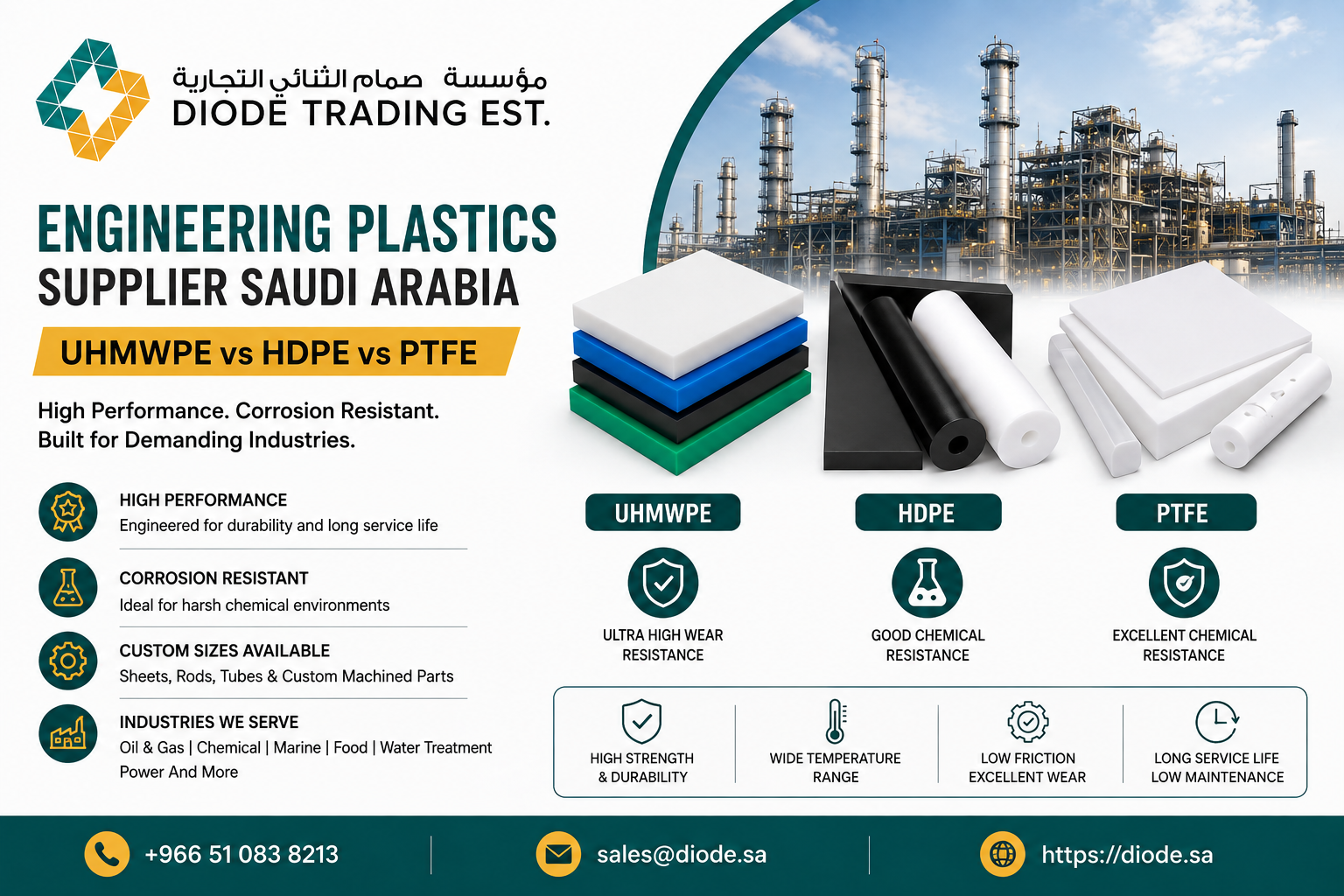
Choosing the right engineering plastics supplier Saudi Arabia contractors can rely on starts with picking the right material, not just the lowest price. We get asked this more than almost anything else: ‘which plastic do I actually need?’ Picking the wrong one usually shows up as premature wear, not total failure, which makes it easy to miss until you’re reordering more often than you should be.
| Material | Best For | Watch Out For |
| UHMWPE | Impact resistance, wear surfaces | Lower max service temp than PTFE |
| HDPE | General-purpose piping, sheet stock | Less impact resistant than UHMWPE |
| PTFE | Chemical inertness, high-temp seals | Higher cost, softer material |
An engineering plastics supplier in Saudi Arabia isn’t just moving sheet and rod stock from a warehouse to your site. Grade selection, storage conditions, and cut tolerances all affect how a part performs once it’s under load, in a chemical bath, or sitting outdoors on a coastal terminal. As an engineering plastics supplier Saudi Arabia projects depend on, Diode Trading EST stocks UHMWPE, HDPE, and PTFE in sheet, rod, and machined-part form, and we size the material to the application rather than defaulting to whatever is cheapest to move.
Ultra-high-molecular-weight polyethylene handles abrasion and repeated impact better than almost any other engineering plastic at this price point. It’s the standard choice for chute liners, wear strips, fender facings, and outrigger pads that take repeated point loading. Its main limitation is service temperature: continuous exposure above roughly 80-90°C will soften it faster than the application sheet suggests, so it’s not the right call for anything near hot process lines.
High-density polyethylene costs less than UHMWPE and machines faster, which makes it the practical choice for cutting boards, tank linings, low-load spacers, and sheet stock that doesn’t see heavy repeated impact. It’s also the material behind the pressure pipe systems covered in our HDPE PE100 pipes guide, though pipe-grade HDPE is a different formulation from sheet stock. It has reasonable chemical resistance across a broad range of acids and alkalis, but it doesn’t match UHMWPE’s wear life under sustained abrasion.
PTFE earns its higher price tag in chemically aggressive or high-temperature environments where UHMWPE and HDPE simply can’t survive. Our separate PTFE sheets and chemical resistance guide goes deeper into virgin versus filled grades if PTFE is the direction you’re leaning. Gaskets, seals, and linings that see solvents, strong acids, or continuous service above 200°C are where PTFE belongs. It’s a poor choice for anything taking direct wear or impact, since it’s noticeably softer than either polyethylene grade.
Beyond stock sheet and rod, as your engineering plastics supplier Saudi Arabia, our workshop machines UHMWPE, HDPE, and PTFE to drawing: bushings, wear pads, rollers, and gaskets cut to the tolerances your project specifies. Material property data sheets from bodies like ASTM International are a useful cross-check if you need to verify a grade’s rated temperature or chemical resistance independently before specifying it. Sending us a dimensioned drawing or a sample part is usually the fastest way to get an accurate quote and lead time, especially for parts with tight tolerances or an unusual geometry that a standard catalog size won’t cover.
As an engineering plastics supplier Saudi Arabia contractors have relied on for years, Diode Trading EST supplies contractors, fabricators, and industrial plants across the Kingdom with UHMWPE, HDPE, and PTFE stock and machined parts. If you’re unsure which grade fits your application, send us the operating temperature, the chemicals involved, and whether the part takes repeated impact, and we’ll recommend the material and thickness that will actually hold up in service.
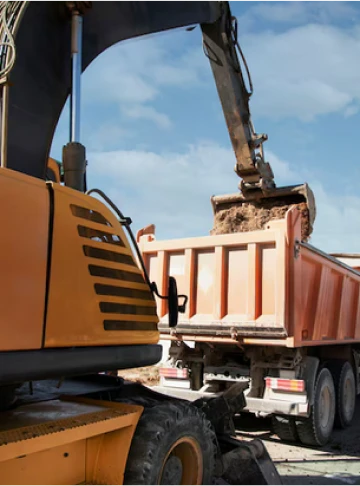
See our range of high-visibility safety mats and markers designed to reduce trip hazards across your site.
 12 September, 2026 | Admin
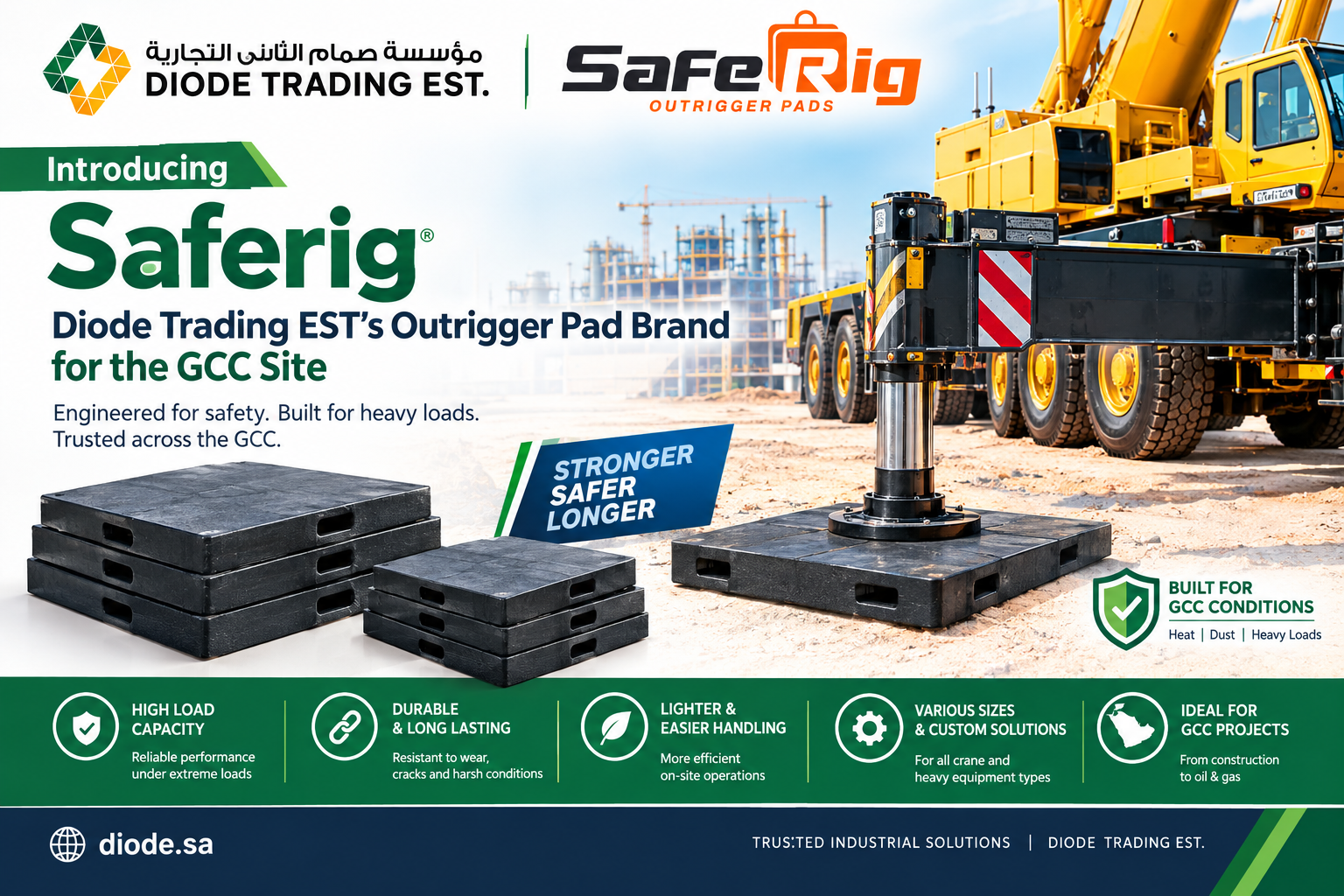
Saferig is Diode Trading EST's outrigger pad
Read more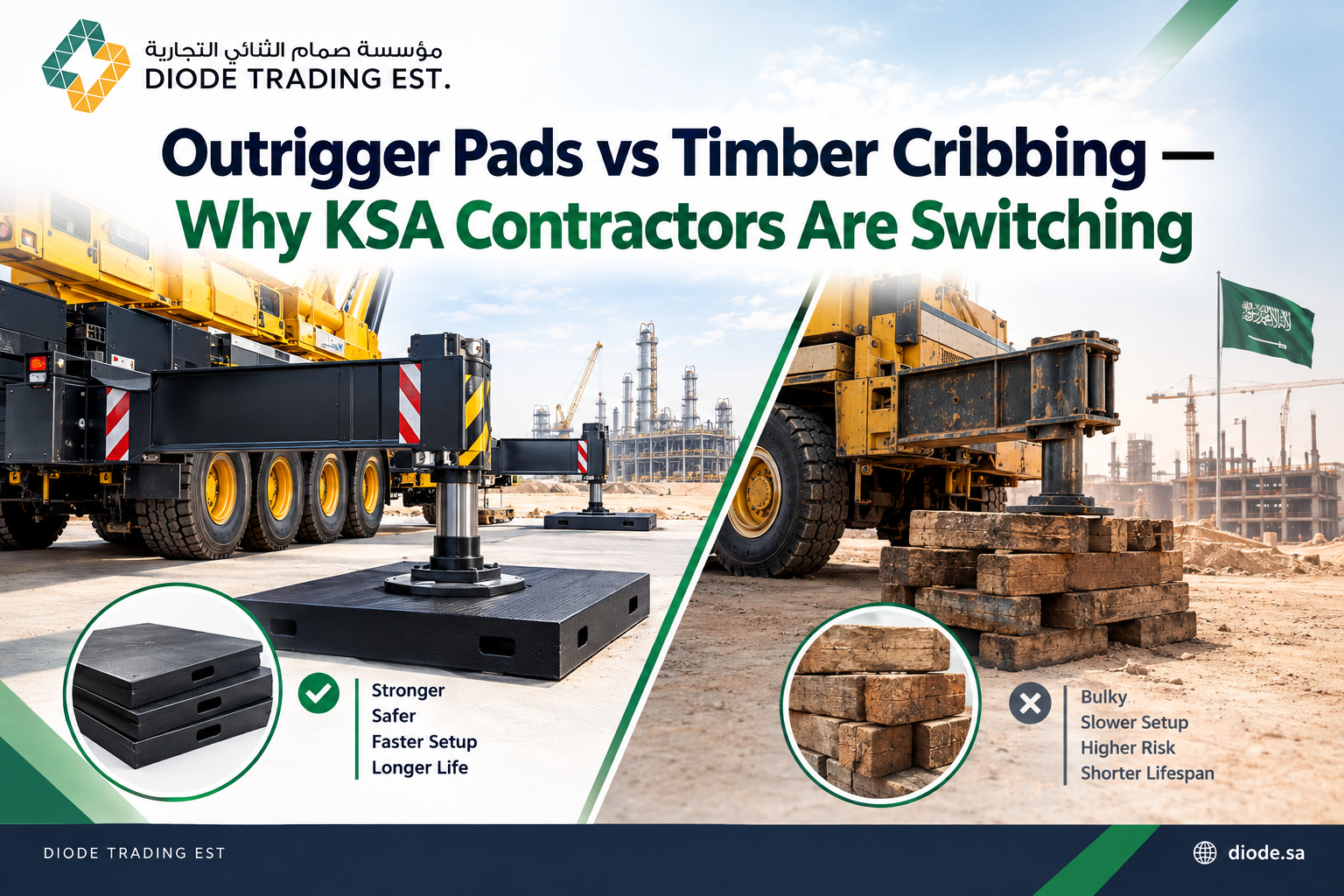 12 September, 2026 | Admin
Timber cribbing was the default for decades.
Read more