
 30 October, 2026 |
 Admin
Synthetic Turf in Saudi Arabia
Short answer: Synthetic t
Read more
Enquire Now
 30 October, 2026 | Admin
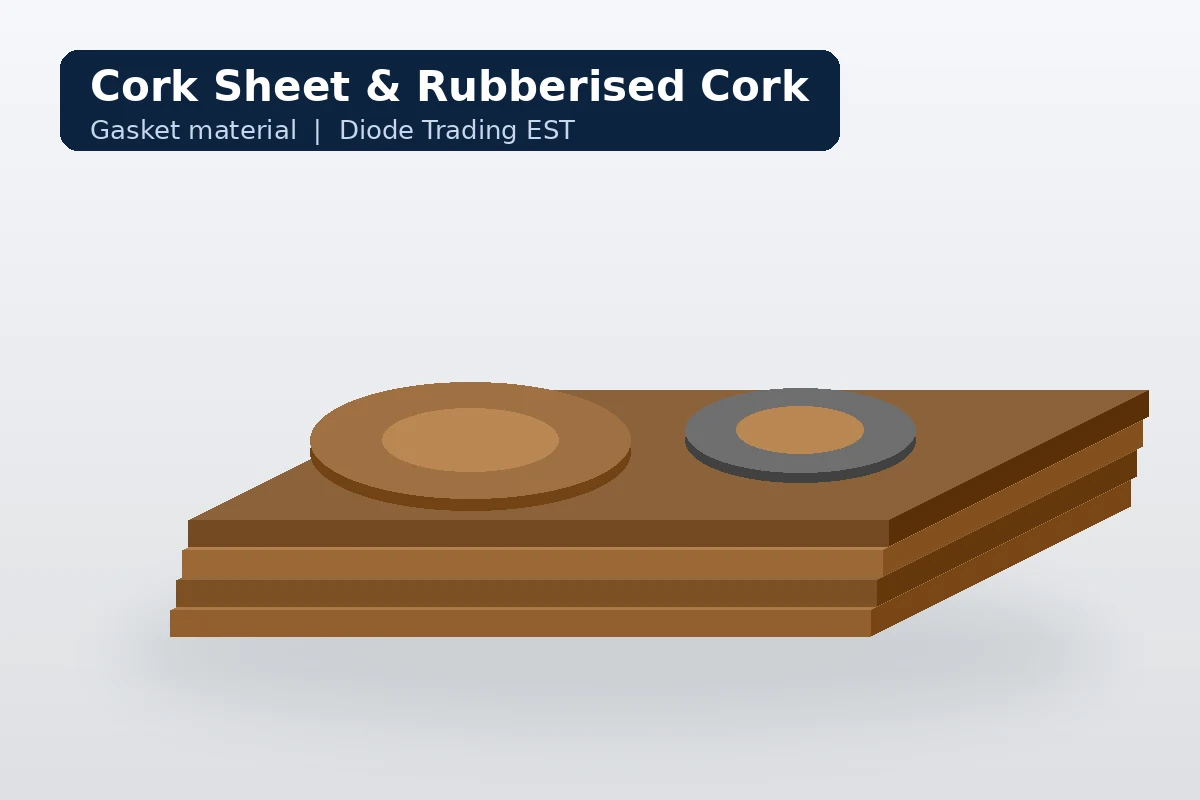
Short answer: Cork sheet is made from natural cork
granules bound together, and rubberised cork combines cork with
synthetic rubber for better strength and sealing. Both are compressible,
resilient and resistant to oils and water. They are used as gaskets,
vibration and sound dampers, thermal insulation and expansion joint
filler.
Cork is made of tiny closed cells filled with air, which makes it
light, compressible and springy. It recovers when pressure is removed,
resists oils and many fluids, and dampens vibration and sound. Unlike
many rubbers, cork does not extrude out from under a joint easily, so it
stays in place under compression.
Free engineering tools
| Application | Why cork |
|---|---|
| Engine, gearbox and pump gaskets | Oil resistance and conformability |
| Vibration pads under equipment | Damping |
| Expansion joints in concrete and floors | Compressible, recovers |
| Thermal insulation pads | Low conductivity |
| Sound isolation | Absorbs vibration |
Cork cuts easily with a knife, die or punch. Cut bolt holes cleanly
to avoid tearing, and tighten bolts gradually and evenly. Avoid
over-tightening, since cork can crush. Do not reuse a compressed cork
gasket.
What binder is used? What are the temperature and compression limits?
What sheet sizes and thicknesses are available? Can gaskets be cut to my
drawing? Is a datasheet available?
Diode Trading EST supplies sealing materials across Saudi Arabia, and
every order ships with a Material Test Certificate. request a quote
Send a short brief with your sizes, quantity, and delivery location
in Saudi Arabia, and we will reply with availability, lead time and a
quotation. If you are unsure of the right grade, describe the working
conditions and we will help you choose.
Thin cork sheet suits fine, machined flanges, while thicker sheet is
used for vibration pads and expansion joints. Sheets are normally
supplied in standard sizes and cut to your shape. For expansion joints
in concrete, choose a thickness equal to the joint width and make sure
the cork is protected from water if the grade is not
water-resistant.
Despite newer materials, cork-rubber remains popular for engine
covers, gearbox inspection plates and similar joints because it seals at
low bolt load, does not harden quickly in oil and is easy to cut on
site. It is a practical, economical choice for low-pressure oil
joints.
What is rubberised cork? Cork granules bound with
synthetic rubber, giving more strength and oil resistance.
Is cork good for oil gaskets? Rubberised cork is
commonly used for oil joints at low pressure.
Can cork be used for vibration isolation? Yes, it
dampens vibration and noise.
Can cork gaskets be reused? No. Replace them after
each opening.
Related: NBR Rubber Sheets · Ready-Cut Gaskets ·
Gasket Selection Guide
See our range of high-visibility safety mats and markers designed to reduce trip hazards across your site.
Diode Trading EST supplies these Rubber Sheets, Gaskets & Seals from stock in Dammam, with delivery across Saudi Arabia and the GCC.