 19 September, 2026 |
  Admin
Admin
Bridge Bearing Pads — Diode&
Saudi Arabia's road and rail infrastructure b
Read more
Enquire Now
 18 August, 2026 | Admin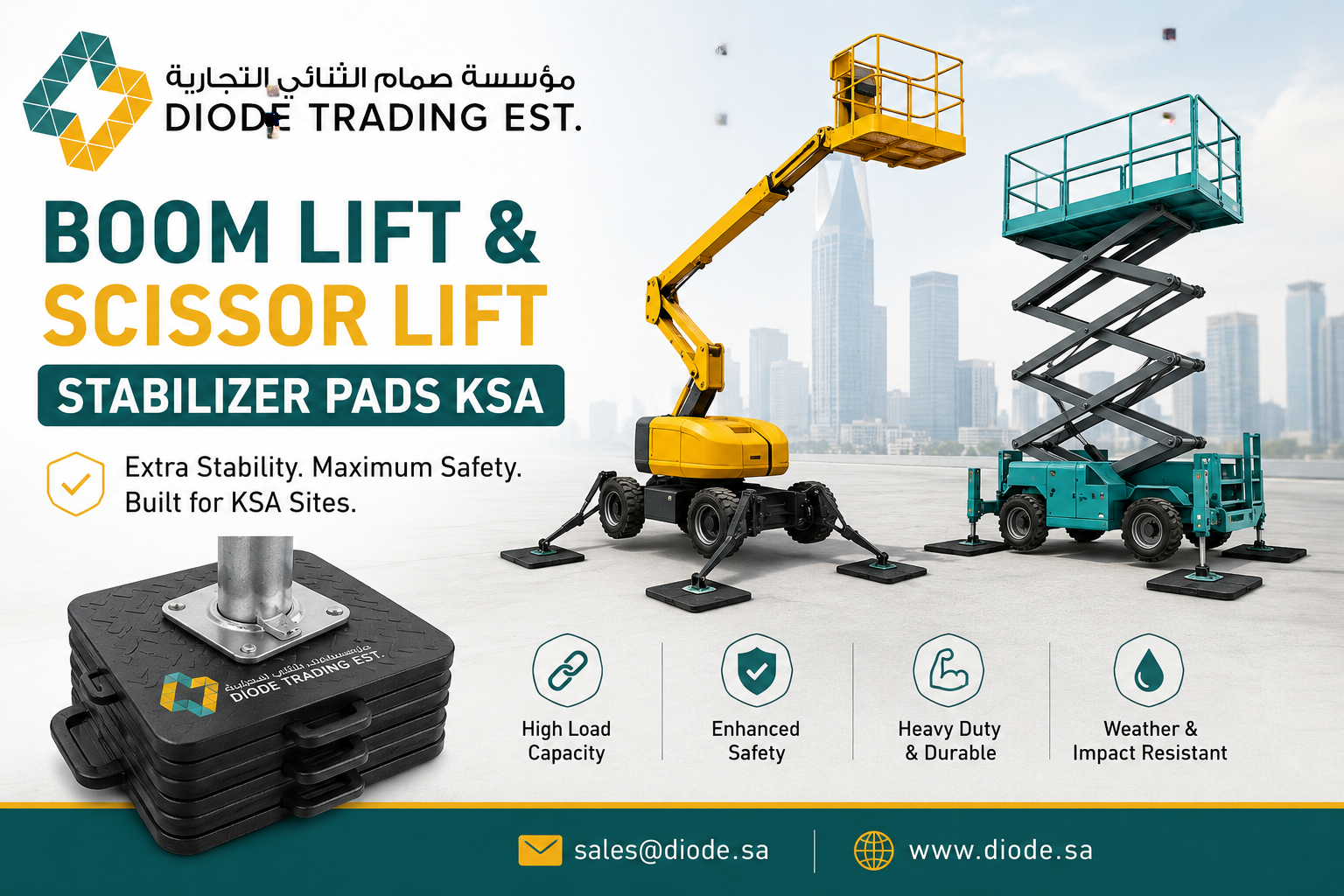
Boom lift stabilizer pads KSA sizing starts with a simple distinction: boom lifts and scissor lifts both use outrigger pads or stabilizers to level the platform, but their loading patterns differ. Boom lifts apply an off-center, dynamic load as the boom extends, while scissor lifts apply a more even, static load, so the same stabilizer pad rarely suits both machines without checking each one’s rated footprint.
Pads should match the manufacturer’s specified minimum footprint and be rated for the maximum outrigger force at full reach, not just the machine’s overall weight. As the boom extends and slews, load shifts toward whichever outrigger is closest to the working side, so that pad needs to handle more than an equal split of the machine’s weight would suggest.
Scissor lifts still require pads on soft ground, indoor finished flooring, or uneven surfaces to prevent point-load damage, even though their load is distributed more evenly across all four points than a boom lift’s. On finished floors, a pad also protects the surface from scuffing and point pressure under the lift’s full working weight.
Check the machine’s operator manual for its specified outrigger or stabilizer footprint and maximum point load, then size the pad to that figure rather than a generic aerial-lift pad size. Undersized pads can allow point settlement even on ground that looks firm. OSHA’s ground conditions requirement for cranes and derricks (29 CFR 1926.1402) sets a useful general principle here too: supporting materials should match the equipment’s actual load, not an assumed average.
Many KSA site teams keep a single boom lift stabilizer pad size in inventory across similar aerial-lift fleets, sized to the largest machine’s footprint, rather than tracking a different pad for every model. That approach works as long as the pad’s rated capacity covers the heaviest boom lift on site at full reach; undersizing to save on inventory is the most common mistake we see on multi-machine sites.
Diode Trading EST supplies boom lift stabilizer pads KSA sites use for both boom lifts and scissor lifts, sized to each machine’s outrigger footprint, across Saudi Arabia. Contact us with your machine’s model and outrigger footprint.
Boom lift and scissor lift stabilizer pads tend to move between job sites more often than crane outrigger pads, so it helps to keep a dedicated, clearly marked set with each machine rather than sharing pads across a fleet. Storing pads with the machine, rather than in a general yard, reduces the chance of a lift starting without the correct pads on site.
It is also worth briefing operators on where the marked pads for their specific machine are stored, since a rushed search for the right pad at the start of a shift is one of the more common reasons mismatched or undersized pads end up being used on lifts.
New operators joining a site should be walked through where stabilizer pads are stored, which machine they belong to, and how to check them for damage before use, as part of standard equipment induction rather than as an afterthought. This is a small addition to onboarding that meaningfully reduces the chance of an undersized or mismatched pad being used by someone unfamiliar with the site’s equipment.
Sites that rotate rented equipment frequently may find it worthwhile to keep a small buffer stock of common pad sizes on hand, rather than ordering fresh pads for every short-term rental that arrives on site.
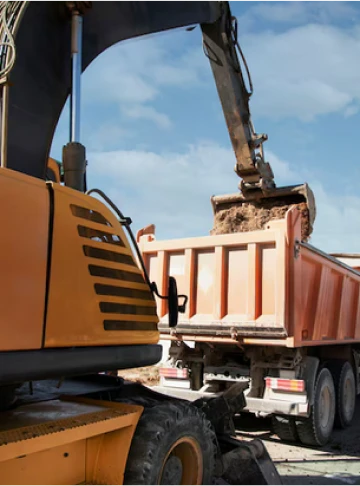
See our range of high-visibility safety mats and markers designed to reduce trip hazards across your site.
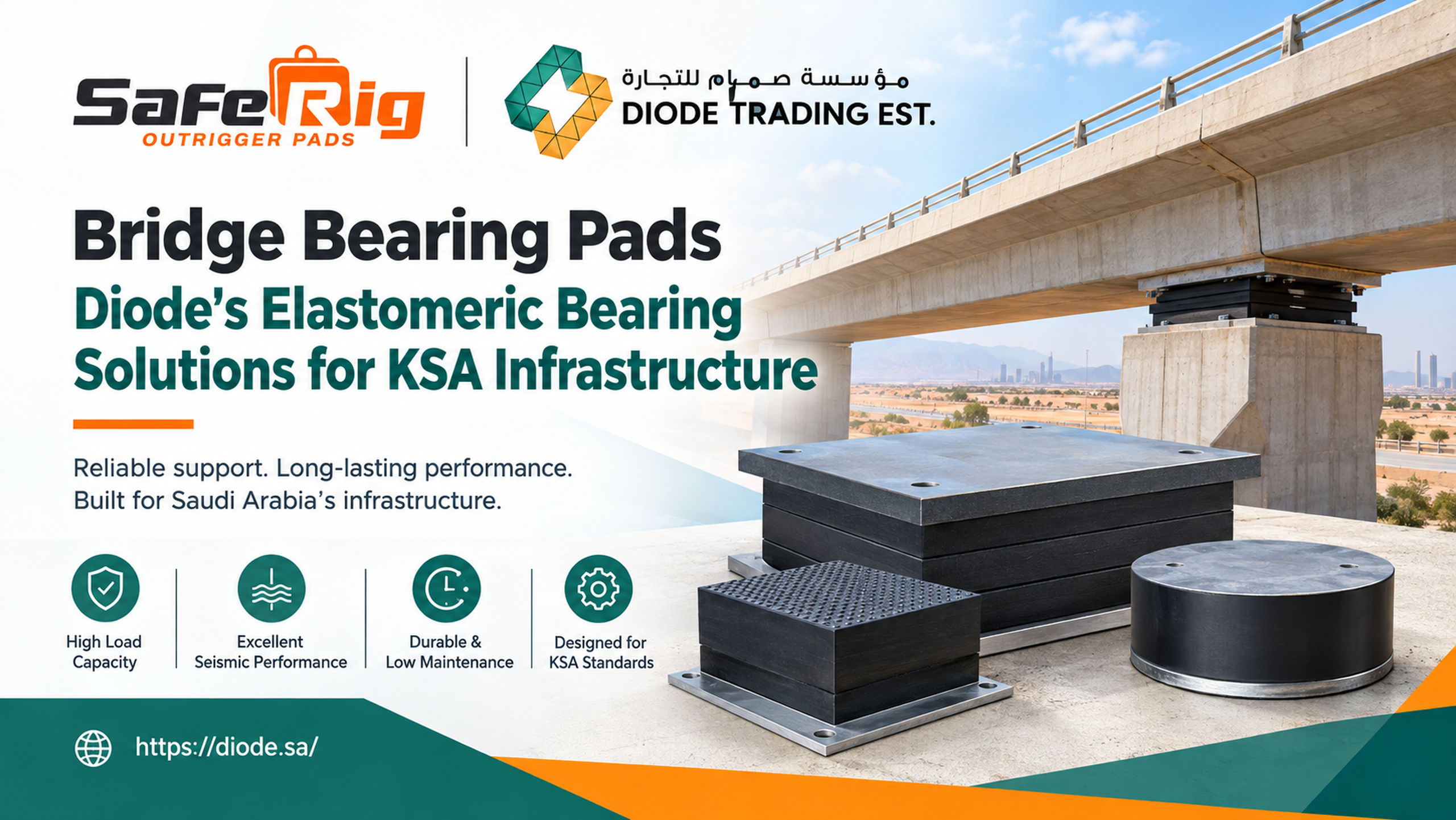 19 September, 2026 | Admin
Saudi Arabia's road and rail infrastructure b
Read more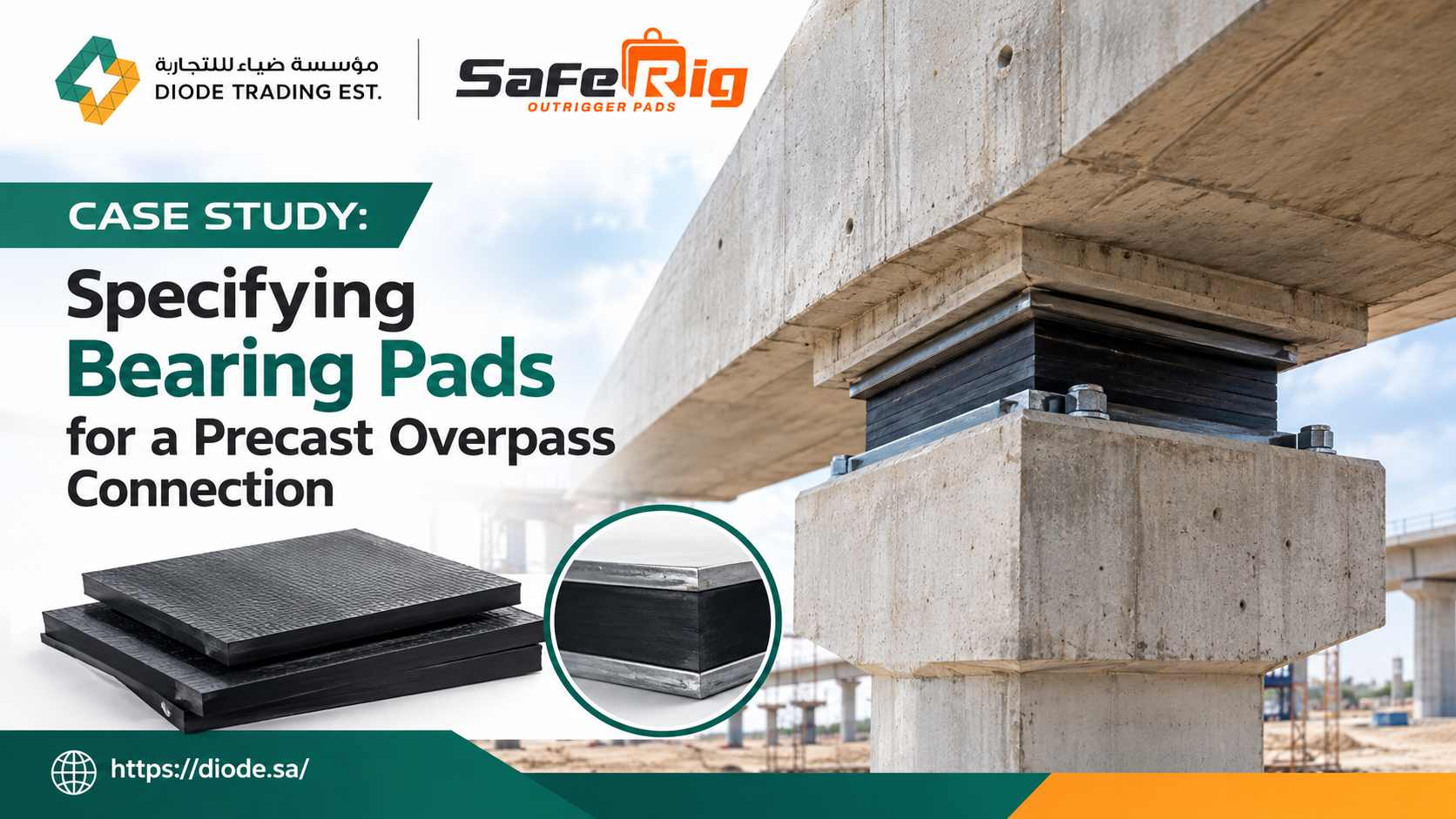 18 September, 2026 | Admin
A structural contractor working on a precast
Read more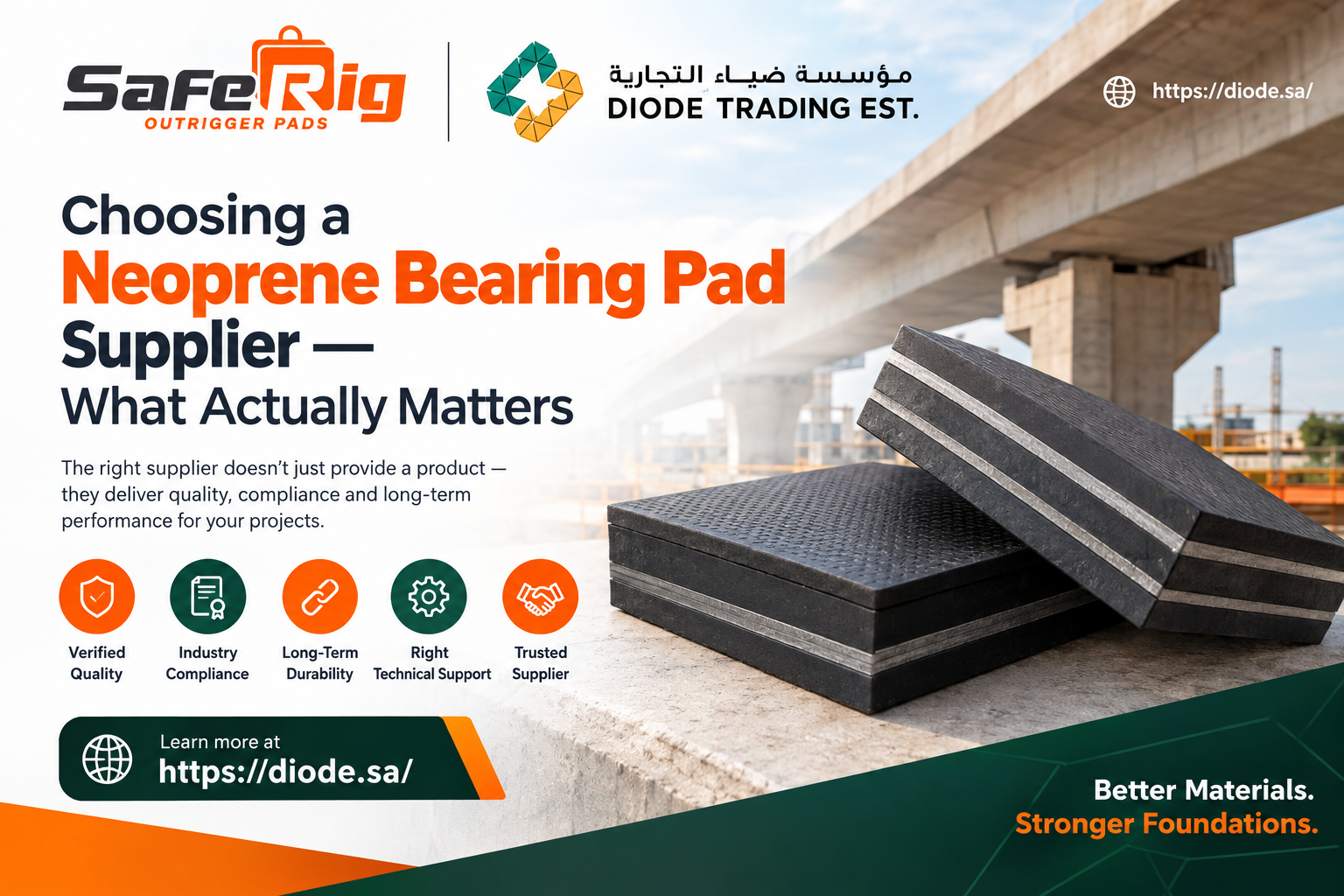 17 September, 2026 | Admin
Neoprene bearing pads are a structural compon
Read more