 23 October, 2026 |
 Admin
Neoprene vs Natural Rubber vs
Choosing the rubber
Bearing pads
Read more
Enquire Now
 23 October, 2026 | Admin
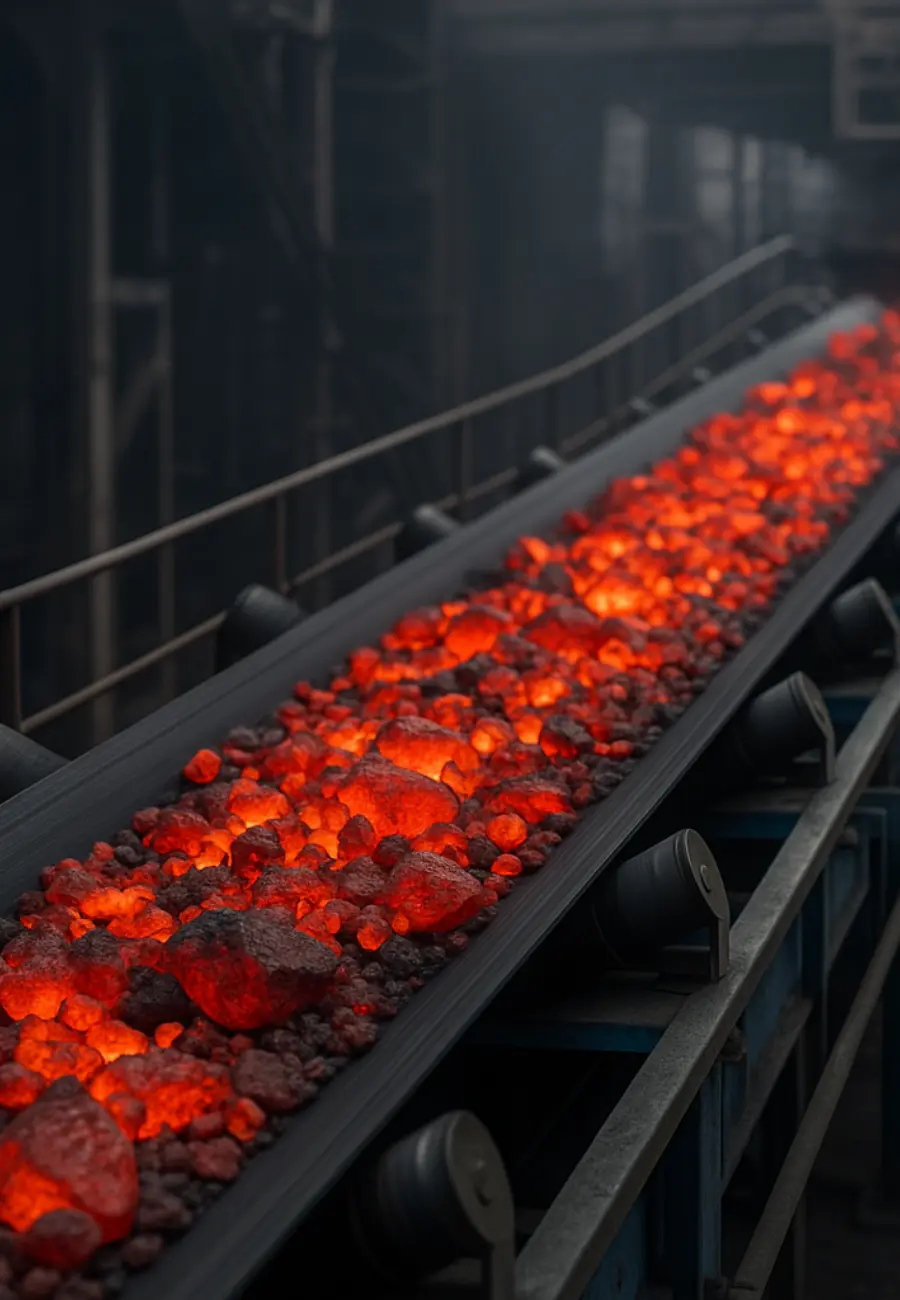
Short answer: A heat resistant conveyor belt for a cement plant is chosen by the temperature of the material, how long the material stays on the belt, and how abrasive and dusty it is. Quote the material temperature, not the room temperature, and ask the supplier which heat resistance class the belt belongs to.
Cement plants are tough on belts. Clinker leaves the kiln and cooler hot, sharp and abrasive. Raw meal and cement are dusty and can be warm. Ordinary belts harden and crack in this environment. A heat resistant belt is built with rubber compounds that keep their flexibility and strength at higher temperatures.
Heat speeds up the ageing of rubber. The cover hardens, loses elasticity and then cracks. Cracks let moisture and dust into the carcass, and the belt starts to delaminate. In a plant this shows up as:
If you see these signs on a belt that carries warm material, the belt is probably not rated for the temperature.
Most buyers quote the temperature of the air around the belt. What matters is the temperature of the material when it lands on the belt and how long it stays in contact. A short contact with very hot material is different from long contact with moderately hot material. Give your supplier:
Heat resistant belts are sold in classes, each class covering a higher material temperature. The names and limits depend on the standard the maker follows, so do not assume that two suppliers’ classes are the same. Ask for the standard and the class in writing, and compare belts using that class, not a marketing description.
Both fabric and steel cord belts can be made in heat resistant versions. Steel cord is used where the tension is very high. The carcass needs to survive the temperature as well as the cover, so tell your supplier the whole duty.
Heat is only one of the problems. Check also for:
Diode Trading EST supplies industrial conveyor belts across Saudi Arabia, and every order ships with a Material Test Certificate. Contact Diode Trading EST
A conveyor belt with a rubber compound designed to keep its flexibility and strength when carrying hot material.
It depends on the belt and the standard it follows. Ask your supplier for the class and the maximum material temperature in writing.
Heat hardens the rubber over time, and abrasion and impact add to the damage. Cracks let in moisture and dust, which makes the belt age faster.
Not necessarily. They solve different problems. Some sites need both.
The peak material temperature, how long the material is in contact, belt size, speed, capacity and any oil or fire risk.
Related: Cement Plant Conveyor Belt Supplier · How to Choose a Mining Conveyor Belt · Fire Resistant Conveyor Belts for Coal Handling
See our range of high-visibility safety mats and markers designed to reduce trip hazards across your site.