Short answer: A building protection system uses corner guards, wall guards, bumper rails and dock wall protection to absorb impact from trolleys, forklifts and vehicles. Corner guards wrap exposed corners and columns, bumper rails run along walls at impact height, and dock protection shields loading bay walls. Choose by what hits the wall, at what height and how often.
Walls and corners in warehouses, car parks, hospitals, factories and loading bays take constant knocks. Without protection, plaster breaks, paint chips and concrete corners spall. Repairs are costly and disruptive, and damaged corners can become safety hazards. A protection system is a small, one-off cost compared with repeated repair.
The main components
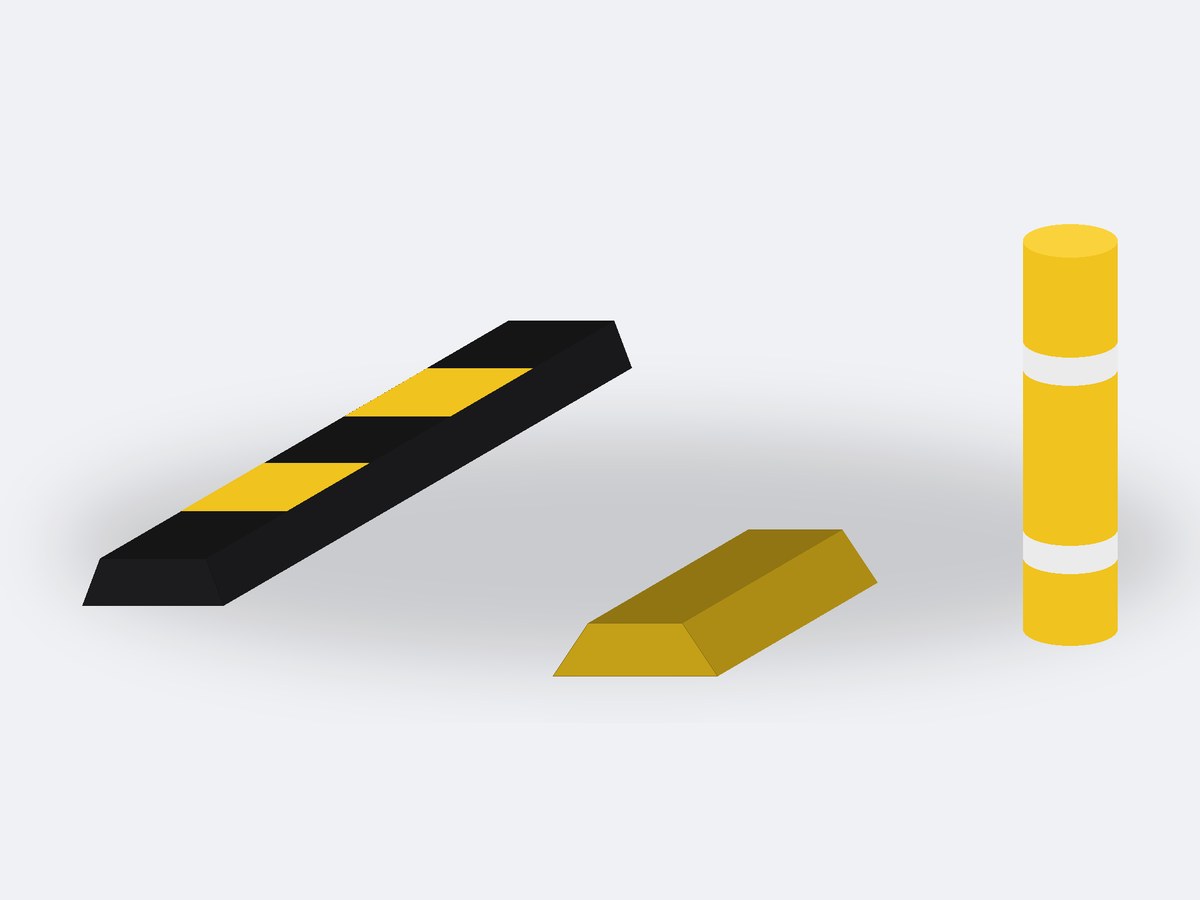
Corner guards. Wrap-around guards that protect external corners and columns. Rubber corner guards with black and yellow stripes in standard warning colours also warn drivers, giving better visibility around corners and entrances. They can be fixed to concrete, brick and plastered walls.
Wall guards and bumper rails. Long strips or rails fixed horizontally along walls to take trolley, pallet truck and forklift impacts. They protect the wall surface along the length of a corridor or bay.
Column protectors. Wraps or shells for round or square columns, usually in rubber or polymer.
Dock wall protection. Bumpers and guards fixed to loading bay walls, where trucks reverse in. Related guidance is in dock bumpers.
Door and frame guards. Protect door edges, jambs and frames at busy openings.
Why rubber
Rubber is elastic, so it takes the impact and recovers. It also protects the vehicle or trolley, reduces noise, resists weather and cleaning, and is available in high-visibility colours. For more on rubber wall guards, see rubber wall guard guide.
Choosing the right product
- Impact source: pallet trucks, forklifts, vehicles or hospital trolleys. Heavier equipment needs larger, thicker sections.
- Impact height: fit the guard at the height where bumpers, forks or trolley edges strike. A guard fixed too low or too high misses the impact.
- Wall type: concrete, brick, block, plasterboard or steel decides the fixing method.
- Visibility: high-visibility striping at corners helps drivers.
- Environment: indoor or outdoor, cleaning chemicals, temperature.
- Fire and safety rules: check any requirements for the building.
Fixing and installation
Mark the positions and heights. Drill and plug as needed for the wall material, and use the correct fixings, with washers to spread the load. Fit guards flat against the wall without gaps, and leave expansion gaps on long runs. Check fixings after a few weeks, since vibration and impact can loosen them.
Planning a layout
Walk the building during working hours and mark where impacts happen: corners at aisle ends, columns near racking, door frames, goods lifts and loading bays. Prioritise the worst spots first, then extend. A simple sketch with measurements lets a supplier propose the quantity and sizes.
Common mistakes to avoid
- fitting guards at the wrong height
- choosing guards that are too light for forklift impact
- using weak fixings that pull out
- skipping corner guards at aisle ends where most damage happens
- not replacing damaged guards, leaving the wall exposed
Questions to ask your supplier
What profiles, lengths and thicknesses are available? What colours and stripe patterns are in stock? How are the guards fixed? Can rails be cut to length? What is the recommended fixing for my wall type?
Diode Trading EST supplies corner guards, wall guards, bumper rails and dock wall protection from its Dammam warehouse to customers across Saudi Arabia, and every order ships with a Material Test Certificate. Request a quote.
Frequently asked questions
What are corner guards used for?
To protect exposed wall corners and columns from impact and to warn drivers.
What height should bumper rails be fitted?
At the height of the trolley, truck bumper or forks that strike the wall.
Can guards be fixed to concrete?
Yes, with suitable plugs and fixings.
Do I need guards if I already have bollards?
Bollards protect specific points. Guards protect the wall surface along its length.
Related guides: Rubber Wall Guard Guide · Bollards · UHMWPE Dock Bumpers
Explore the product range: Building Protection Systems · Rubber Wall Guard Protection System
Need a price or lead time? Request a quote with sizes, quantity and delivery city in Saudi Arabia.





 30 October, 2026 |
 Admin