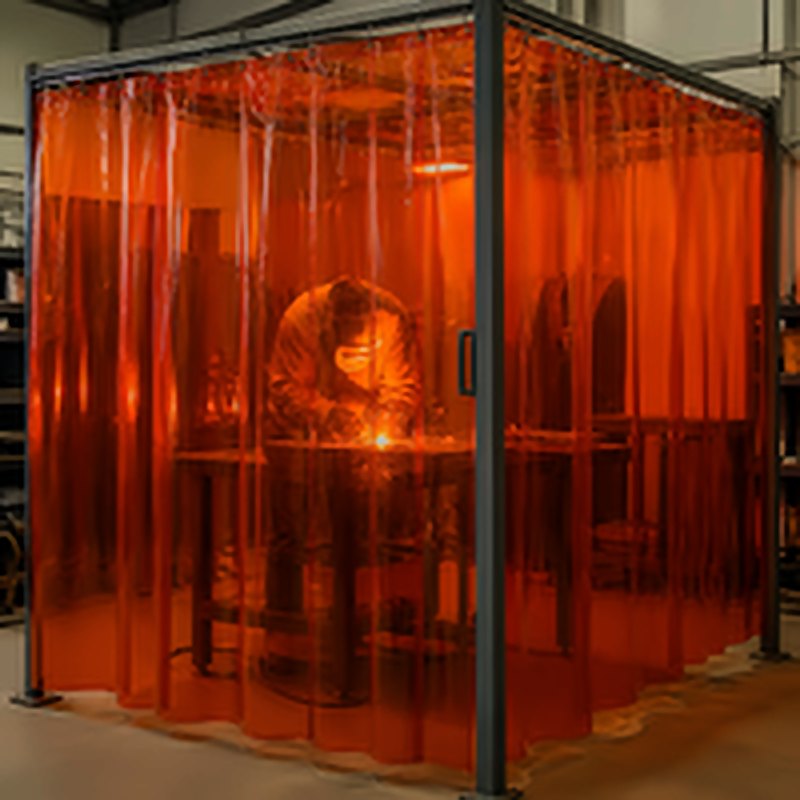
A welding curtain is a tinted PVC screen hung around a welding station so that the bright arc light does not dazzle people working nearby. It is flexible, easy to move and cheaper than a fixed wall. This guide explains the colours available, where to use a welding screen and what it can and cannot do.
The key point is that a welding curtain reduces glare for bystanders. It is not a fire-rated barrier or a machine guard, and the person welding still needs proper eye and face protection.
Welding curtains are normally supplied in red or orange and in green tints. The tint filters part of the visible light from the arc so that nearby workers are less affected. Darker tints block more light but also make it harder to see through the screen. The right choice depends on the welding process and your safety officer’s assessment.
Where to hang a welding screen
Typical uses include welding bays in fabrication shops, workshop corners and temporary repair areas, shipyards and maintenance sites, and training areas where several stations are close together. The curtain separates the welding zone from walkways while still letting people move through.
Strips or full screen
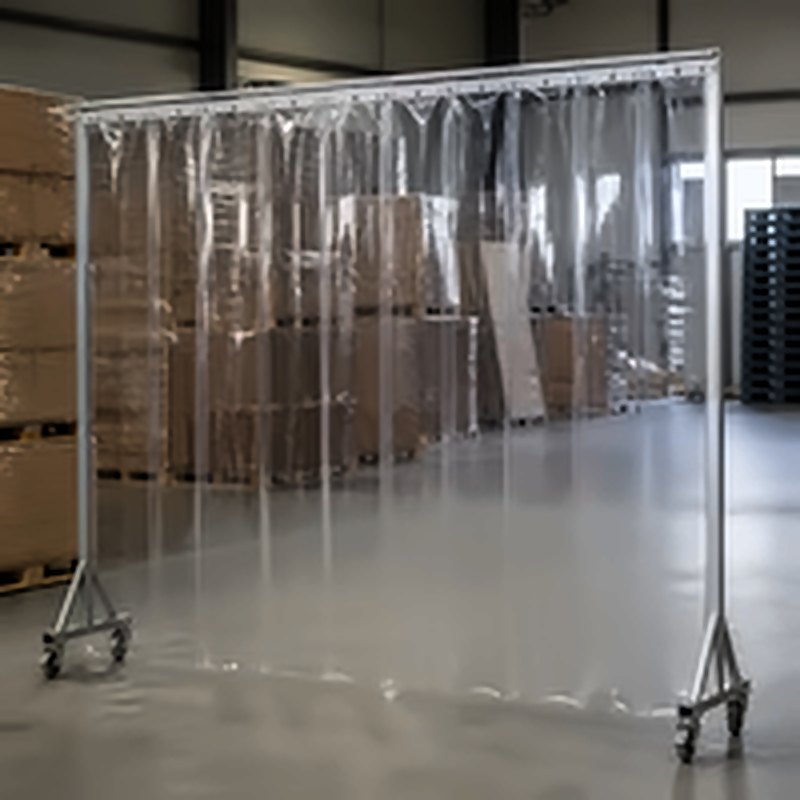
A welding curtain can be made as overlapping strips on a rail or as a full screen with frames. Strips are quicker to install and allow access. A screen on a frame gives a more complete enclosure. Both are cut to the size of your bay, and strips can be replaced one by one.
What a welding curtain does not do
It is not fire-rated and it will melt if hot spatter hits it for long periods. It does not replace a welding helmet or fume extraction. Keep the screen away from flame and hot work, and check it regularly for holes and burn marks. If you need fire-resistant protection, ask us about alternatives.
Choosing the right size
Measure the area you want to enclose. Add a little extra for overlap and for the clearance above the floor. Our team can supply the rail, clamps and strips together so you can hang the screen quickly.
If you also need a clear curtain for a nearby door, see our guide to PVC strip curtains.
Installation and care
Hang the rail high enough that the strips cover the whole opening, and keep the bottom edge about 10 to 20 mm above the floor so it does not drag. Fit the clamps or hooks securely so the strips can be replaced one by one. Clean the screen with a soft cloth and mild detergent, and avoid solvents that can make the tint cloudy or the PVC brittle.
Using a welding screen with other controls
A screen is only one part of a safe welding area. Keep flammable materials away, provide ventilation or fume extraction, and make sure everyone in the zone knows the rules. If your site has a safety officer, ask them to approve the tint and layout before you order. We can then cut the strips or screen to match your bay, and supply the rail, clamps and spare strips.
Frequently asked questions
Does a welding curtain stop UV light?
It reduces glare for people nearby, but the welder must still use a proper helmet. Ask your safety officer to confirm the correct tint for your process.
Is a welding curtain fireproof?
No. It is not a fire-rated barrier and should be kept away from direct flame and heavy spatter.
Can it be made to measure?
Yes, welding curtains are made to your bay size and supplied with rail and clamps.
This guide on welding curtain is a starting point. For more help with welding curtain, send us your door size, temperature and traffic and we will recommend the right specification. Background reading: strip curtains on Wikipedia.


 10 November, 2026 |
 Admin