
 27 October, 2026 |
 Admin
EVA vs Rubber Flooring: What M
The EVA vs rubber flooring question comes
Read more
Enquire Now
 27 October, 2026 | Admin
Gym flooring thickness is the first spec most buyers ask about, and the one most often got wrong. Ask five gym owners how thick their flooring should be and you will hear five versions of the same answer: as thick as the budget allows. It is an understandable instinct and often a wrong one. Thickness is not a quality score. It is a tool, and it only makes sense when it is matched to the job the floor has to do.
A 7mm tile that is perfect under treadmills is the wrong answer under an Olympic lifting platform. A 30mm tile in a stretching studio is money spent on a benefit nobody will feel. This guide breaks thickness down zone by zone, using the systems available through Diode Trading EST in Saudi Arabia. For a wider view of each training area, see our guide to gym flooring by zone.
Flooring thickness works on three separate problems. The first is impact: protecting the concrete slab, the equipment, and the athlete’s joints when weight lands. The second is sound and vibration: stopping a dropped barbell from becoming a complaint from the unit below or next door. The third, often forgotten, is stability: a very soft, thick surface can make racks and machines feel less planted, which is why thickness should be matched to the activity rather than maximised.
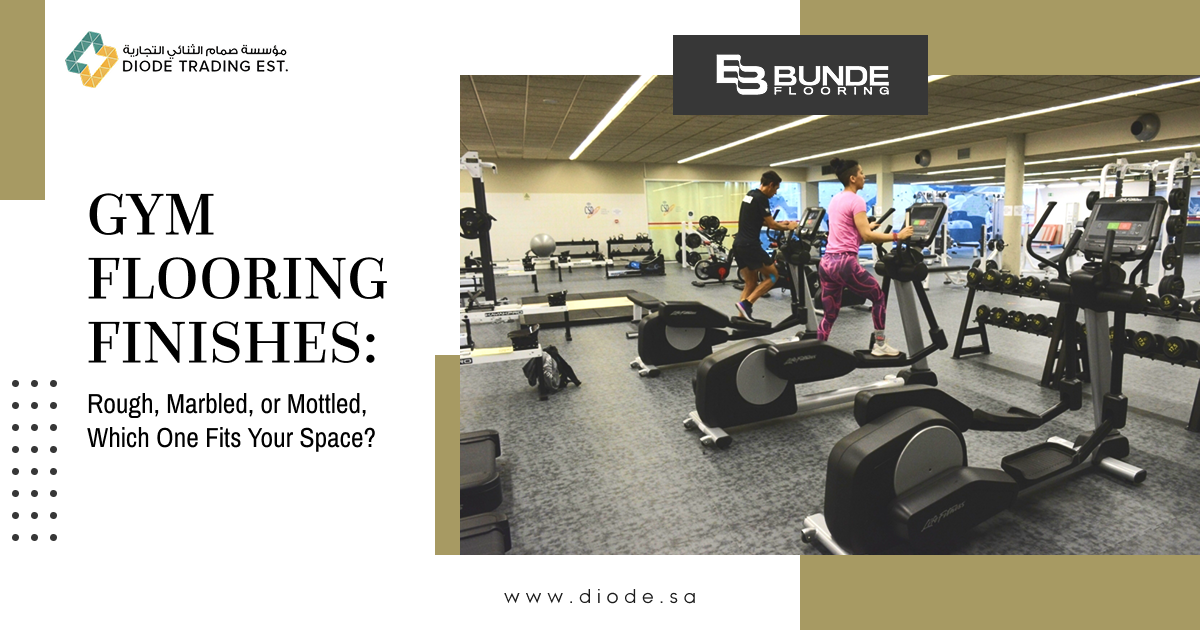
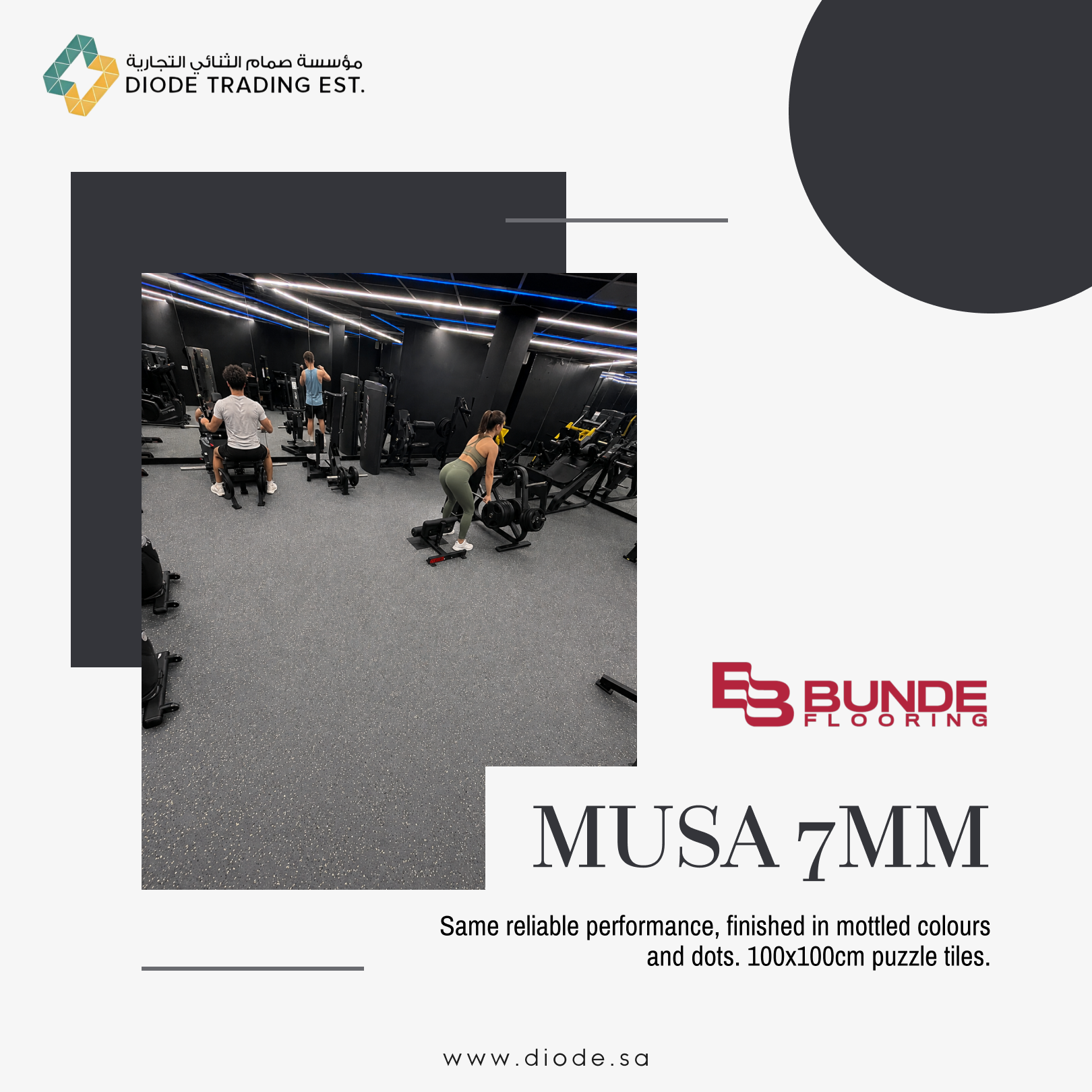
For most of a commercial gym floor, 7mm is the working standard. The Troter Genius, Marbled Troter and MUSA range is supplied in 100x100cm puzzle-edge tiles built for exactly these areas: static machines, cardio zones, functional training, and medium weights such as kettlebells and dumbbells. All three finishes perform the same; the choice between rough, marbled and mottled is purely visual.
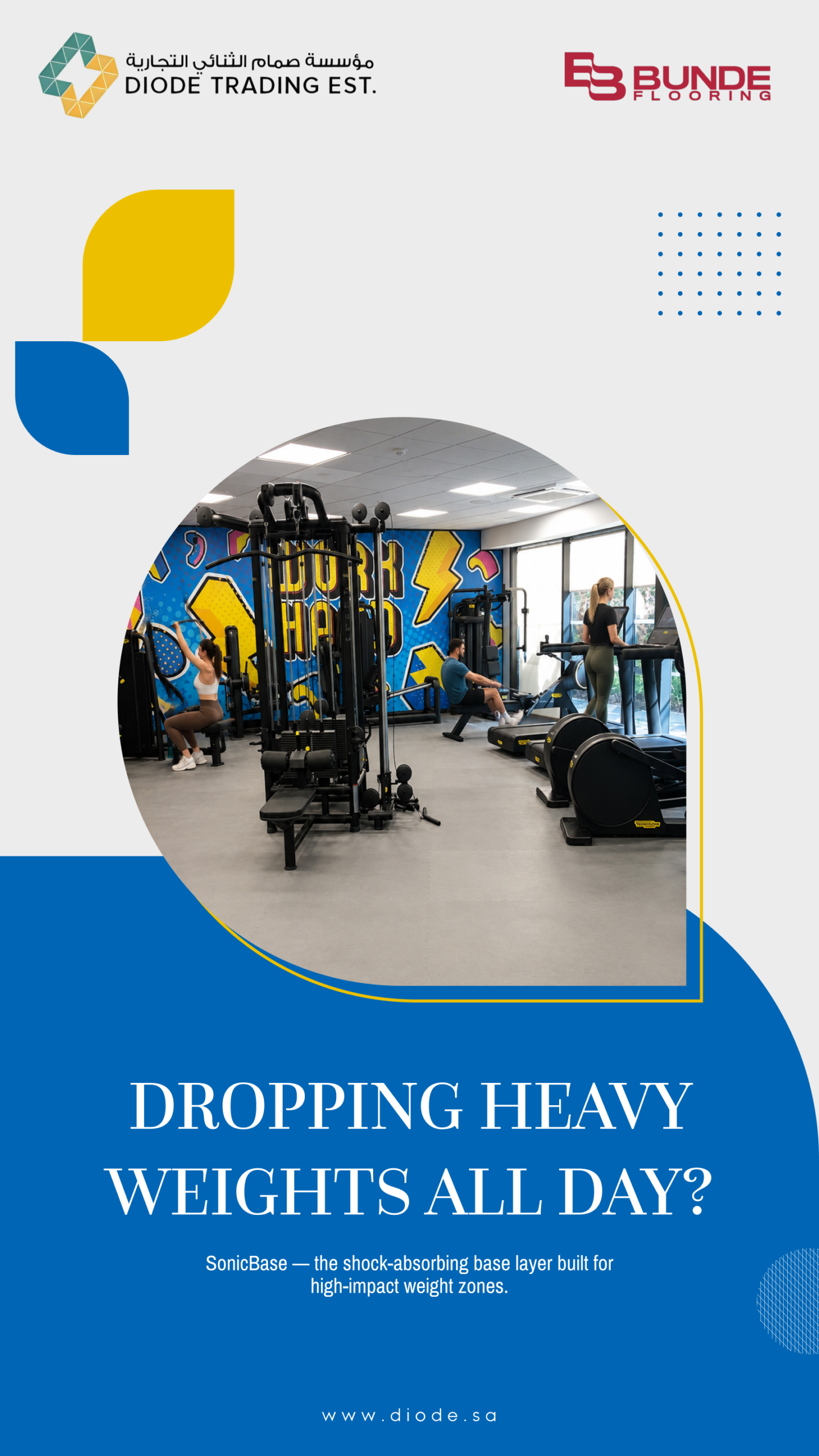
When heavy weights are dropped, the answer is not simply a thicker top tile. It is a second layer. SonicBase is a dedicated underlay, available in 15mm or 30mm, laid beneath the 7mm surface to absorb vibration from dropped weights. Its published data includes a density of 200 kg/m³, hardness of 45-50 Shore A, near-zero water absorption, an Efl-s2 fire reaction rating, and acoustic insulation above 20 dB. The surface tile gives grip and finish; the underlay does the structural work.
For areas where barbells are dropped repeatedly, specifiers move to thicker rubber formats. ErgoFloor manufactures ErgoTile in thicknesses from 10mm up to 43mm. In one documented CrossFit build, a 25mm ErgoTile Quad surface was combined with a 45mm ErgoPlay Impact underlay to gain additional impact-sound and vibration reduction. The pattern is the same as Zone 2: a purpose-built surface over a purpose-built underlay.
Not every zone belongs to rubber. Tatami flooring for martial arts and stretching is EVA, supplied in 20mm or 30mm. Sport yoga mats are EVA in 9.5mm or 19mm. Kids’ areas use Cole 18mm EVA in 50x50cm tiles. These are chosen for softness and comfort, not drop resistance.
| Zone | Recommended system | Thickness |
|---|---|---|
| Cardio, machines, functional | Troter Genius / Marbled Troter / MUSA | 7mm |
| Heavy free weights | 7mm surface over SonicBase | 7mm + 15mm or 30mm |
| Drop zones, lifting, CrossFit | ErgoTile (with impact underlay where needed) | Up to 43mm |
| Martial arts | Tatami (EVA) | 20mm or 30mm |
| Yoga, stretching | Sport yoga mats (EVA) | 9.5mm or 19mm |
| Kids’ play | Cole (EVA) | 18mm |
Using one thickness across the whole facility, which overpays in light zones and underprotects heavy ones. Relying on a thick top tile alone where an underlay is needed. And ignoring what sits below the gym: a ground-floor slab and a mezzanine over a shop do not have the same noise risk.
What is the heaviest object that will realistically be dropped here? What is directly beneath or beside this zone? And how many hours a day will it be used?
Diode Trading EST supplies these systems across Saudi Arabia, including Riyadh, Jeddah, Dammam and Al Khobar, in partnership with Elaf Rubber, and every order ships with a Material Test Certificate. Explore the full rubber gym flooring range or contact our team for a zone-by-zone recommendation.
There is no single best thickness. 7mm suits cardio, machines and medium-weight functional areas, while heavy-lifting zones need an underlay or a thicker system such as ErgoTile.
No. Only zones with heavy dropped weights typically need one. Cardio, reception and stretching areas usually do not.
Not on its own. Sound control comes from the combination of surface and underlay, and from what is beneath the slab, not from thickness alone.

See our range of high-visibility safety mats and markers designed to reduce trip hazards across your site.
 27 October, 2026 | Admin
The EVA vs rubber flooring question comes
Read more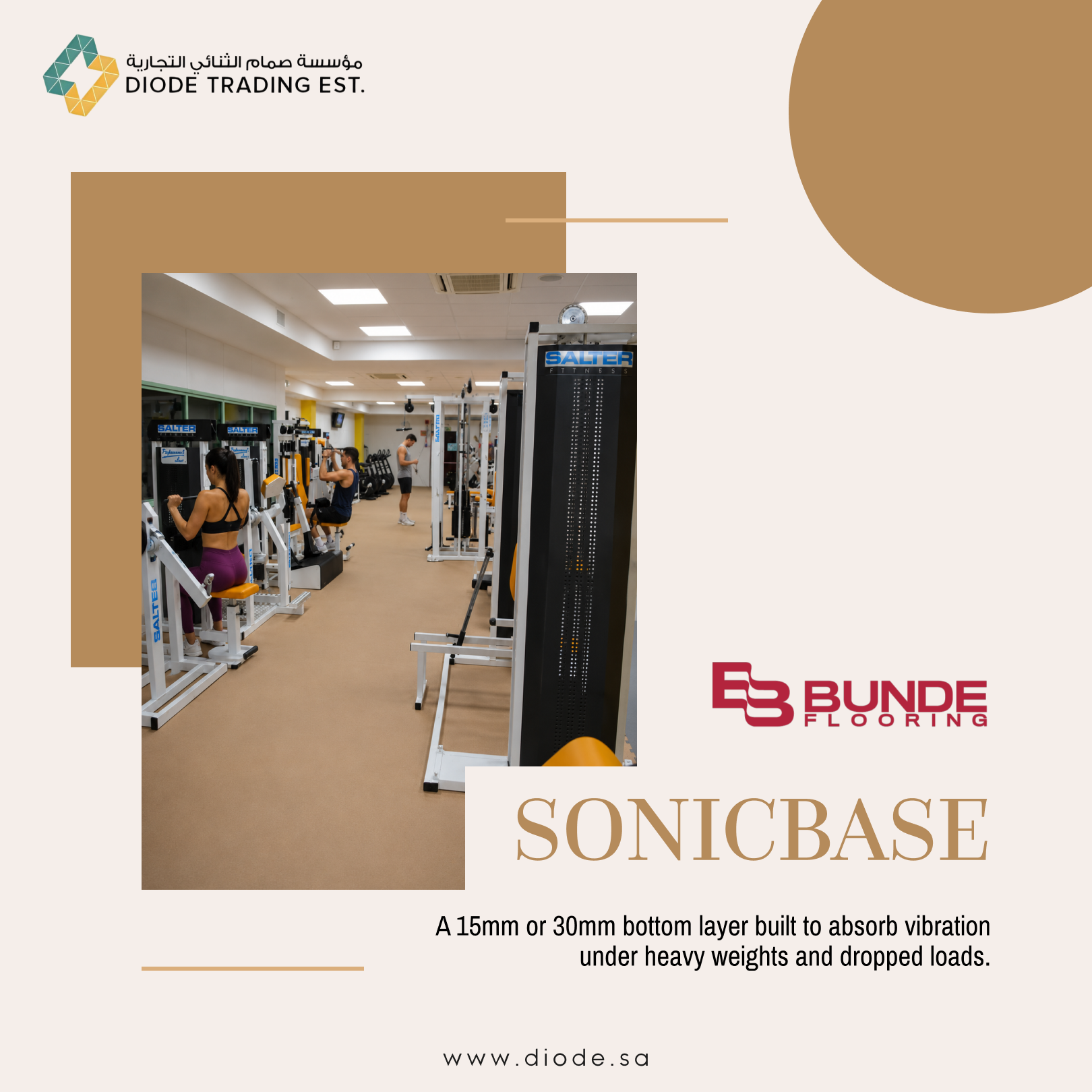 27 October, 2026 | Admin
Good rubber gym flooring installation star
Read more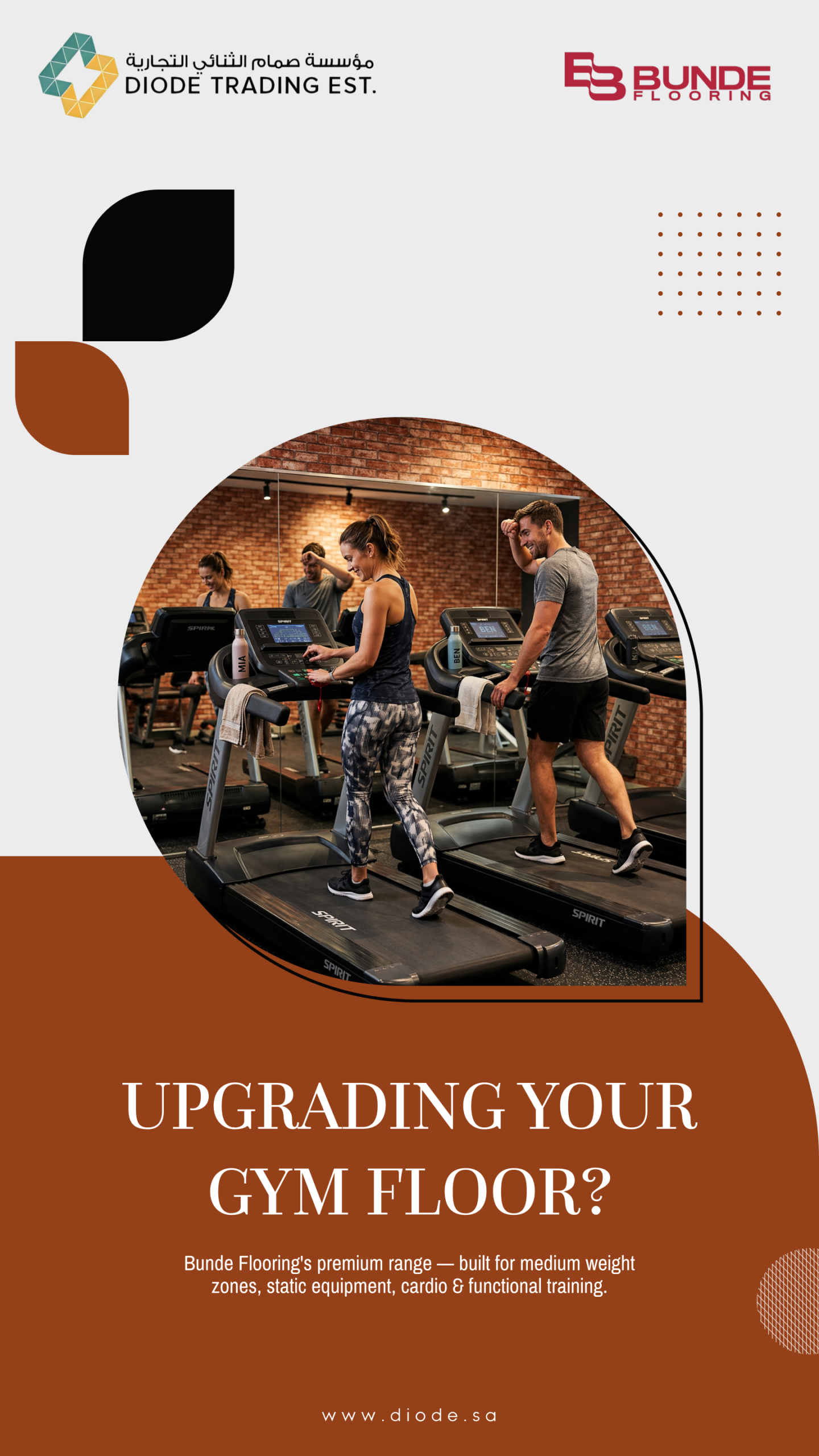 27 October, 2026 | Admin
Choosing a gym flooring supplier in Saudi
Read moreDiode Trading EST supplies these Industrial Mats & Flooring from stock in Dammam, with delivery across Saudi Arabia and the GCC.