 23 October, 2026 |
 Admin
Neoprene vs Natural Rubber vs
Choosing the rubber
Bearing pads
Read more
Enquire Now
 23 October, 2026 | Admin
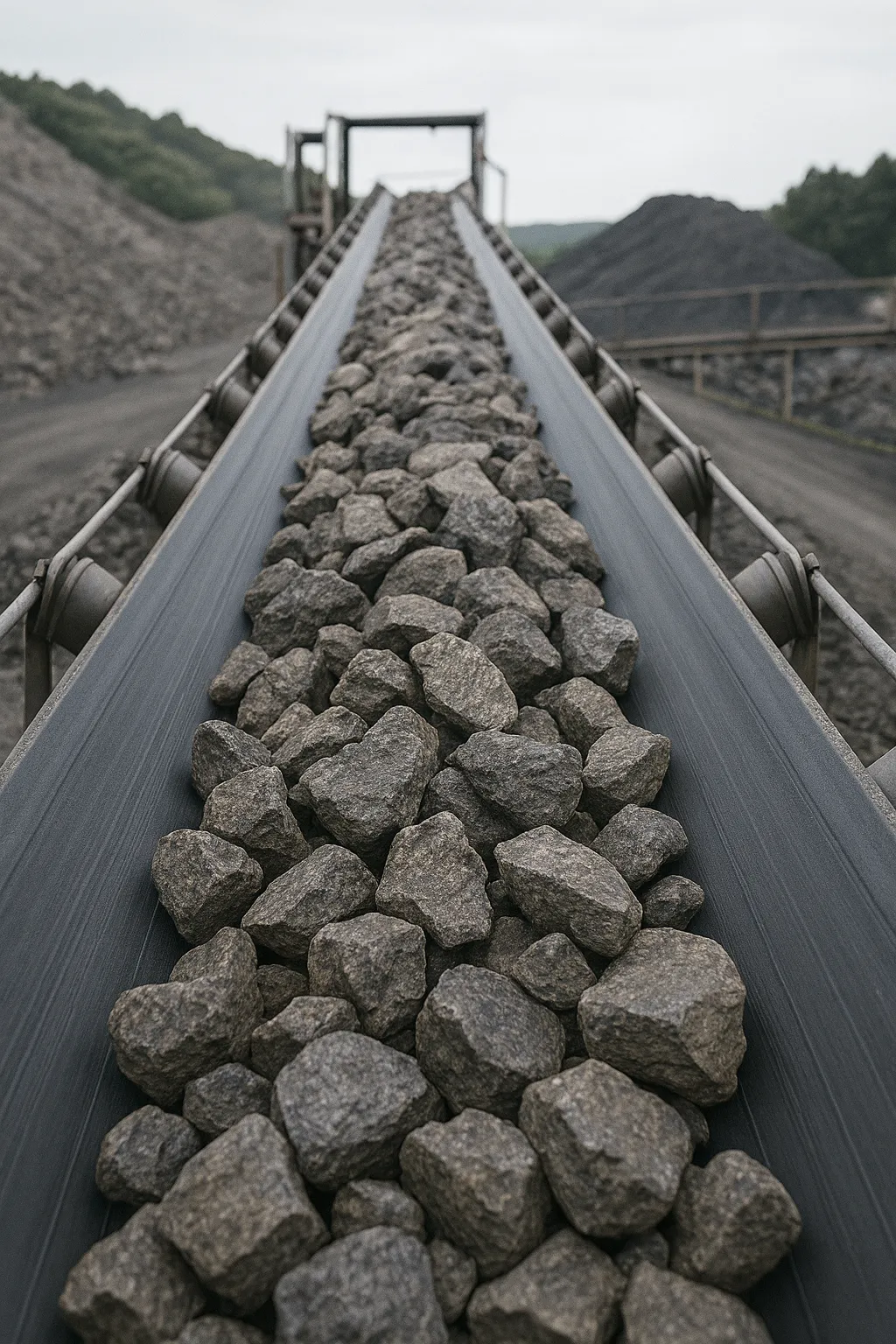
Short answer: A mining conveyor belt is chosen by what it carries and how it is loaded. Sharp, heavy rock needs a tough cover and enough body strength. Fine abrasive material needs a cover that resists wear. Choose the cover rubber, the thickness and the carcass (fabric or steel cord) together, not one at a time.
Mines and quarries are among the hardest places for a conveyor belt. Rock arrives in lumps, drops onto the belt from a height, scrapes along the chutes and rides over rollers for hours. A belt that suits a packing line will fail in weeks here. The good news is that the decision comes down to a short list of questions.
Start with the material, not the belt. Write down:
Sharp, large lumps cut and gouge the top cover. Fine, hard material wears the cover away gradually, like sandpaper. Each failure mode points to a different solution.
The cover is the rubber on the carrying side. Its job is to protect the carcass underneath. Two things matter most:
A good rule is to ask how the existing belt failed. If it was cut through at the loading point, the cover grade or thickness is the issue. If it was worn smooth along the whole length, abrasion resistance is the issue.
The carcass carries the tension. There are two main options.
| Fabric (EP, NN) | Steel cord | |
|---|---|---|
| Best for | Short to medium conveyors, general mining and quarry duty | Long, high-tension conveyors |
| Strength | Moderate | High |
| Typical use | Quarries, crushing plants, transfer lines | Long overland conveyors, high capacity lines |
| Cost | Lower | Higher |
Fabric belts use layers (plies) of polyester and nylon fabrics. Steel cord belts use steel cables embedded in rubber to carry very high tension. See our page on chevron and steel cord conveyor belts for more on steel cord. Choose steel cord when the length, the tension or the capacity is beyond what a fabric belt can handle comfortably.
The belt width follows the capacity you need and the lump size. Wider belts carry more but also need stronger structures and bigger pulleys. Give your supplier the belt width, the length (or the splice-to-splice length), the speed and the tonnes per hour. These decide how much tension the belt must carry.
How the belt is joined affects its life and your downtime. Hot vulcanised splices are generally stronger than mechanical fasteners, but they take longer to make and need a trained crew. Mechanical fasteners are faster to fit and are common on shorter or temporary conveyors. Ask what joining method your site uses before you order.
A good belt can still be ruined by a poor system. Check:
To get an accurate quotation, send:
Every order from Diode Trading EST ships with a Material Test Certificate.
It depends on the material and the duty. For sharp, heavy rock, look at tough cut-and-gouge cover grades with enough carcass strength. For fine abrasive material, choose an abrasion-resistant cover grade.
Fabric belts suit short to medium conveyors. Steel cord belts suit long, high-tension conveyors. Tell us the length, the capacity and the tension and we will recommend a type.
Thicker top covers last longer at heavy loading points, but they add weight and cost. Match the thickness to how severe the impact and abrasion are.
Reduce the drop height, set skirts and scrapers properly, keep the belt tracking straight and clean off carryback.
Yes. Send us the details above and request a quote. Contact Diode Trading EST
Related: Mining Conveyor Belt Supplier · Cement and Clinker Conveyor Belts · Fire and Heat Resistant Conveyor Belts · Chevron and Steel Cord Conveyor Belts
See our range of high-visibility safety mats and markers designed to reduce trip hazards across your site.