This guide to PTFE products Saudi Arabia buyers rely on explains which form and grade to choose. PTFE (Polytetrafluoroethylene) shows up in more places across Saudi Arabia’s industrial economy than almost any other single material — gasket faces, lined pipe, valve seats, electrical insulation, food processing equipment — because it does something very few materials can: resist nearly every chemical a plant will throw at it, across an enormous temperature range, without breaking down. This guide covers everything you need to choose the right PTFE product, wherever in the Kingdom you’re buying.

What Makes PTFE Different
Most plastics degrade when they meet aggressive chemicals — they swell, soften, or break down at a molecular level. PTFE’s chemical structure is close to inert, resisting nearly all industrial acids, solvents, and chemicals with only a small handful of exotic exceptions most plants will never encounter. It also performs across an unusually wide temperature range — roughly -200°C to +260°C for standard grades — without losing its properties, and it has one of the lowest coefficients of friction of any solid material.
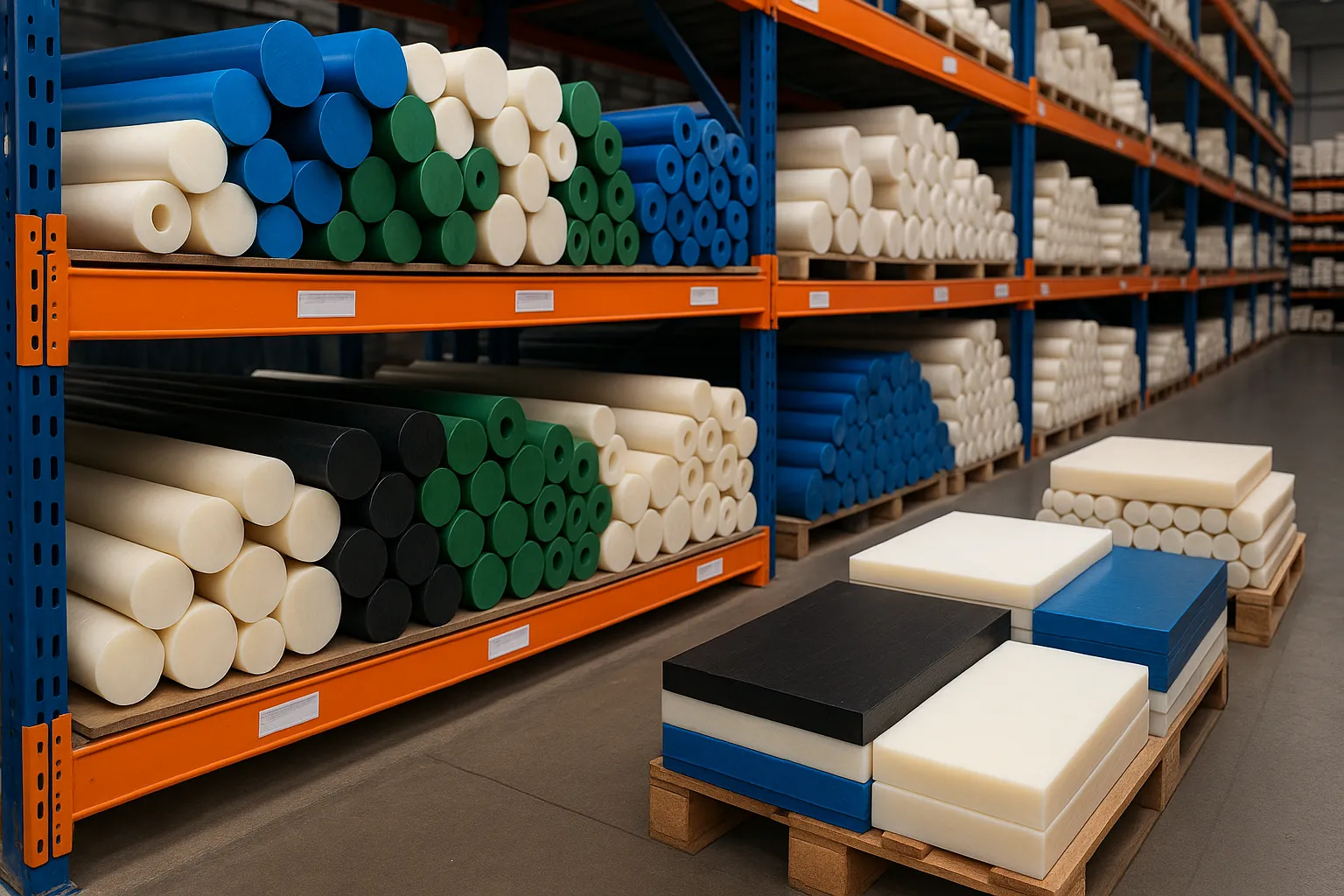
The Main Forms PTFE Comes In
| Form |
What It’s For |
Typical Use |
| Sheet |
Gasket fabrication, cutting to custom shapes, lining flat surfaces |
Flange gaskets, equipment lining, cut-to-size seals |
| Rod |
Machined into custom parts – bushings, seals, valve components |
CNC machining shops, custom mechanical parts |
| Tube/Pipe lining |
Chemical transport where the fluid must not contact the pipe wall material |
Chemical processing, corrosive fluid transport |
| Tape |
Thread sealing, wrapping, low-friction surface application |
Plumbing, pipe fitting, general sealing |
| Gaskets (ready-cut) |
Pre-fabricated to standard flange dimensions |
Fast replacement, standard piping systems |
Choosing the Right Grade
Not all PTFE is the same – virgin (unfilled) PTFE and filled PTFE (with glass, carbon, graphite, or bronze) behave differently under load, wear, and temperature. Virgin PTFE offers the best chemical purity and is the default for food-grade or highest-purity chemical applications. Filled grades trade a small amount of chemical inertness for significantly better mechanical strength, wear resistance, or thermal conductivity – see our full grade comparison guide for the complete breakdown.
Where PTFE Is Used Across Saudi Industry
- Oil & gas and petrochemical – gasket faces, valve seats, pump seals, lined pipe for corrosive process fluids
- Chemical processing – tank and vessel lining, agitator seals, dosing system components
- Food & beverage – conveyor components, seals, and gaskets requiring FDA-compliant, non-reactive materials
- Electrical – high-dielectric-strength insulation for cabling and components
- Water treatment – valve and pump components resistant to chlorine and treatment chemicals
- Pharmaceutical – process equipment requiring chemical inertness and cleanability
PTFE Products Saudi Arabia: Regional Demand Overview
PTFE demand isn’t concentrated in one region – it follows wherever chemical processing, oil & gas, or general industrial manufacturing operates, which in practice means it spans the whole Kingdom.
| Region |
Primary Industry Driver |
Typical PTFE Demand |
| Jubail / Yanbu |
Petrochemical, refining |
Gasket sheet, lined pipe, valve seat components for large-scale chemical plants |
| Dammam / Khobar / Dhahran |
Oil & gas, general industrial |
General PTFE stock, gaskets, seals for the Eastern Province industrial base |
| Riyadh |
General manufacturing, construction, Vision 2030 projects |
Broader industrial and construction-adjacent PTFE demand |
| Jeddah |
Port/logistics, general industry, food processing |
Food-grade PTFE, general industrial gaskets and seals |
How to Choose a PTFE Supplier
- Confirm they stock both virgin and filled grades, and can advise on the difference for your application.
- Ask whether they can supply both sheet stock and pre-fabricated gaskets, or only one form.
- Check delivery coverage across the region(s) you operate in – a single supplier covering the Eastern Province, Riyadh, and Jeddah simplifies multi-site procurement.
- For chemical processing applications, confirm the specific grade’s chemical compatibility with your process fluid before ordering – see our chemical compatibility guide below.
Buying PTFE Products in Saudi Arabia: Practical Checklist
Before you request a quotation for PTFE products in Saudi Arabia, have these details ready. They shorten lead times and make sure the right grade arrives the first time.
- Form and size: sheet thickness and dimensions, rod diameter and length, or a drawing for machined parts and gaskets.
- Grade: virgin PTFE for chemical, food and electrical duty, or a filled grade (glass, carbon, bronze) for load and wear.
- Service conditions: process chemicals, temperature range and pressure.
- Compliance: any food-contact, pharmaceutical or client-specific documentation your project requires.
- Quantity and delivery location: so stock and freight can be confirmed.
Every order from Diode Trading EST is supplied with a Material Test Certificate. For background on the polymer itself, see this
overview of polytetrafluoroethylene. For the PTFE products Saudi Arabia projects need on short lead times, our Al Khobar team can confirm stock and delivery across the Kingdom.
Why Source PTFE Products Saudi Arabia-Based
Working with a local stockist for PTFE products Saudi Arabia plants use every day shortens lead times for shutdowns and emergency repairs. It also means grade questions can be answered by people who know local service conditions, from desalination brine to sour hydrocarbon service.
- Faster delivery: stock held in Al Khobar reaches the Eastern Province quickly and the rest of the Kingdom by road freight.
- Cut-to-size service: PTFE products Saudi Arabia buyers order are often cut or machined to drawing before dispatch.
- Consistent documentation: a Material Test Certificate with every order keeps grade records straight for repeat purchases.
If you are comparing PTFE products Saudi Arabia suppliers offer, ask each one for the grade, form, test certificate and delivery time in writing before you order.
Explore Further
Why plants standardise on one PTFE supplier
Switching suppliers for a critical sealing or lining material carries real risk: grade specifications and documentation must be re-verified, and a subtle difference in filler content or manufacturing process may only show up after the part is in service. Plants that have had an inconsistent PTFE supply once tend to standardise on a single source that can match the grade to the application every time. It also simplifies audits and vendor qualification, since procurement tracks one approved supplier and one set of certificates. Datasheets and Material Test Certificates for every grade are on our downloads page.
FAQ
Is PTFE the same as Teflon?
Yes – Teflon is a brand name (originally DuPont’s) for PTFE. The material itself, Polytetrafluoroethylene, is the same regardless of which name is used.
What temperature range can PTFE handle?
Standard PTFE typically performs reliably from around -200°C up to roughly 260°C continuous service, though exact limits depend on the specific grade and application.
Does Diode Trading EST supply PTFE across all of Saudi Arabia, or just the Eastern Province?
Delivery is available across the Kingdom – Eastern Province, Riyadh, Jeddah, and other regions – from our Dammam base.
See also: What is PTFE? Full form, meaning, properties and uses


 13 November, 2026 |
 Admin