 14 September, 2026 |
  Admin
Admin
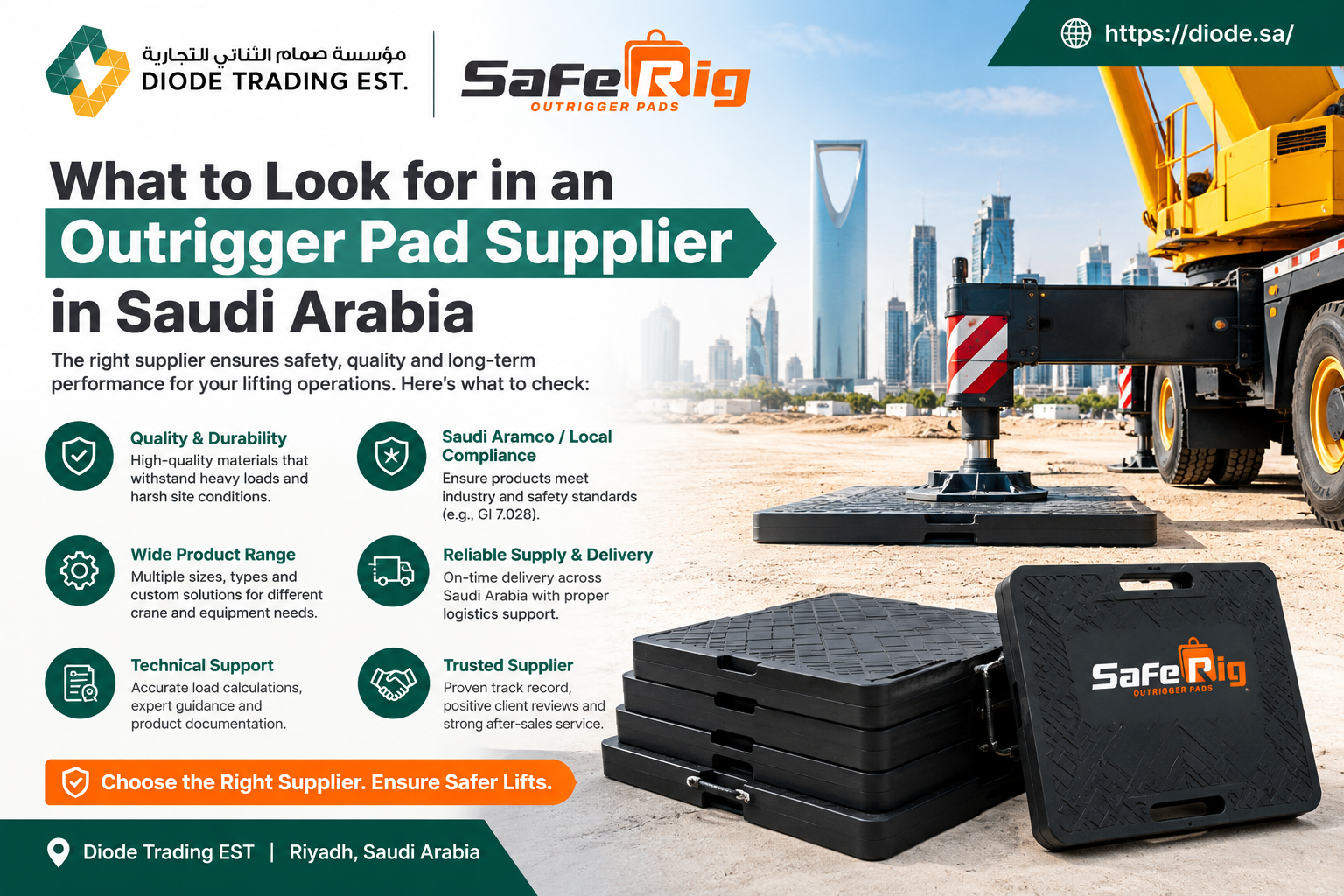
What to Look for in an Outrigg
Most Read more

 09 September, 2026 | Admin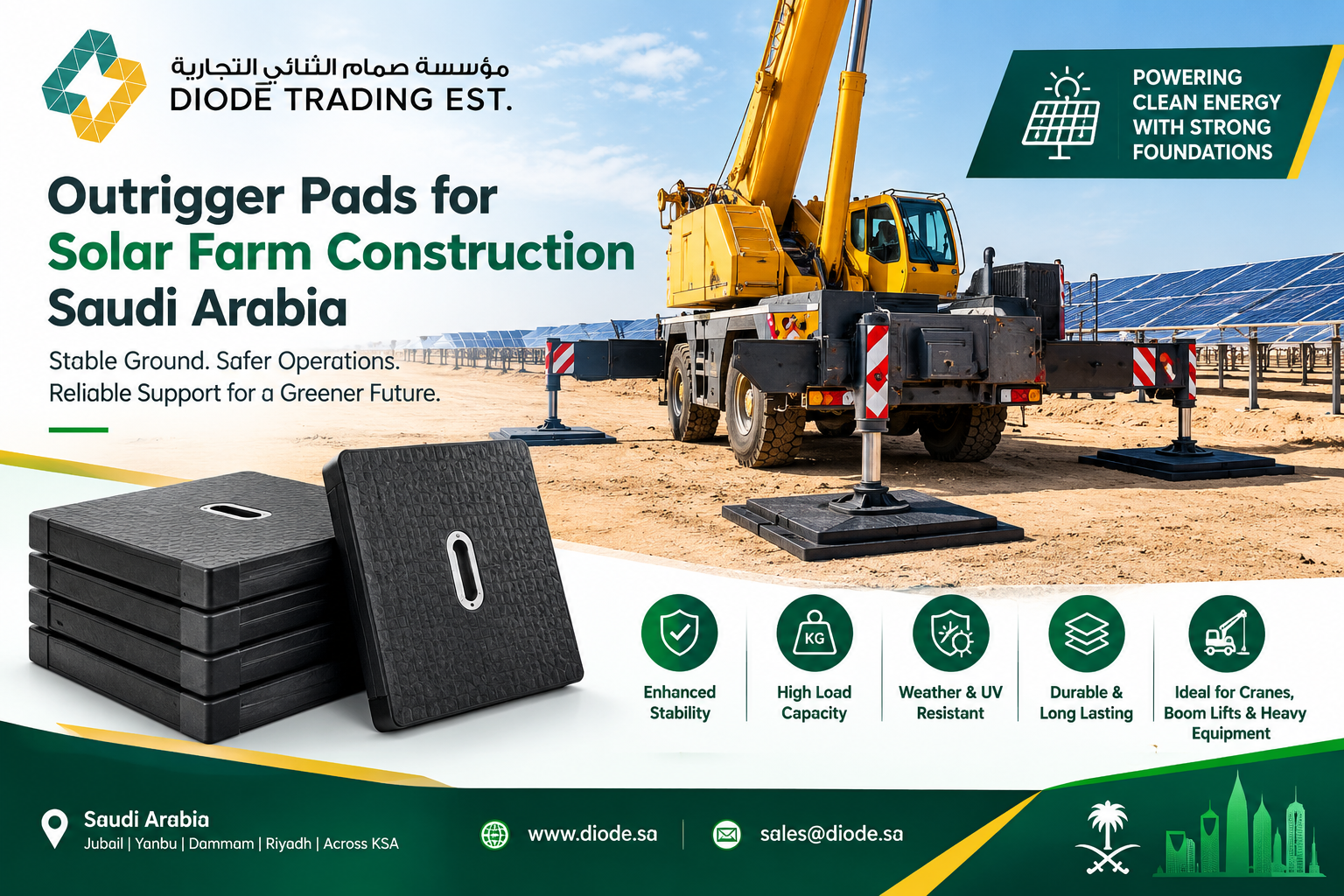
Outrigger pads solar farm Saudi Arabia contractors specify need to keep pace with a build schedule that moves methodically across open desert, as cranes and pile-driving equipment progress row by row through thousands of panel foundations across the array, often over a build period lasting many months.
Utility-scale solar construction differs from most other crane work because the same piece of ground protection equipment may need to be relocated hundreds of times over the life of a single project, moving forward as pile-driving rigs and mobile cranes progress across the site. Desert ground can also vary meaningfully within a single solar farm footprint, with looser sand pockets sitting between areas of naturally compacted aggregate, so a pad that performs well in one section may need reassessment a few hundred metres away.
Because outrigger pads solar farm Saudi Arabia contractors deploy are relocated so frequently, many projects standardize on one or two pad sizes across the whole site rather than sizing individually for each foundation position, provided the ground bearing pressure has been checked to allow it. Running a quick check with the outrigger pad size calculator against the heaviest equipment on site, using the loosest ground condition found during the site survey, gives a single conservative pad size that works safely across most of the array.
UHMWPE pads tend to outperform timber alternatives on solar farm projects because they hold up better to the sheer number of relocation cycles involved, without splitting or degrading under repeated UV exposure across a multi-month build. Their lighter weight compared to steel matting also matters when crews are repositioning pads by hand or with a small support vehicle dozens of times a day.
Solar farm programs typically need far more total pad inventory than a conventional construction site, simply because so many positions are active at once across a large array. Sourcing the outrigger pads solar farm Saudi Arabia programs need from a supplier who can deliver in the volumes a giga-watt-scale project requires, and who can confirm load ratings consistent with general crane safety guidance from OSHA’s crane and derrick standards, helps procurement teams avoid delays once construction is underway.
Because a solar farm build progresses in a fairly predictable direction across the site, many contractors plan a rolling pad rotation that follows the piling and cranage crews rather than purchasing enough pads to cover the entire array at once. This reduces total capital tied up in ground protection equipment while still keeping enough pads ahead of the working crews to avoid schedule delays, and it also cuts down on the transport cost of moving unused inventory back and forth across a large site.
Keeping a simple shared record of outrigger pads solar farm Saudi Arabia teams have already deployed, along with the ground condition each pad size was approved for, is one of the easiest ways to avoid repeat mistakes across a long build.
Large solar farms often have several civil and electrical subcontractors working different sections of the same site at once, so it helps to document which pad size and material was approved for which ground condition early in the program. Sharing this reference across all contractors mobilizing on site reduces the chance that one crew under-specifies ground protection simply because they were not aware of the geotechnical findings from an earlier phase of the same project.
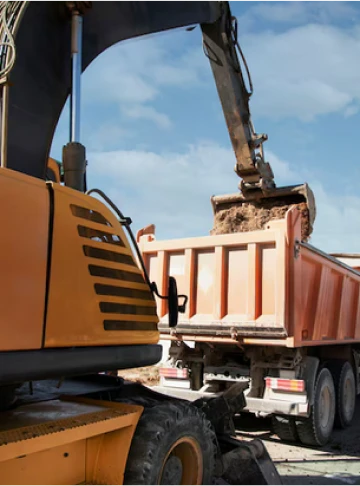
See our range of high-visibility safety mats and markers designed to reduce trip hazards across your site.
 12 September, 2026 | Admin
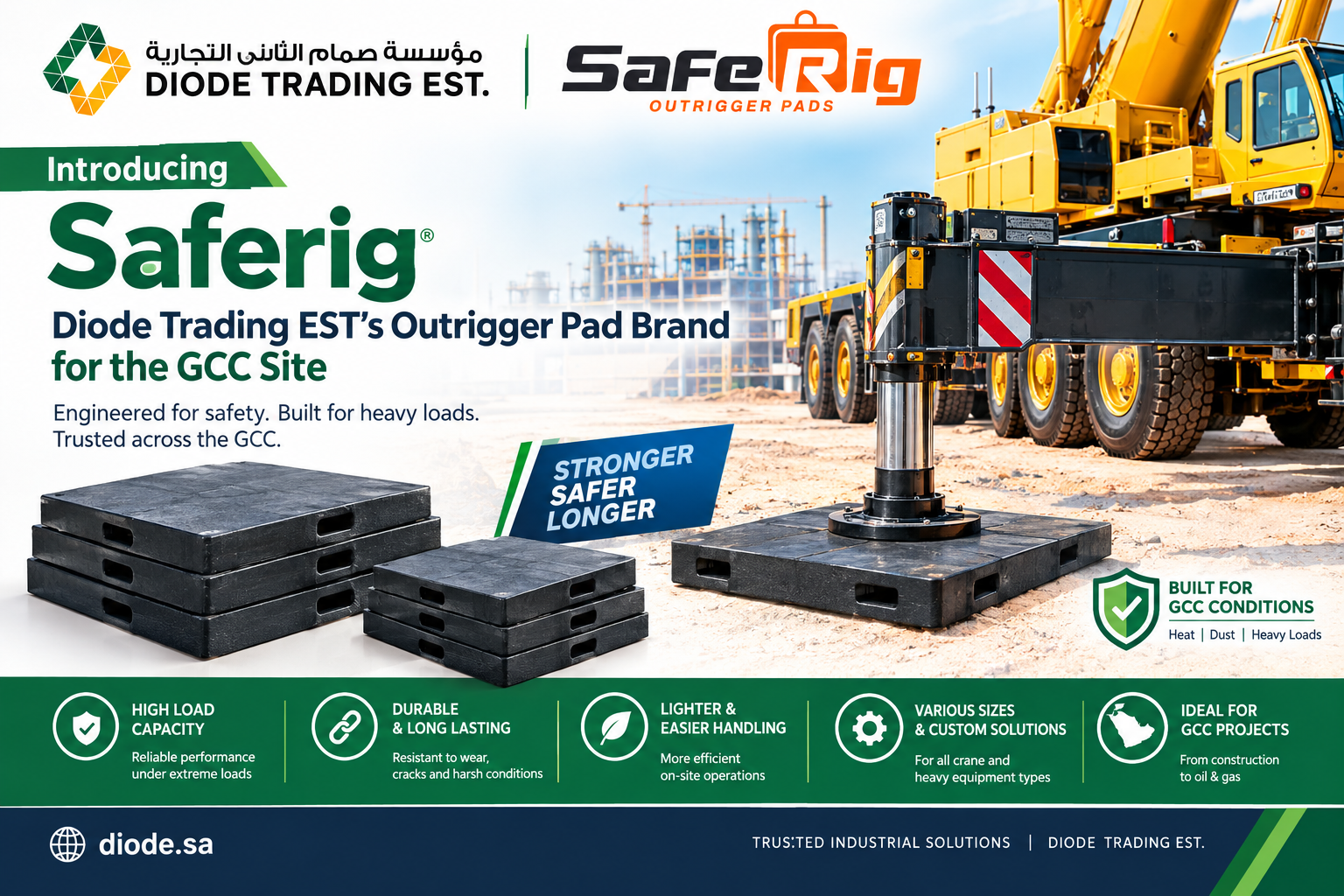
Saferig is Diode Trading EST's outrigger pad
Read more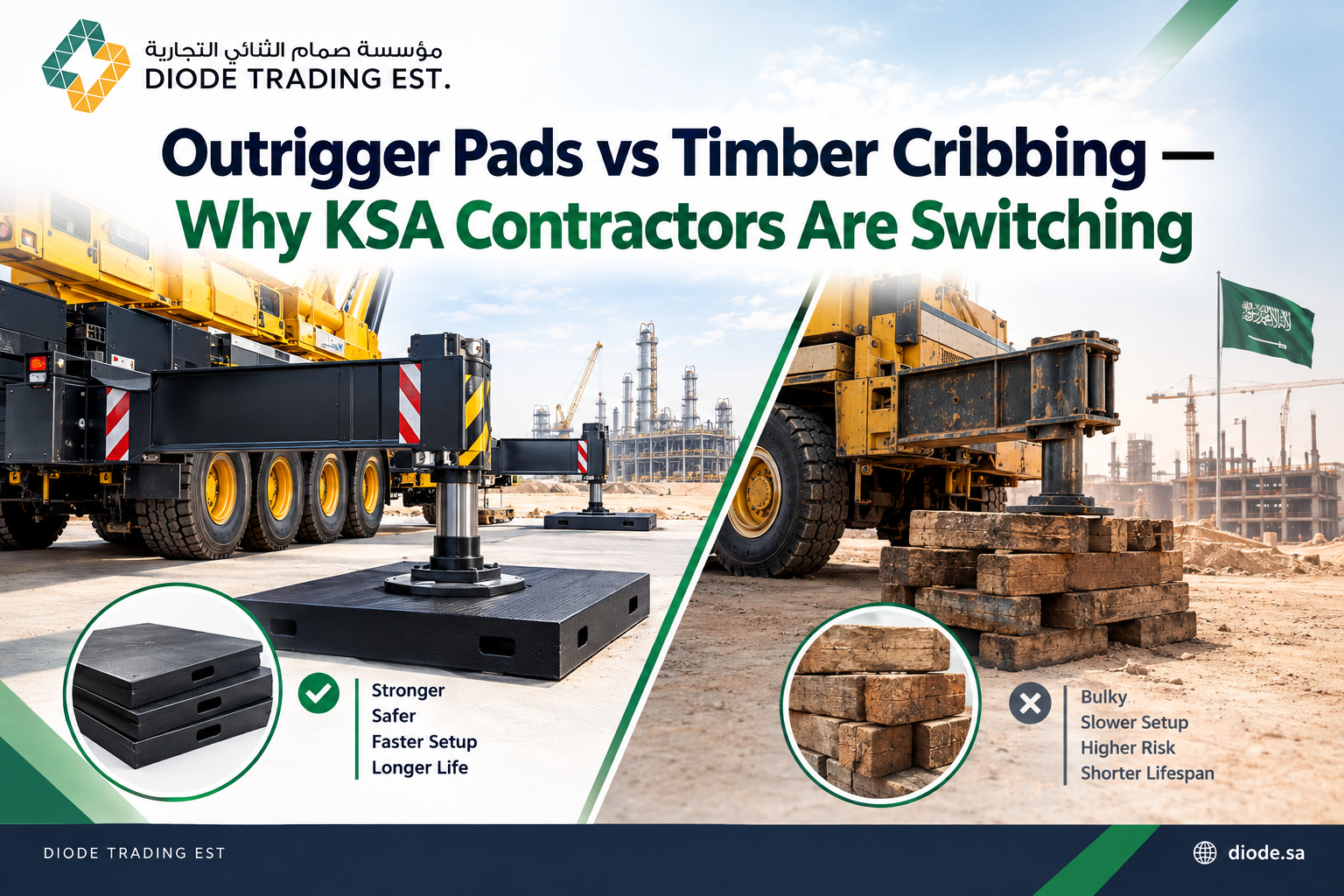 12 September, 2026 | Admin
Timber cribbing was the default for decades.
Read more