Outrigger Pads for NEOM & Giga-Project Sites
 10 September, 2026 |
  Admin
Admin
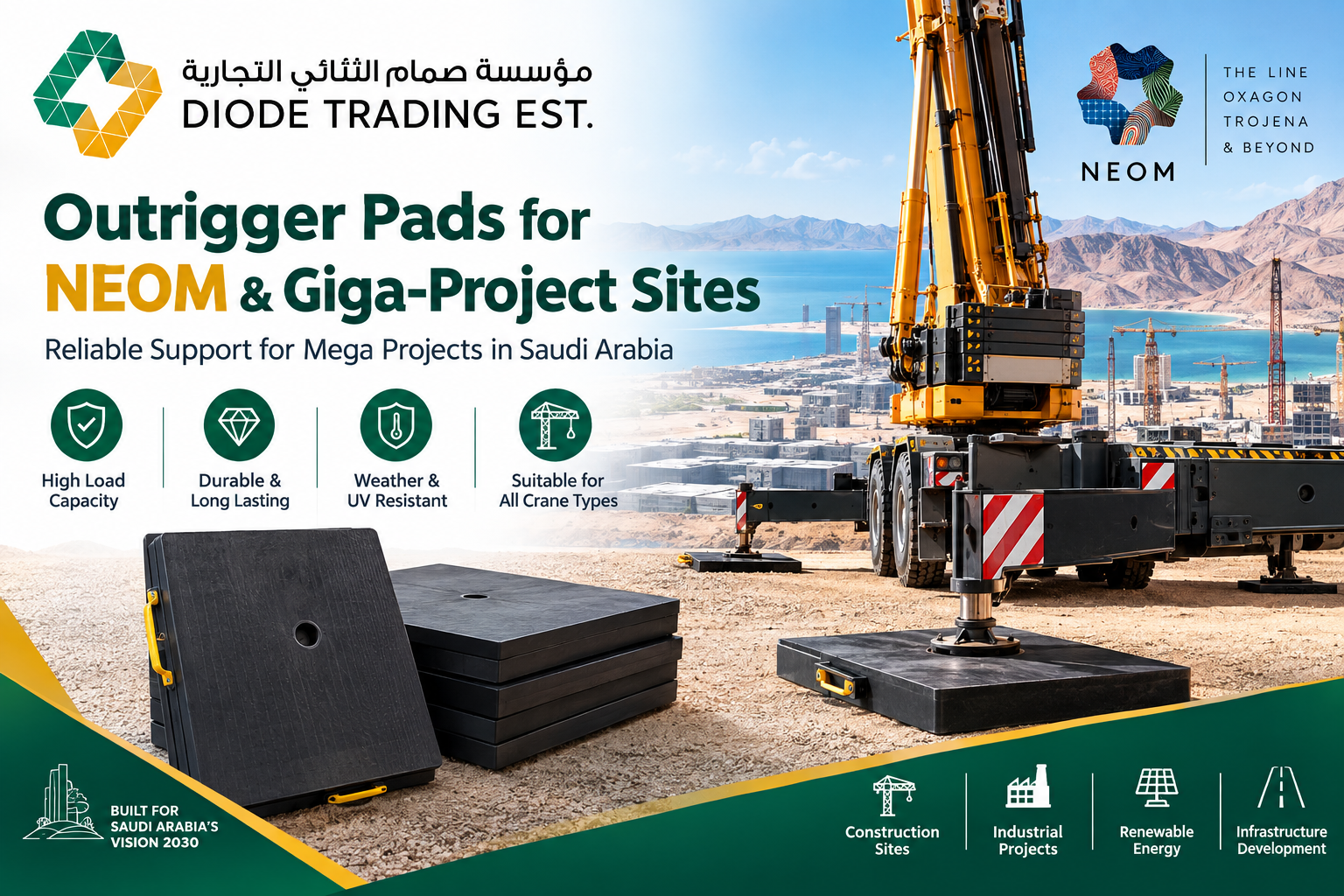
Outrigger pads NEOM contractors specify need to handle some of the most varied ground conditions found on any single construction program in the world. Vision 2030’s giga-projects run some of the most demanding construction schedules Saudi Arabia has seen, with lifting equipment operating around the clock across sites spanning coastal reclamation zones, open desert, and mountainous terrain.
Why NEOM’s Terrain Makes Pad Selection Difficult
A single giga-project contract can involve crane lifts on reclaimed coastal land near the Red Sea, compacted desert plains further inland, and steep mountain grading work around developments such as Trojena. Each of these ground types bears load very differently, so a pad size and material that performs well on compacted desert sand may be undersized on soft reclaimed fill. Contractors sourcing outrigger pads NEOM sites require should plan for multiple pad specifications rather than a single standard size across the whole project.Ground Conditions Across NEOM Zones
Coastal and reclaimed areas typically have the lowest bearing capacity and often need the largest pad footprint or additional matting underneath the pad itself. Desert interior sites with compacted aggregate generally allow smaller pads for the same load, though wind-blown sand can mask soft pockets that only a site-specific ground assessment will catch. Mountain and hillside zones introduce uneven, sloped surfaces where pad thickness and rigidity matter as much as footprint area, since an uneven bearing surface concentrates load onto pad edges rather than spreading it evenly.What We’d Recommend for Giga-Project Procurement
- Standing supply arrangements rather than one-off orders, so pads are already on site or in-region when a new work zone opens
- Confirm documentation requirements early, including material certification and load test data that giga-project main contractors typically request before mobilization
- Plan for varied ground conditions across zones, and budget for at least two or three different pad sizes rather than a single specification
- Build in lead time for custom sizing, since standard catalogue sizes do not always match the outrigger footprint of specialized heavy-lift cranes used on giga-project schedules
Choosing Pad Material for Mixed Terrain
UHMWPE panels are generally the better choice for desert and hardstanding areas because of their rigidity, chemical resistance, and long service life under repeated heavy loads. Rubber composite pads can offer more surface grip on uneven or sloped ground, which is useful on the mountainous sections of a giga-project site. Using the outrigger pad size calculator for each ground type helps confirm that the pad footprint selected actually matches the crane’s load chart and the site’s bearing pressure, rather than relying on a single generic size across every zone.Planning Ahead for Multi-Phase Delivery
Giga-projects are typically delivered in phases over several years, which means outrigger pad requirements will shift as work moves from early earthworks into structural, marine, and finishing trades. Reviewing pad needs at the start of each new phase, rather than assuming the previous phase’s sizing still applies, helps avoid last-minute sourcing delays when a new crane or ground condition is introduced partway through the program.Working With a Reliable Supplier
Because giga-project schedules rarely allow for delays, it is worth partnering with a supplier that can maintain regional stock of outrigger pads in Saudi Arabia rather than importing on a per-project basis. Confirming that pads meet recognized load and material testing benchmarks, consistent with general crane safety guidance from bodies such as OSHA’s crane and derrick standards, gives procurement teams a defensible basis for sign-off across multiple contractors and site supervisors working the same giga-project. Whichever combination of pad sizes and materials a project settles on, it helps to document the reasoning behind each choice — ground type, load chart figures, and safety factor used — so that other contractors mobilizing on the same giga-project site can reference the same sizing logic instead of starting from scratch on their own outrigger pads NEOM procurement.FAQ
Related Reading
Recent Posts


High Visibility Reduce Trip Hazards
See our range of high-visibility safety mats and markers designed to reduce trip hazards across your site.
Related Blogs