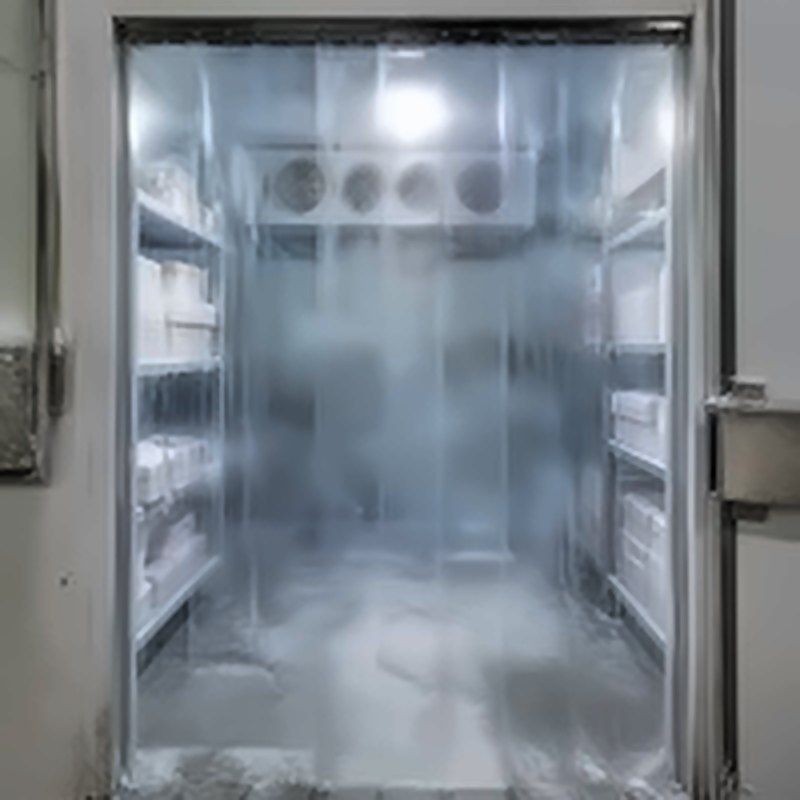
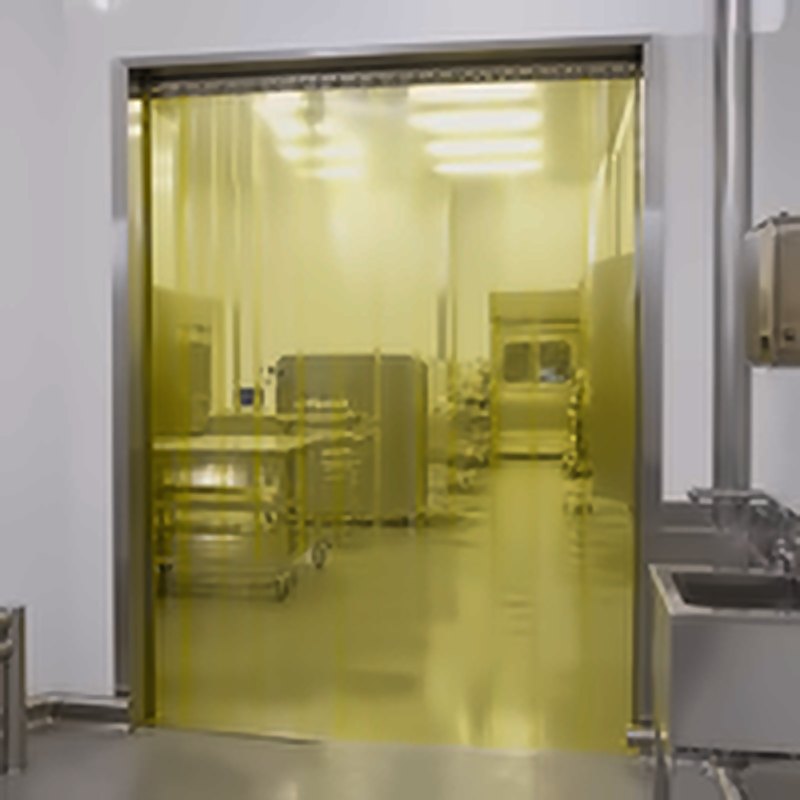
Cold room strip curtains do one job: they keep cold air inside every time the door opens. Without them, warm Saudi air rushes into the room, the compressor works harder and the product near the door warms up. The right curtain is not just a thick strip of PVC. It has to be a low-temperature polar grade that stays flexible when the air is below zero.
This guide explains how polar PVC differs from standard strips, which sizes and overlap suit chillers and freezers, and the mistakes that cause curtains to crack or fail early.
Free engineering tools
Plastic weight calculator — Work out the weight of Cold Room Strip Curtains sheets, rods and tubes in kg
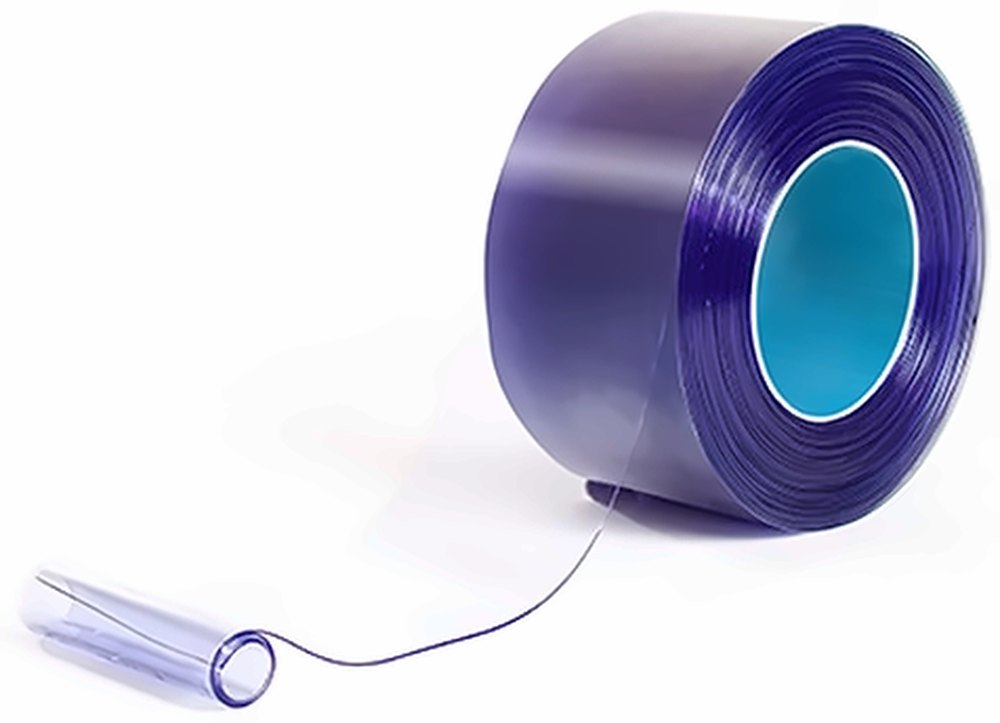
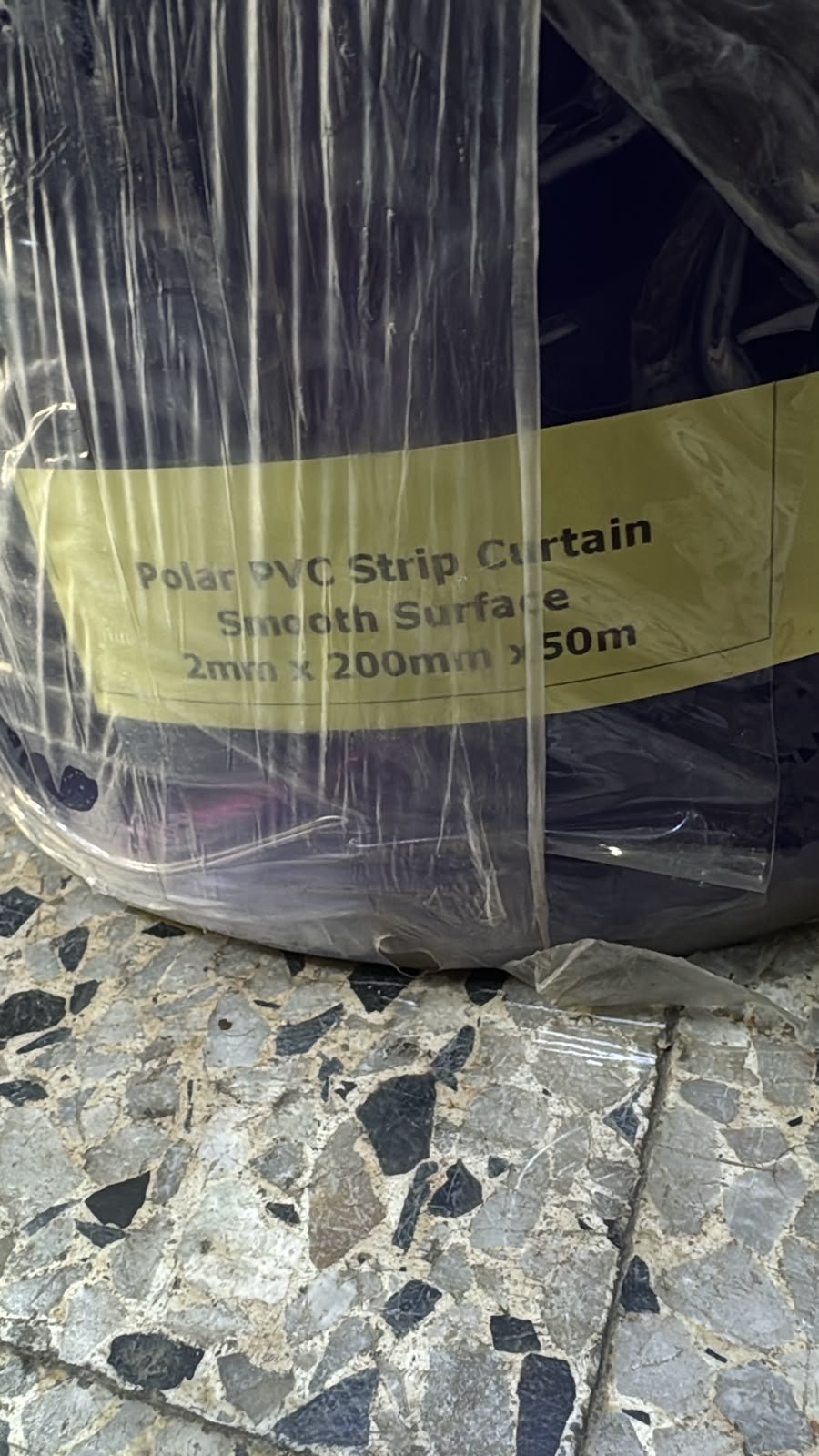
Standard PVC contains plasticiser that keeps it soft at room temperature. As the temperature falls, the strip stiffens, loses its spring and eventually cracks at the bends. A polar grade uses a formulation that stays flexible in sub-zero conditions, so the strips still swing back into place after every pass.
Polar strips are usually clear or lightly tinted so that forklift drivers and staff can see through them. Typical polar grades work down to about -25 °C. If your freezer runs colder, tell us your real operating temperature so the grade can be matched.
Recommended size and overlap
Cold-room doors normally use wider, thicker strips than ordinary doors. Typical choices are 300 x 3 mm or 400 x 4 mm. Overlap matters more than thickness: for chillers and freezers, an overlap of about 50 percent leaves no straight gap for air to move through.
Typical applications include chillers and cold rooms, blast freezers, dairy and food-processing stores, refrigerated loading bays and refrigerated trucks and reefers. Each one has the same need: let people and trolleys through quickly, then seal again.
Installation points that protect performance
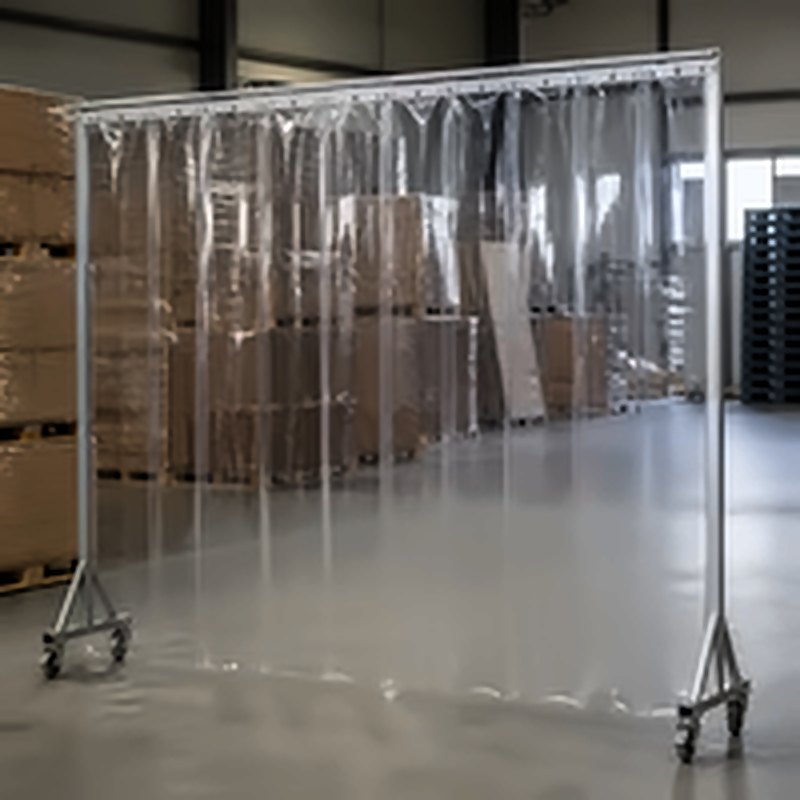
Hang the rail close to the door frame so the strips cover the full opening. Keep the strips about 10 to 20 mm above the floor so they do not drag or freeze to it. Fit the rail with clamps or hooks that allow single strips to be replaced without removing the whole curtain.
Avoid mixing different grades in one curtain. A single standard strip in a polar curtain will be the first one to crack and creates a gap in the seal.
Cold room strip curtains: mistakes to avoid
The most common mistake is buying a thicker standard strip instead of a polar grade. The second is too little overlap, which wastes the energy saving. The third is ignoring condensation and ice at the floor: if the floor is wet, the strips can freeze to it, so keep the clearance.
Check strips every few months. Replace any that are cracked, yellowed or deformed, because one damaged strip can undo most of the benefit.
Maintenance and replacement
Wipe polar strips with a mild detergent and a soft cloth to remove dust and condensation, and never use sharp tools to remove ice. Inspect the curtain every month for cracks, torn edges or strips that no longer spring back. Because strips hang individually, a damaged one can be replaced in minutes without taking down the whole curtain, which keeps downtime in the cold room to a minimum.
Frequently asked questions
What temperature can polar strip curtains handle?
Typical polar grades work down to about -25 °C. Confirm your actual operating temperature when you request a quote.
How much do cold room curtains save?
They reduce the amount of cold air lost each time the door opens, which lowers energy use. The actual saving depends on how often the door opens and how well the curtain overlaps.
Can forklifts drive through them?
Yes. Clear polar strips let drivers see through, and a ribbed surface adds protection against impact.
This guide on cold room strip curtains is a starting point. For more help with cold room strip curtains, send us your door size, temperature and traffic and we will recommend the right specification. Background reading: strip curtains on Wikipedia.




 10 November, 2026 |
 Admin