

 30 October, 2026 |
 Admin
Synthetic Turf in Saudi Arabia
Short answer: Synthetic t
Read more
Enquire Now
 30 October, 2026 | Admin
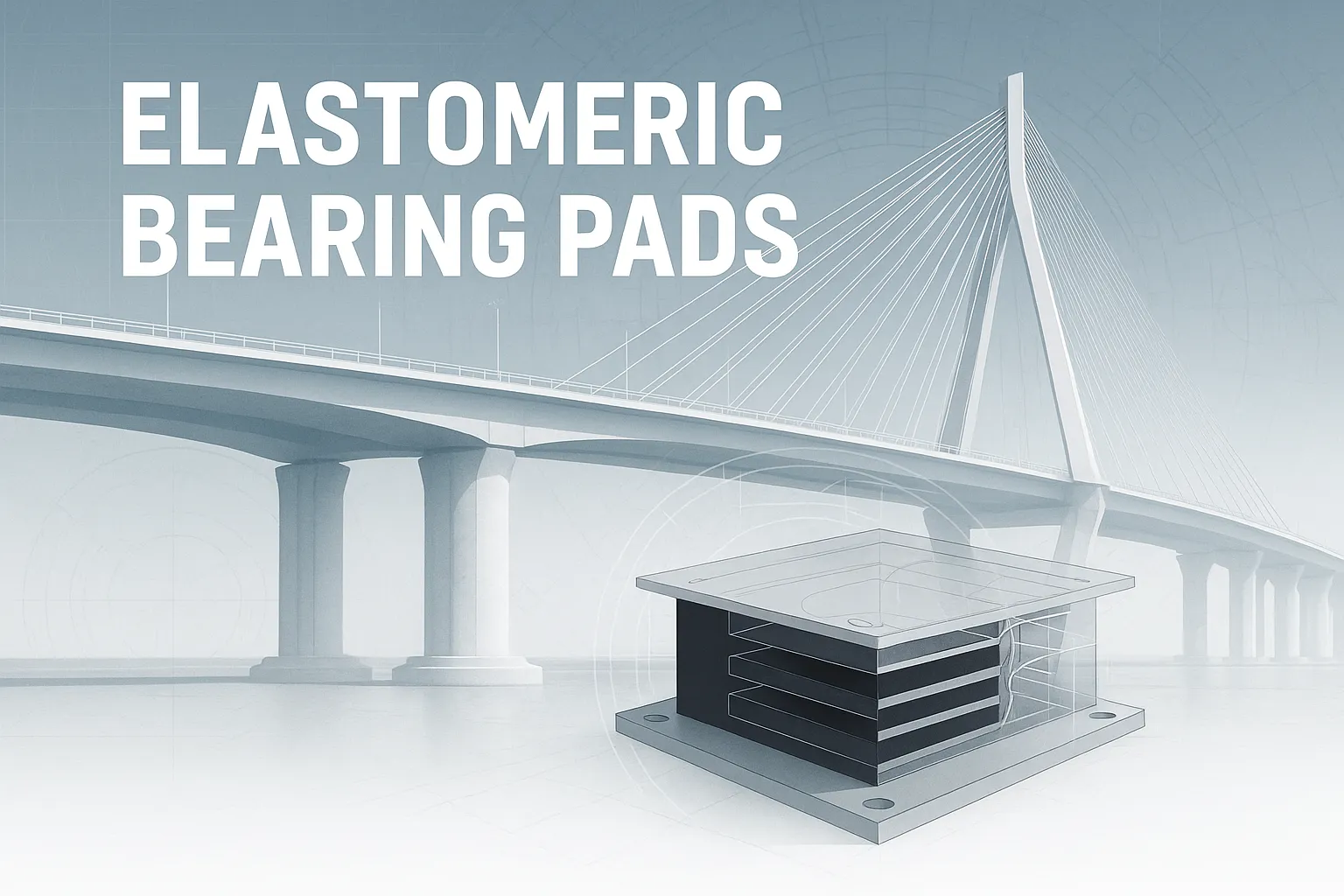
Short answer: Elastomeric bearing pads (often
neoprene) sit between a bridge girder or building beam and its support.
They carry vertical load while allowing small movements and rotations
from temperature, traffic and shrinkage. Pads are plain (rubber only) or
steel-laminated (layers of steel and rubber). The type and size are set
by the structural design and the governing standard.
Structures expand and contract with temperature, and girders rotate
slightly under load. If a beam is rigidly seated on concrete, these
movements crack the supports. A pad of elastomer deforms in shear to
absorb horizontal movement and in compression to carry the load,
spreading it evenly onto the support. The pad also isolates some
vibration.
Free engineering tools
Neoprene (chloroprene) is widely used for bridge bearings because of
its weather, ozone and ageing resistance, and natural rubber is also
used in some specifications. The material, hardness and test
requirements come from the governing standard and project specification,
so supply to those.
The bridge engineer designs the pad, and the supplier manufactures to
the approved drawing and standard.
Elastomeric bearings are usually tested for hardness, tensile
strength, adhesion between steel and rubber, and compression behaviour.
Ask what tests the project requires and request the documents. Diode
Trading EST ships every order with a Material Test Certificate; if the
project needs further test evidence, tell us in advance.
Place pads on a clean, level bearing seat, centred under the girder.
Protect them from oil, grease and weld spatter. Check for uneven bulging
or splitting during inspection.
Bearing pads are inspected as part of routine bridge inspection.
Signs of trouble include excessive bulging, splits at the edges, pad
walking out from under the girder and delamination of rubber from steel
plates. Damaged pads are replaced under the engineer’s direction, which
usually needs jacking the structure. Keep records of the pad type and
size so replacements match the design.
Store pads flat, clean and covered, away from sunlight, oils and
heat. Do not stack heavy items on them, and keep them in their packing
until installation.
Send the approved bearing drawing or schedule, the plan size, the
number of rubber layers and steel plates, the total height, the quantity
and the standard that governs the project. If you are replacing a
bearing, send the dimensions of the old pad and the girder details.
What are neoprene bearing pads used for? Supporting
bridge girders and beams while allowing small movements.
What is a steel-laminated pad? A pad with steel
plates between rubber layers for higher loads.
Who designs the pad? The structural or bridge
engineer, to the project standard.
Do pads need maintenance? Inspect them periodically
for bulging, splits and displacement.
Related: PTFE Bridge Bearing Slide Plates ·
Rubber Sheets Guide · Neoprene Rubber Sheet
See our range of high-visibility safety mats and markers designed to reduce trip hazards across your site.



Diode Trading EST supplies these Rubber Sheets, Gaskets & Seals from stock in Dammam, with delivery across Saudi Arabia and the GCC.