 30 October, 2026 |
 Admin
Synthetic Turf in Saudi Arabia
Short answer: Synthetic t
Read more
Enquire Now
 30 October, 2026 | Admin
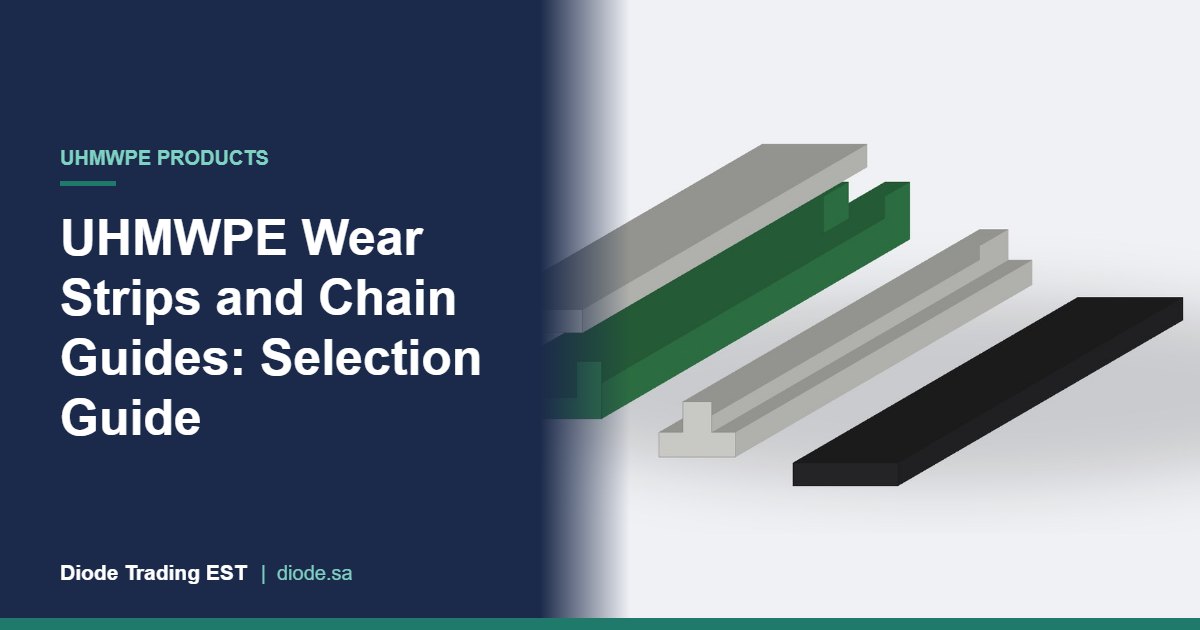
Short answer: A chain guide is a rail or strip that
supports and directs a conveyor or drive chain. Plastic guides, usually
made of UHMWPE, give low friction, quiet running and long wear life, and
they protect the chain and sprockets. Choose the guide profile and
material by chain size, speed, load and whether the area is dry, wet or
dusty.
A chain runs along a path, and without support it sags, whips and
wears. A guide rail keeps the chain on its track, limits side movement,
takes the weight of the chain and its load, and reduces wear on both
chain and structure. Metal rails wear quickly and make noise. Plastic
rails are kind to the chain, cheap to replace and need little or no
lubrication.
Free engineering tools
UHMWPE has a slippery surface, excellent abrasion resistance and good
impact strength, so it can slide against steel chain with little wear.
It does not corrode, and it dampens noise and vibration. It also resists
many chemicals and cleaning agents, which suits food and beverage lines.
Other materials such as nylon, POM or filled grades are also used for
certain loads or speeds. See UHMWPE guide and nylon guide.
Guides are made as flat strips, angles, channels and profiled rails
shaped to a specific chain type. Choose a profile that matches the chain
pitch and width and the structure that holds the guide. If you are
replacing an existing guide, the easiest way to match it is to send a
sample or a drawing with the cross-section.
Deep grooves where the chain runs, a thin remaining profile, melted
or glazed surfaces from overheating, or a chain that starts to jump or
whip are signs of wear. Replace worn guides before they damage the
chain, which is much more costly.
Can profiles be cut to my drawing? Are lubricated or anti-static
grades available? What lengths are in stock? Can parts be machined with
holes and countersinks? Is the grade suitable for food lines?
Diode Trading EST supplies UHMWPE and engineering plastic products
across Saudi Arabia, and every order ships with a Material Test
Certificate. request a quote
What material are chain guides made of? Most often
UHMWPE, but nylon, POM and filled grades are also used.
Do plastic chain guides need lubrication? Usually
not, although some lines use water or light lubrication.
How long do chain guides last? It depends on speed,
load and cleanliness. Inspect them regularly.
Can you make custom profiles? Send a drawing or
sample and we will review.
Related: UHMWPE Sheets and Rods · PTFE Wear Strips · Nylon Guide

See our range of high-visibility safety mats and markers designed to reduce trip hazards across your site.
Diode Trading EST supplies these Engineering Plastics from stock in Dammam, with delivery across Saudi Arabia and the GCC.