Choosing between a straight, grooved and pin channel chain guide changes how long the guide lasts and how smoothly the chain runs. This article compares the three UHMWPE profiles, shows where each one works best and helps you pick a size from the standard range held by Diode Trading EST in Dammam.
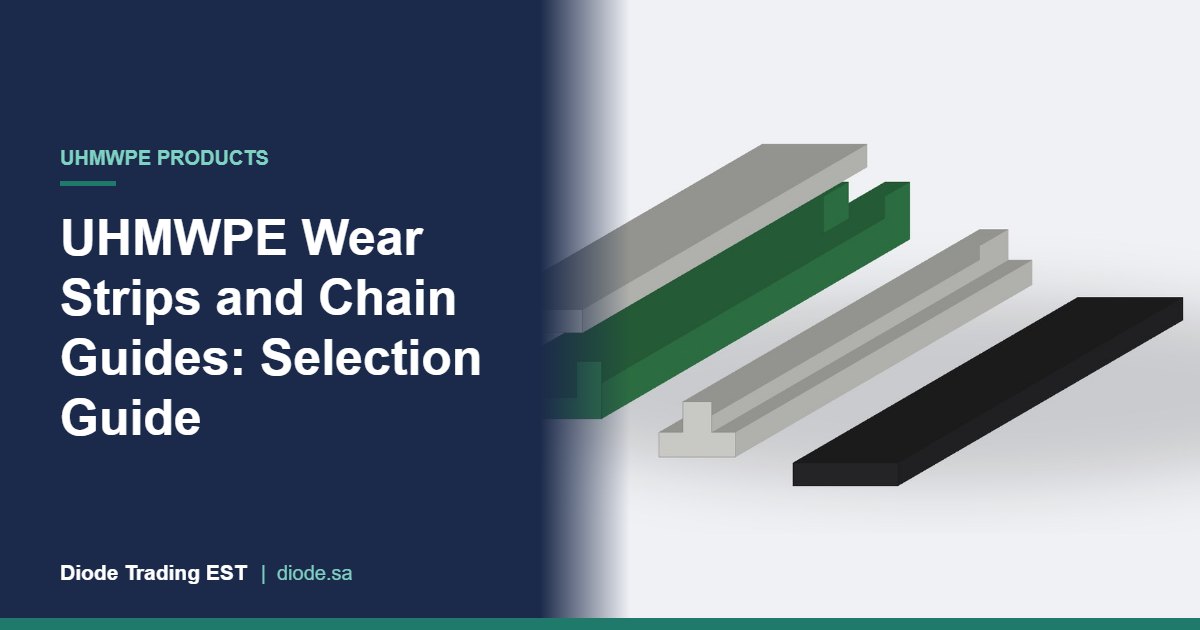
The straight profile is a plain bar with a flat or lightly stepped top where the chain slides. It is the simplest and cheapest shape. It works well for light and medium duty chains, for short runs and for places where the chain is fully supported along its length. Because the surface is open, dirt can fall away easily, which helps in dusty plants. The downside is that the chain can move sideways, so the guide needs side support from the frame or from a second guide.
The grooved profile
A grooved profile has a channel cut along the top. The chain, or the rollers of the chain, sits inside that channel and cannot wander. This is the standard choice for conveyors where the chain must stay in line, for example on long horizontal runs or where the chain carries product. The channel width has to match the chain, which is why the size tables list the channel width by chain size. A groove that is too tight makes the chain bind, and one that is too wide lets it move and wear the wall.
The pin channel profile
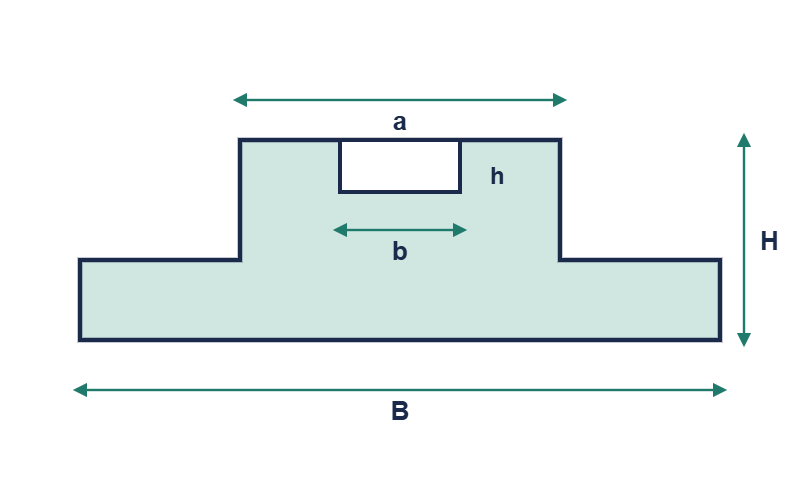
The pin channel profile has a different shape from the other two. Instead of an open groove, it has a round bore running along the guide, with a narrow slot cut along the top. The round section holds a round part, such as a pin or a cylindrical chain element, and the slot lets the connecting part pass through. In the size tables these profiles are listed under the pin series, with the bore diameter and the slot width given as separate dimensions on the drawing. Because the bore must match the part that runs in it, you cannot swap a pin channel guide for a grooved one. Read the diameters on the drawing and compare them with your chain or your moving part before you order. If you are unsure, send us a sketch or a photo and we will check it against the table.
How the three compare
Profile
Best for
Watch out for
Straight
Light and medium chains, short runs, dusty areas
Chain can move sideways
Grooved
Long runs, chains that must stay in line
Channel width must match the chain
Pin channel
Round pins or cylindrical elements running in a bore
Bore and slot sizes must match the part
Other things that affect the choice
Load and speed. Heavy loads and higher speeds need a wider bearing surface and a firmly supported guide.
Environment. Heat, wash down and dust all matter. UHMWPE resists water and many chemicals, and its properties are described in the UHMWPE article on Wikipedia.
Mounting. You can bolt the guide to the frame or use a C-profile rail, explained in our C-profile chain guide article.
All three profiles wear slowly, because UHMWPE has a very low coefficient of friction and high abrasion resistance. Even so, a guide should be inspected on a regular schedule. Look for a shiny, polished running surface, which is normal. Look also for a groove that is getting deeper, a rounded wall edge, melted or smeared plastic that points to heat from a dry or misaligned chain, and cracks around the fixing holes. Replace the guide before the chain begins to touch the frame, because steel on steel is far more costly to repair than a plastic strip.
A simple way to decide
Is it a plain roller chain? Choose straight or grooved.
Must the chain stay in line without help from the frame? Choose grooved.
Does your design use a round pin or bar running in a bore with a slot? Choose pin channel and match the bore diameter.
Will you replace the guide often? Choose a C-profile version of the profile.
Tell us the chain number, the profile you want and the length. We confirm the size against the table and supply from stock in Dammam, with a material test certificate with every order.



 17 November, 2026 |
 Admin