UHMWPE belt guides keep flat, V and round belts running straight and cut down the wear on the belt and the frame. This article explains how each belt type is guided, which dimensions to check and how to pick a size from the standard range that Diode Trading EST holds in Dammam.
A belt that drifts sideways rubs on the frame, frays at the edge and wastes power. A guide made of UHMWPE gives the belt a smooth, low friction surface to ride on or against. The plastic does not corrode, does not need oil and is gentler on the belt than steel, so it suits food lines, packaging lines and general conveyors alike.
Free engineering tools
Plastic weight calculator — Work out the weight of UHMWPE Belt Guides for Flat, V and Round Belts sheets, rods and tubes in kg
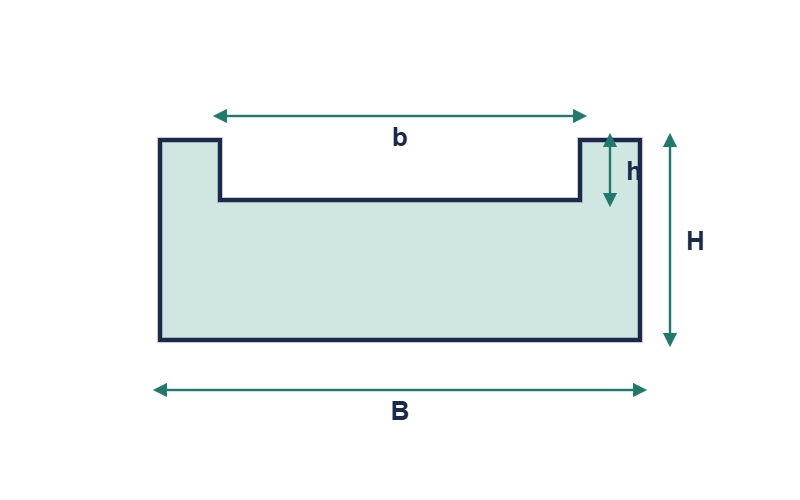
A flat belt guide is a bar with a shallow channel. The belt sits in the channel and the side walls stop it moving sideways. The key rule is simple: the channel width should be about the belt width plus 1 mm. Too tight and the belt binds. Too loose and the belt wanders and wears its edge on the wall. In the size table the channel width is the b dimension, and the table lists standard sizes from narrow belts upward, so you can read across to find the closest match. Where the height value is shown as a dash in the table, that size has no set height and you should check the drawing.
V belt guides
A V belt has a trapezoid section, so the guide has a V shaped groove that supports both sloping sides. The belt sections are named by letter, and the groove must be sized for the top width of the section. The common section widths are:
V belt section
Top width (mm)
Z (10)
10
A (13)
13
B (17)
17
C (22)
22
D (32)
32
E (40)
40
Check the section letter printed on the belt, then pick the guide whose groove matches it. A groove that is too narrow pinches the belt and heats it up. A groove that is too wide lets it tilt. For more on how V belts are built and rated, see the V-belt article on Wikipedia.
Round belt guides
Round belts, usually polyurethane, run in a half round groove. The groove diameter should be a little larger than the belt diameter so the belt can turn slightly without gripping. These guides are common on light conveyors and on small transfer sections where a round belt carries a product between two pulleys. The size table lists each groove by belt diameter, and the C-profile version adds a mounting rail on the back.
Mounting: bolted or C-profile
All three belt types come in two versions. The plain guide is fixed with screws through the body. The C-profile version has a rail on the back that slides onto a bracket, so it can be fitted and replaced without drilling. Our C-profile guide article explains how the rail works and when it pays off.
How to choose the size
Identify the belt type: flat, V or round.
Measure the belt width, the V section letter or the round belt diameter.
Pick the guide whose channel or groove matches that figure with a small running clearance.
Decide whether you want a bolted or C-profile mount.
Confirm the length and quantity.
The complete list of flat, V and round belt guide sizes is in the chain guide size tables, with a drawing for each type. You can also download the full catalogue from the product page.
Care and replacement
Keep the guide free of dirt and product build up, because grit scores the surface and the belt. Check the channel for wear every few months and replace a guide when the edge is rounded or grooved. UHMWPE is a tough, wear resistant plastic, and the wear strips and guide guidance in our wear strips and chain guides selection guide will help you plan replacement intervals.
Order from stock in Dammam
Send us the belt type and size, the mounting style and the length. Every order comes with a material test certificate, and the standard range is held in stock in Dammam. Start from the UHMWPE chain guides page.





 17 November, 2026 |
 Admin