

 30 October, 2026 |
 Admin
Synthetic Turf in Saudi Arabia
Short answer: Synthetic t
Read more
Enquire Now
 30 October, 2026 | Admin
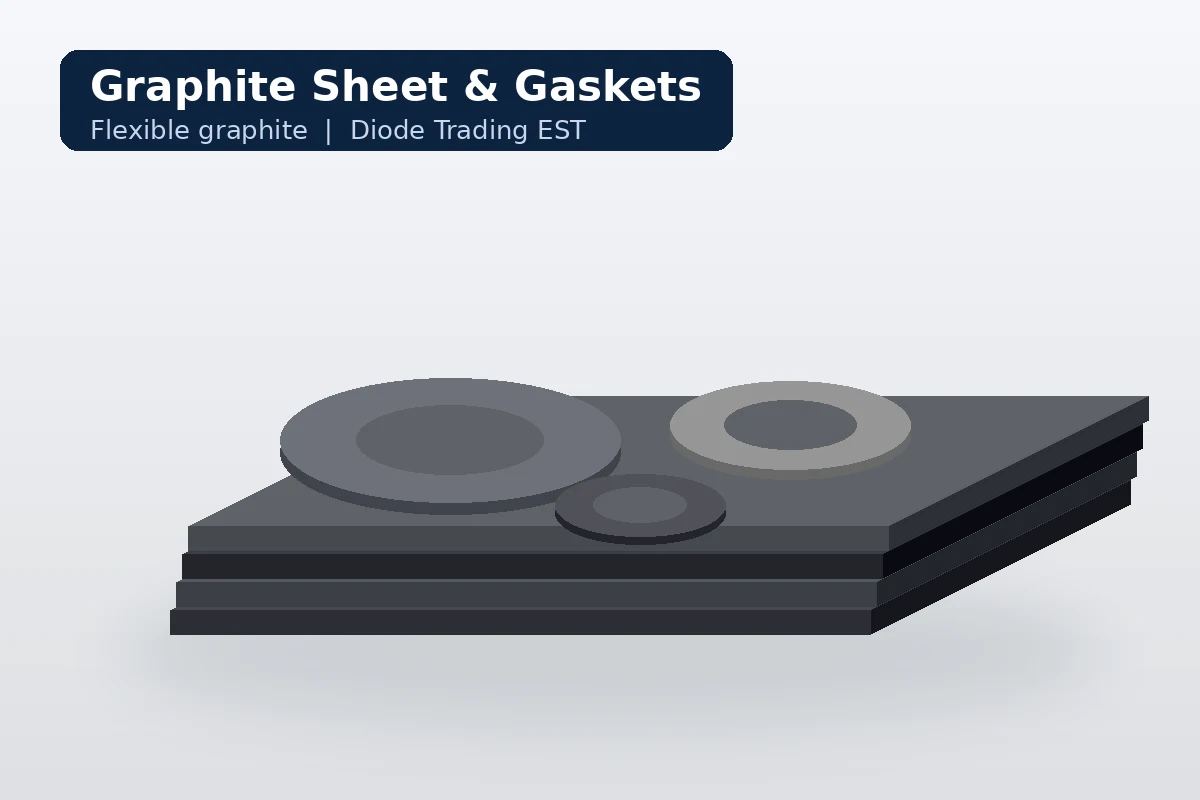
Short answer: Graphite sheet gaskets are made from
flexible expanded graphite. They seal well at high temperatures, resist
most chemicals and recover well, so they are used in steam, heat
transfer fluid and process piping. They are chosen when rubber or fibre
gaskets cannot take the heat. Reinforced types (with metal) give better
handling and blow-out resistance.
Flexible graphite sheet is soft and conformable, so it fills small
flange imperfections. It stays stable at high temperatures where rubber
and many plastics fail, and it resists a wide range of chemicals, with
exceptions such as strong oxidising acids. It also does not age or
harden quickly. These properties make it a standard sealing material in
refineries, power plants and chemical plants.
Free engineering tools
| Application | Why graphite |
|---|---|
| Steam lines | Heat stability |
| Heat transfer oil systems | Heat and chemical resistance |
| Refinery and petrochemical flanges | Wide chemical resistance |
| Exhaust and furnace joints | High-temperature sealing |
| Pumps and valves | Good conformability |
Clean the flange faces and check flatness. Centre the gasket without
stretching it. Tighten bolts evenly in a cross pattern in stages to the
specified torque. Graphite is soft, so do not over-tighten, and do not
reuse a compressed gasket.
Is the graphite sheet reinforced, and with what insert? Is it
suitable for steam? What documents are available? Can the gasket be cut
to my flange size? What temperature and pressure limit applies?
Diode Trading EST supplies gasket materials across Saudi Arabia, with
a Material Test Certificate on every order. request a quote
For graphite gaskets, send the flange standard, size and class, the
insert type and the medium. If you only have the old gasket, send it or
a clear photo with a ruler. For sheet, give the size and thickness, and
ask for the datasheet.
Graphite sheet is conductive, so keep offcuts away from electrical
equipment. Store sheets flat, dry and clean, away from heavy loads that
could crack them. Wear gloves when cutting, since graphite dust is
dirty, and avoid inhaling dust.
Look for the temperature range for steam and for non-oxidising
service, the maximum pressure, the carbon purity of the graphite, the
insert type and thickness, and the compression and recovery values.
Carbon purity matters, because impurities such as chlorides can corrode
flanges over time. Ask the supplier for the datasheet for the grade you
are buying.
What are graphite gaskets used for? High-temperature
sealing in steam, heat transfer and process lines.
Are graphite gaskets reusable? No. Replace after
each opening.
Can graphite gaskets be cut to size? Yes, cut to
your flange dimensions.
Do graphite gaskets handle all chemicals? Most, but
not strong oxidisers. Check your medium.
Related: Non-Asbestos Gasket Sheet · PTFE Gasket Types · Gasket Selection Guide

See our range of high-visibility safety mats and markers designed to reduce trip hazards across your site.


Diode Trading EST supplies these Rubber Sheets, Gaskets & Seals from stock in Dammam, with delivery across Saudi Arabia and the GCC.