Outrigger Pads Saudi Arabia — Complete Guide to Types, Standards & Suppliers
 22 October, 2026 |
 Admin
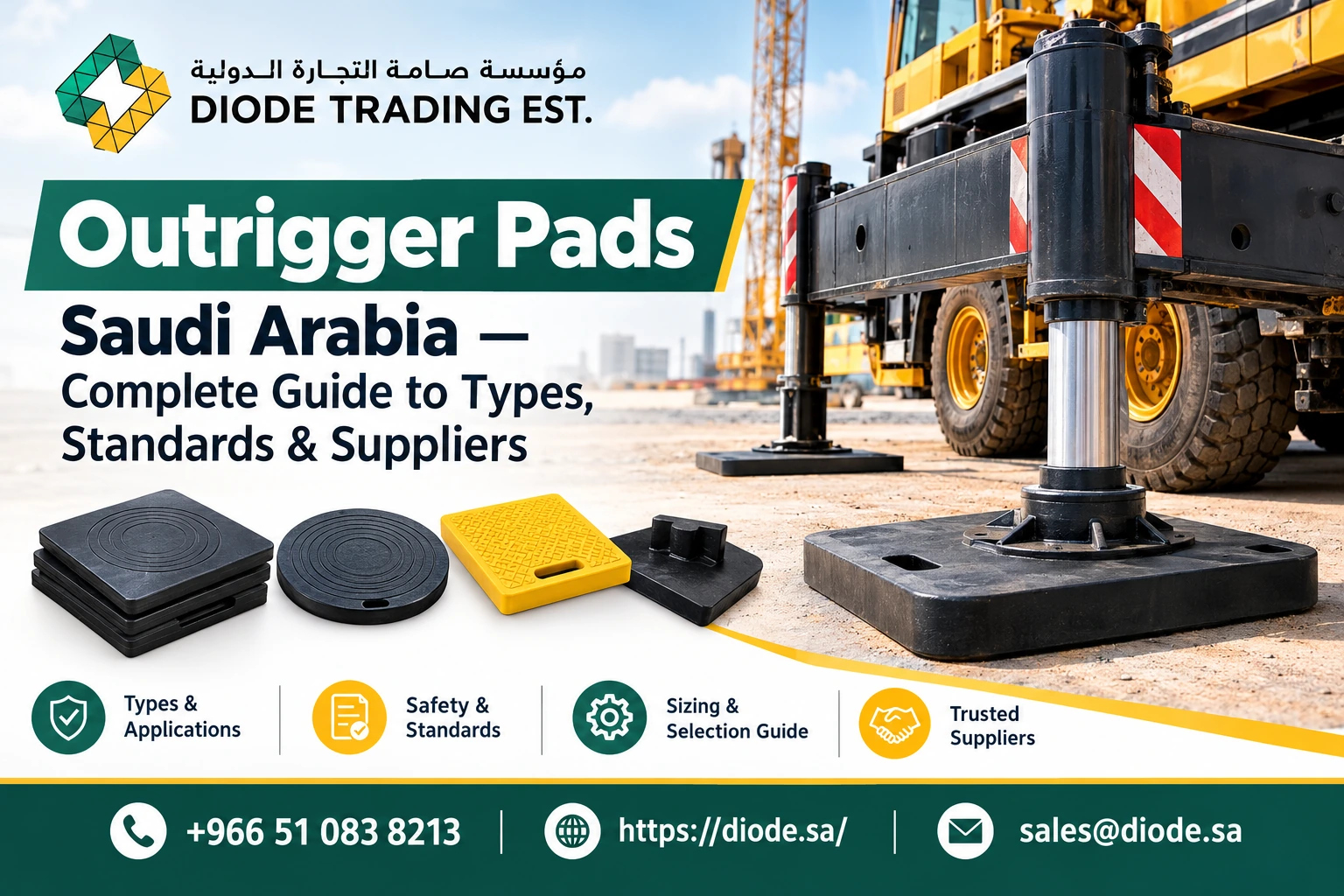
Outrigger Pad Types and Standards: Outrigger pads are one of those products every crane operator and site manager in Saudi Arabia eventually needs, but few buy often enough to become an expert in. This guide covers the basics from the ground up — what they are, why they matter specifically in the Saudi context, the types available, relevant standards, and how to choose a supplier.
What Are Outrigger Pads?
Outrigger pads are load-distribution plates placed under the outriggers or stabilizer legs of mobile cranes, concrete pump trucks, aerial lifts, and similar heavy equipment. They spread the equipment’s concentrated point load across a wider area, keeping ground bearing pressure within safe limits and preventing the equipment from sinking or tipping.
Why Outrigger Pads Matter Especially in Saudi Arabia?
- Ground conditions — large areas of Saudi Arabia’s Eastern Province sit on reclaimed land, sabkha (salt-flat soil), or loose desert sand, all of which have lower bearing capacity than compacted or rock ground
- Climate — summer surface temperatures can exceed 60°C, which affects material performance; not every pad material holds up equally well
- Industrial density — the concentration of oil & gas, petrochemical, and giga-project construction across the Kingdom means heavy lifting is a daily reality on a huge number of active sites
Types of Outrigger Pads Available in the Saudi Market
| Material | Key Traits | Best Fit |
| UHMWPE | Lightweight, heat/chemical resistant, long lifespan | Repeat commercial use, industrial sites, hot climates |
| Rubber | Some flex, moderate cost | Lighter-duty or specific vibration-dampening applications |
| Timber | Low upfront cost, widely available | Short-term or one-off lower-budget jobs |
| Steel | Highest load capacity, heavy | Very heavy point loads, semi-permanent installations |
For a full head-to-head comparison of these materials, see our UHMWPE vs Timber vs Steel guide.
Standards and Documentation to Know
Saudi Aramco’s General Instruction GI 7.028 and SABIC’s own lifting safety procedures both require outrigger pads to have documented load ratings and material traceability — a Material Test Certificate (MTC) tied to the specific batch supplied — verified by the site’s lifting authority before use. Neither certifies specific commercial products in advance; approval happens job-by-job through the site’s lifting authority.
Where Outrigger Pads Are Used Across Saudi Industry?
- Construction and infrastructure — general building, roads, bridges, giga-project sites
- Oil & gas and petrochemical — refinery turnarounds, plant maintenance, pipeline construction
- Ports and marine — cargo handling equipment, dock construction
- Renewable energy — wind turbine installation, solar farm construction, both involving heavy crane work on undeveloped terrain
- Equipment rental — rental fleets supplying pads alongside crane and MEWP hire
How to Choose a Supplier?
1. Confirm they supply Material Test Certificates with every order, not just on request.
2. Check they offer both standard and custom sizing — non-standard equipment or unusual loads need a supplier who can fabricate to spec.
3. Ask about actual dispatch time for standard sizes — same-day availability matters when a job can’t wait.
4. Check delivery coverage if you work across multiple Saudi cities or GCC countries — a single reliable supplier across your whole operating area simplifies procurement significantly.
5. Confirm they’ll size against your specific equipment’s load chart rather than just selling the biggest pad they have in stock.
Explore Further
- How to Choose the Right Outrigger Pad — Complete Buyer’s Guide
- Crane Mat vs Outrigger Pad — What’s the Difference
- UHMWPE vs Timber vs Steel Outrigger Pads — Material Comparison
- Outrigger Pad Sizing Methodology — Complete Technical Guide
- Free Online Sizing Calculator
FAQ
1. What is the difference between outrigger pads and crane pads?
They’re generally the same thing — different suppliers and regions use the terms interchangeably, along with ‘stabilizer pads’ and ‘jack pads.’ All refer to load-distribution plates placed under a crane or equipment outrigger.
2. Are outrigger pads required by law in Saudi Arabia?
Requirements vary by site and contractor rather than a single nationwide law — major operators like Saudi Aramco and SABIC have their own lifting safety procedures (e.g. GI 7.028) that require documented, load-rated ground protection. Confirm specific requirements with your project’s lifting authority.
3. How much do outrigger pads cost in Saudi Arabia?
Cost varies significantly by size, material, and quantity. Contact a supplier directly with your load and quantity requirements for an accurate quote — comparing suppliers on documentation and reliability matters as much as price alone.
Outrigger Pad Types and Standards: Next Steps
For outrigger pad types and standards questions, product data or a quotation, contact Diode Trading EST at sales@diode.sa or browse our product range. Every order ships with a Material Test Certificate, and our quality system is certified to ISO 9001.
Need advice on outrigger pad types and standards? Contact our team at sales@diode.sa for product data and a quotation.
Recent Posts



High Visibility Reduce Trip Hazards
See our range of high-visibility safety mats and markers designed to reduce trip hazards across your site.
Related Blogs