
 23 October, 2026 |
 Admin
Neoprene vs Natural Rubber vs
Choosing the rubber
Bearing pads
Read more
Enquire Now
 23 October, 2026 | Admin

Every bridge girder, precast beam and heavy structural element needs to rest on something. That “something” cannot be rigid. Concrete and steel expand in the Saudi summer, contract on cooler nights, deflect under load and vibrate under traffic. If a structure is bolted hard to its support, those movements turn into cracks and damage.
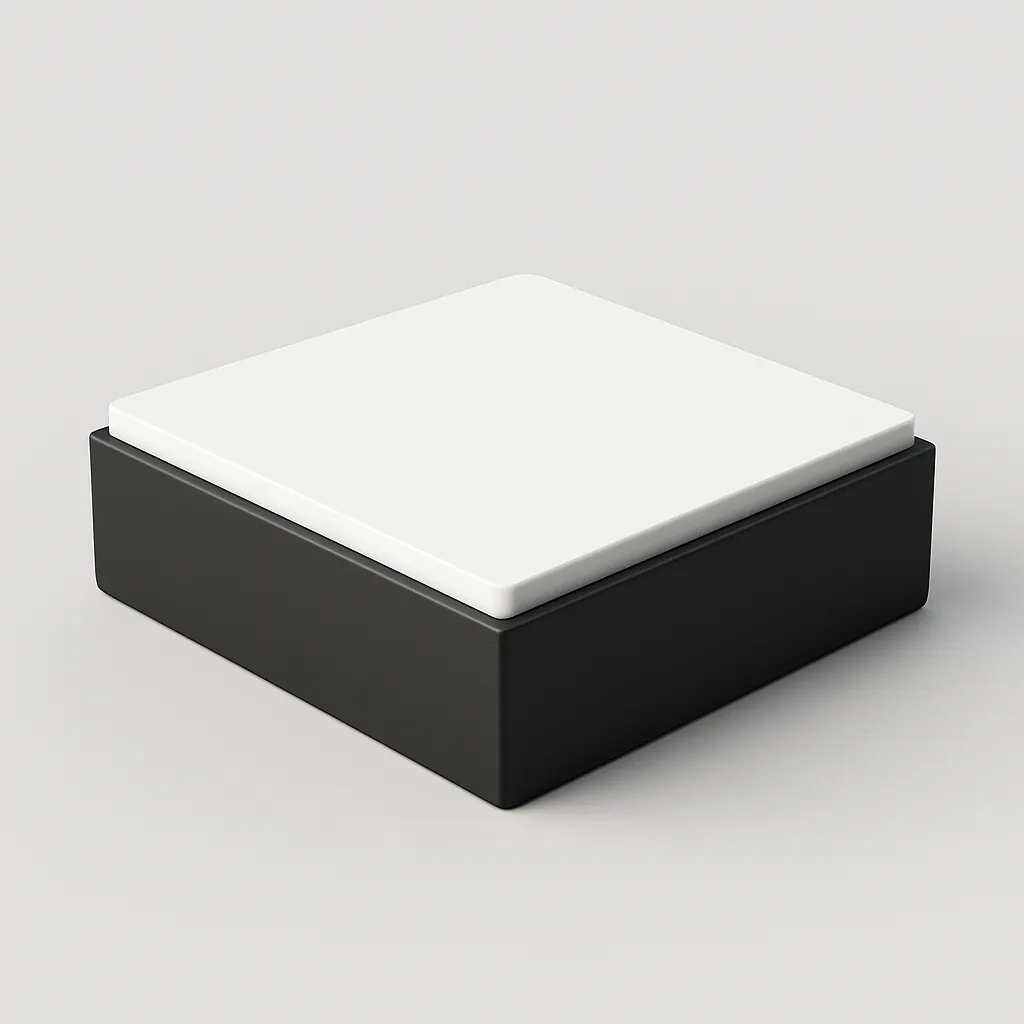
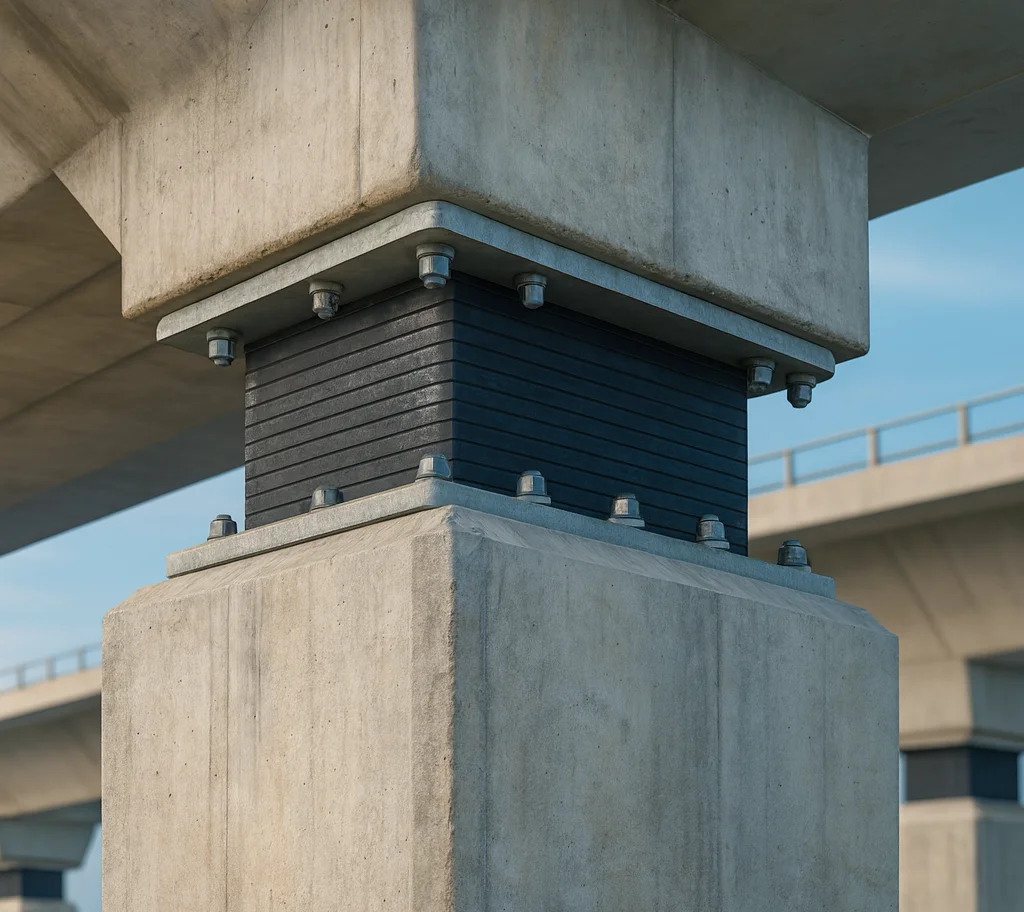
A neoprene bearing pad solves this problem. It is a block of neoprene (polychloroprene) rubber placed between a structure and its support. It carries the vertical load while allowing small movements: sliding, rotation and thermal expansion. It is simple, passive and needs no maintenance, which is why it is among the most widely used bearing solutions in bridge and precast construction.
Several rubbers can be used for bearings, but neoprene is the common choice for good reasons:
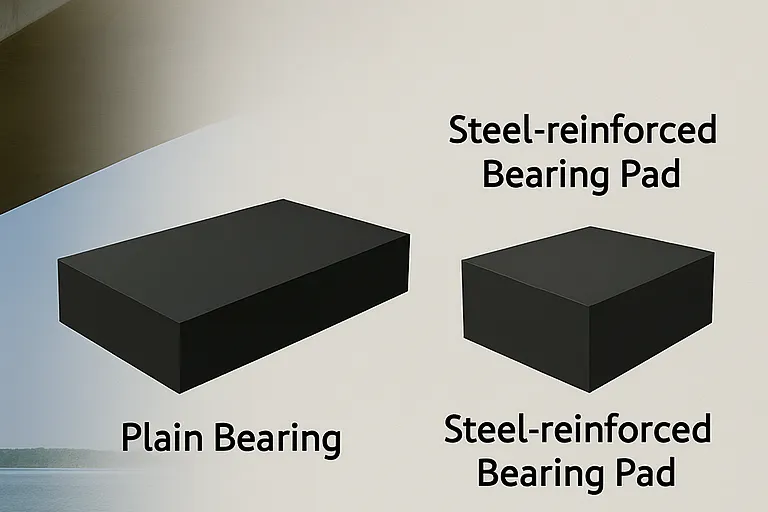
1. Plain neoprene pads. Solid neoprene with no internal reinforcement. They are used for lighter loads such as precast wall panels, small beams, pipe supports and equipment bases. Under heavy load a plain pad bulges at its sides, so it is limited to modest compressive stress.
2. Fabric-reinforced neoprene pads. Layers of fabric are embedded in the neoprene. The reinforcement limits bulging and increases the load the pad can carry, making these a middle option between plain and steel-laminated pads.
3. Steel-laminated neoprene pads. Layers of neoprene are bonded to internal steel plates. The steel restrains lateral bulging, which allows very high compressive loads while still permitting shear movement and rotation. These are the standard choice for highway bridges, flyovers, metro viaducts and heavy girders. For a detailed comparison, read steel-laminated vs plain neoprene bearing pads.
In Saudi Arabia, neoprene bearing pads appear in:
Selecting a pad is an engineering decision, usually fixed by the structural designer in the bearing schedule. The main inputs are:
If you are a contractor or supplier rather than the designer, the practical step is to work from the bearing schedule and ask your supplier to match the specification exactly, including the documentation required for approval. Our guide to the AASHTO M251 specification explains what consultants check.
On most Saudi projects a pad will not be accepted just because it looks right. The consultant will want a datasheet, evidence of the grade supplied and a material certificate for the batch. At Diode Trading EST, a Material Test Certificate is supplied with every order so your submittal records what was actually delivered.
Diode Trading EST supplies plain, fabric-reinforced and steel-laminated neoprene bearing pads from our Dammam warehouse, with delivery across the Kingdom and custom cutting to your drawing. Send your bearing schedule and we will confirm type, size and specification.
Request a Quote | See our full Neoprene Bearing Pads range

See our range of high-visibility safety mats and markers designed to reduce trip hazards across your site.