 14 September, 2026 |
  Admin
Admin
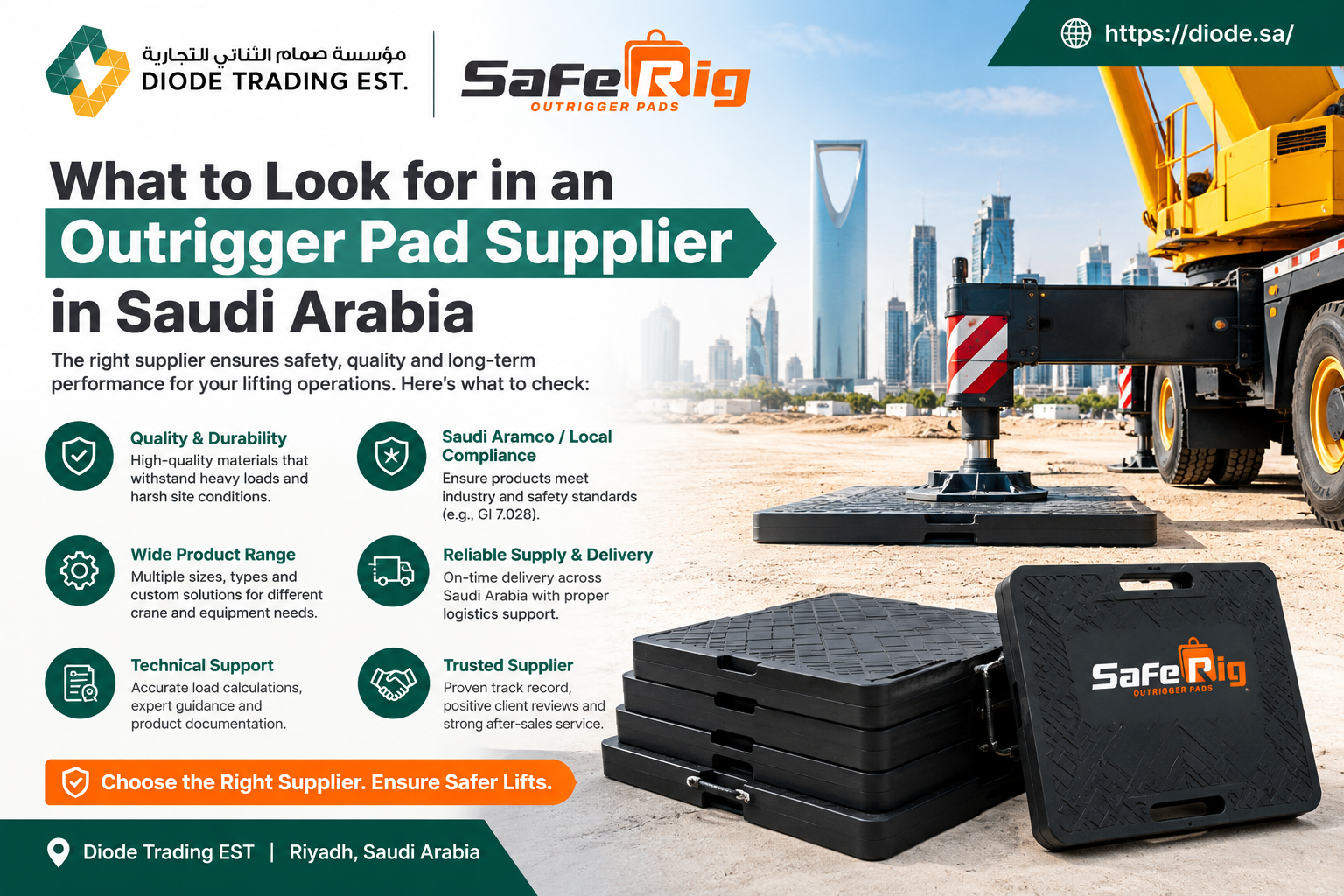
What to Look for in an Outrigg
Most Read more

 23 October, 2024 | Admin
The safe use of outrigger pads starts with understanding what the material under the crane is actually made of.
Ultra High Molecular Weight Polyethylene (UHMWPE) is a robust plastic known for its high wear and abrasion resistance, making it ideal for industrial applications that require durability, low friction, and chemical resistance. SafeRig outrigger pads, made from UHMWPE, are specifically designed to support heavy loads and provide flexibility in crane operations, especially on challenging terrains.
When working on unstable or soft soil, outrigger pads are crucial. Without these pads, cranes and other heavy equipment risk tipping, which can lead to severe damage to equipment, materials, and the surrounding environment. Outrigger pads help to disperse the crane’s load over a larger area, protecting the ground and enhancing operational safety, especially on fragile soils.
OSHA (Occupational Safety and Health Administration) provides specific standards for safe outrigger pad use:
Consult the full OSHA and ASME guidelines for legally binding safety requirements.
Understanding the working load limits (WLL) of your outrigger pads is essential:
To lift safely with outrigger pads, follow these steps:
In some cases, you may need additional blocking or cribbing under the pads for optimal support.
Outrigger pads are essential for safe crane operations, especially on soft ground. By following government regulations, understanding load limits, and calculating load distribution, you can ensure a safer work environment while protecting the ground and your equipment.
Beyond material choice, the safe use of outrigger pads on any site comes down to a few consistent habits: inspect each pad for cracking or deformation before every lift, center the crane’s outrigger foot fully on the pad rather than near an edge, and never stack pads to make up for an undersized pad when a larger size is the correct fix. These habits cost nothing and prevent the majority of pad-related incidents on site.
Store outrigger pads flat and out of direct sun when not in use, since prolonged UV exposure and uneven stacking can warp UHMWPE over time. When transporting pads between sites, secure them so they can’t shift or impact each other in transit, since surface damage from transport is one of the more common causes of premature pad replacement.
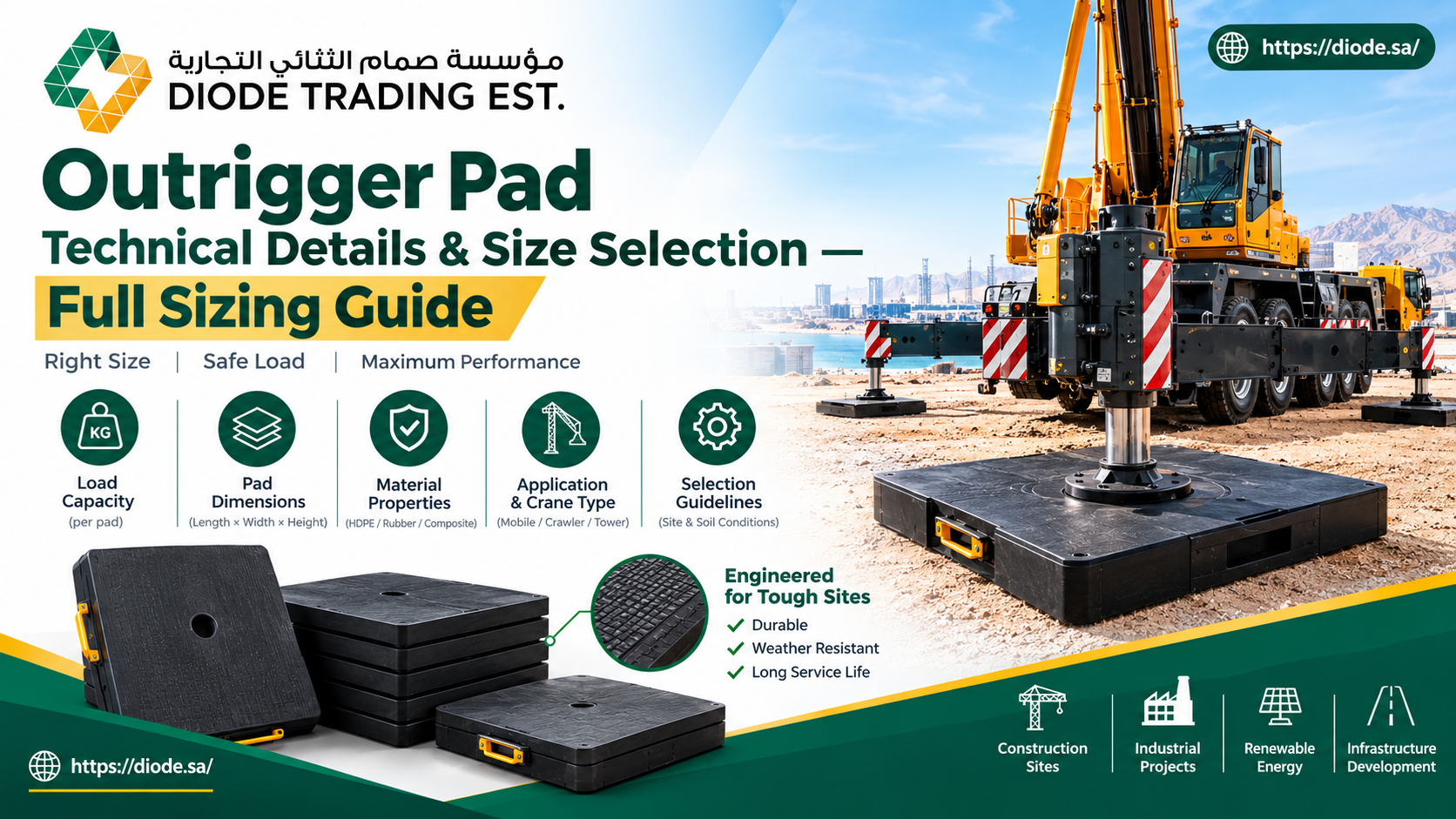
Pad size should always be driven by the outrigger float’s footprint and the maximum reaction force from the crane’s load chart, not by whatever is already on the truck. Our Saferig outrigger pad sizing datasheet lists standard sizes and load capacities by crane class, and we also produce custom size outrigger pads when a standard pad doesn’t match the float dimensions. For general guidance on crane stability and ground bearing during outrigger operations, OSHA’s cranes and derricks eTool is a useful reference alongside your site-specific lift plan.
See our range of high-visibility safety mats and markers designed to reduce trip hazards across your site.
 12 September, 2026 | Admin
Saferig is Diode Trading EST's outrigger pad
Read more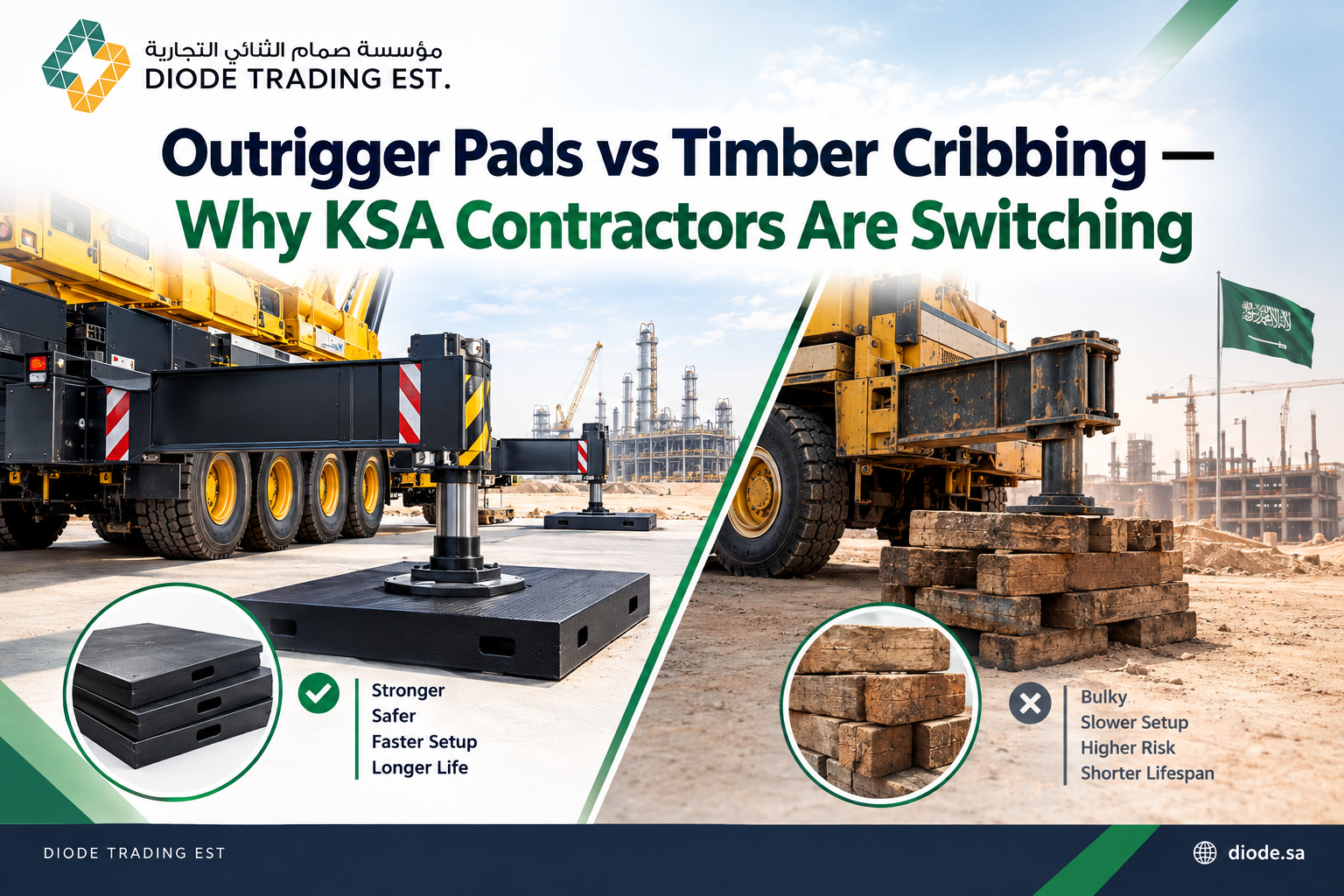 12 September, 2026 | Admin
Timber cribbing was the default for decades.
Read more