

 30 October, 2026 |
 Admin
Synthetic Turf in Saudi Arabia
Short answer: Synthetic t
Read more
Enquire Now
 30 October, 2026 | Admin
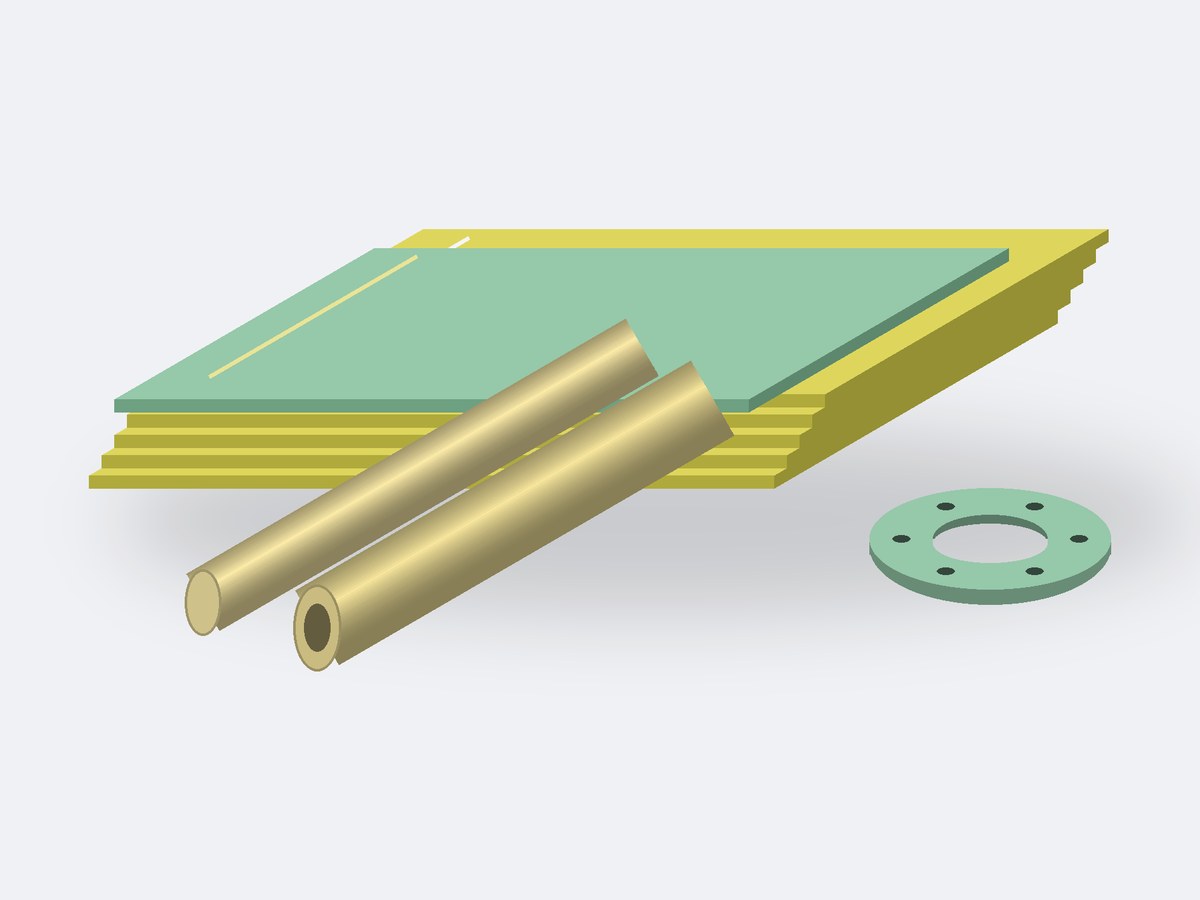
Short answer: Glass epoxy is a laminate of glass
cloth bonded with epoxy resin. It is strong, stiff, a good electrical
insulator and stable in heat and humidity. It is used for electrical
insulation boards, switchgear parts, transformer components, fixtures
and mechanical spacers. G10 is the general grade, and FR4 is the
flame-retardant version.
Layers of woven glass fabric are impregnated with epoxy resin and
pressed under heat and pressure into sheets, rods and tubes. The result
is a thermoset, so it does not melt like thermoplastics. It is machined
rather than moulded.
Free engineering tools
If your application requires a flame rating or certification, ask for
the specific test evidence before ordering.
| Application | Why glass epoxy |
|---|---|
| Electrical insulation boards | Insulation and strength |
| Switchgear and busbar supports | Stable under load and heat |
| Transformer parts | Insulation and stiffness |
| Mechanical spacers and washers | Rigid and stable |
| Fixtures and jigs | Flat, strong and heat resistant |
Sheets are cut into plates and insulators. Rods are turned into
spacers and pins. Tubes make sleeves and insulating bushes. Choose the
form that avoids unnecessary machining.
Use carbide tools, support the work and extract dust. Seal cut edges
in damp environments if the application needs it.
Form, thickness or diameter, size, grade (G10 or FR4), colour,
application and quantity. Diode Trading EST supplies glass epoxy
products in Saudi Arabia, and every order ships with a Material Test
Certificate. request a quote
Order sheets slightly larger than the finished part so edges can be
trimmed square. For many small parts, ask about cut sizes to reduce
waste. Keep a record of thickness tolerance, since glass epoxy sheets
vary slightly, and check this on parts that must fit tightly.
Is the sheet G10 or FR4? What is the thickness tolerance and
flatness? Is a flame rating needed, and can supporting test evidence be
provided? What colours are available? Are rods and tubes available in
the size needed, to avoid heavy machining?
Glass epoxy produces fine glass and resin dust that irritates skin,
eyes and lungs. Use dust extraction, wear a suitable mask and eye
protection, and clean up with a vacuum rather than blowing dust. Use
carbide or diamond tools, since normal steel tools wear quickly.
Compared with bakelite, glass epoxy is stronger and keeps its
insulation better in damp conditions. Compared with PEEK or PPS, it is
cheaper and stiffer but not as easy to mould or weld. Compared with mica
or ceramic, it is far easier to machine. For most panel, switchgear and
fixture applications, it offers the best value balance.
What is glass epoxy used for? Electrical insulation
and strong, stable mechanical parts.
What is the difference between G10 and FR4? FR4 is
flame retardant. G10 is the standard grade.
Is glass epoxy a good insulator? Yes, which is its
main use in electrical equipment.
Can it be machined? Yes, with carbide tools and dust
control.
Related: Bakelite Sheets · PPS Sheets ·
Engineering Plastics Guide

See our range of high-visibility safety mats and markers designed to reduce trip hazards across your site.
Diode Trading EST supplies these Engineering Plastics from stock in Dammam, with delivery across Saudi Arabia and the GCC.