

 19 September, 2026 |
  Admin
Admin
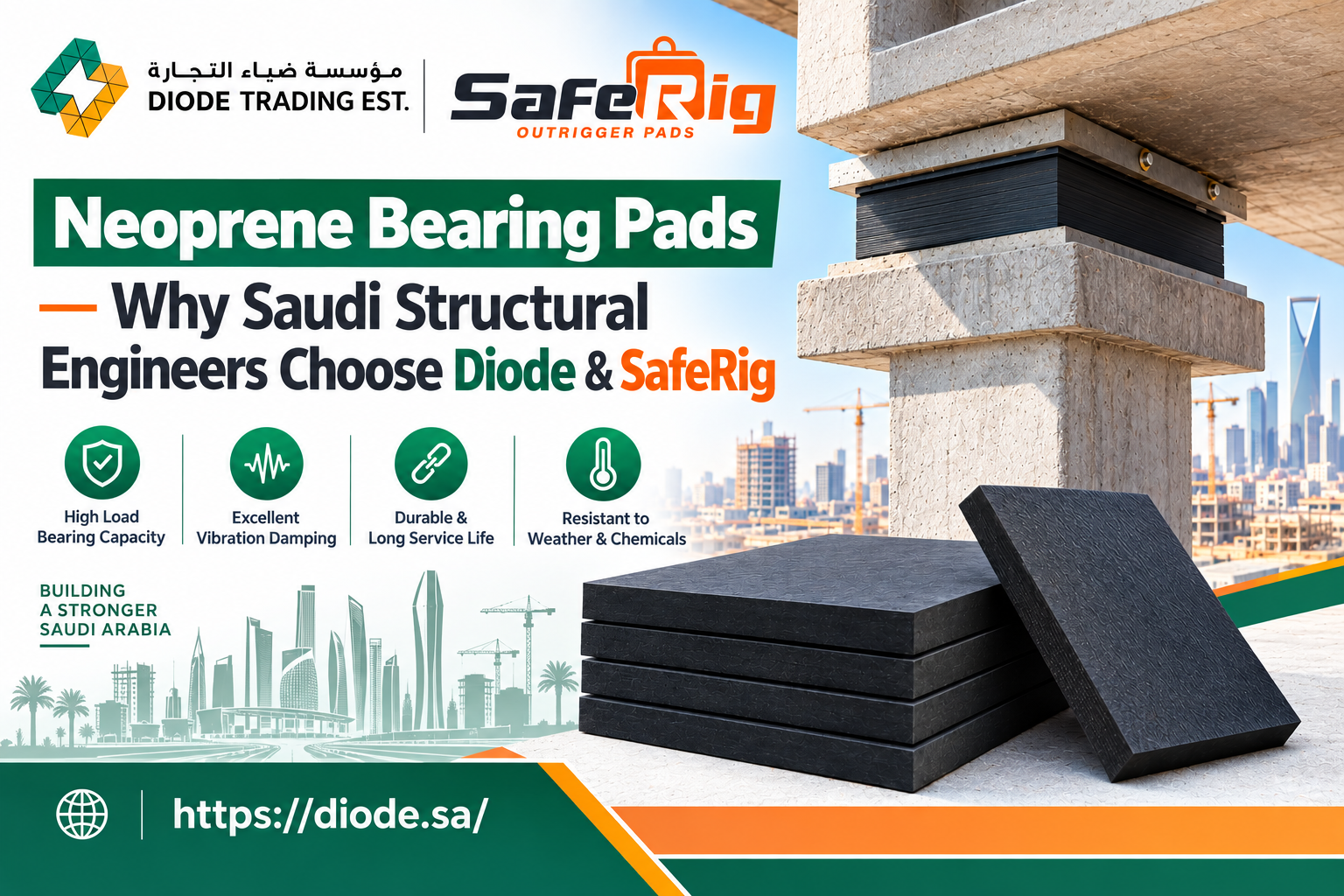
Bridge Bearing Pads — Diode&
Saudi Arabia's road and rail infrastructure b
Read more
Enquire Now
 19 August, 2026 | Admin
Sizing outrigger pads sandy ground KSA sites need starts with one fact: sandy and loosely compacted ground has significantly lower bearing capacity than compacted aggregate or rock, meaning the same crane may need a noticeably larger outrigger pad footprint on a desert or coastal sand site.

Ground bearing pressure = load ÷ pad contact area. Doubling the pad’s footprint halves the pressure transferred to the ground for the same load. On compacted aggregate, a standard pad may be sized around the crane’s rated capacity alone; on loose sand, the same load needs a larger contact area to stay within the ground’s safe bearing pressure. OSHA’s ground conditions requirement for cranes and derricks (29 CFR 1926.1402) is a useful starting reference for why supporting materials are required at all on ground that can’t be assumed firm.
Dry surface sand can be deceptive — a site that looks firm can lose bearing capacity quickly once it’s compacted under repeated load or exposed to moisture. Where possible, confirm the ground’s bearing capacity before positioning outriggers, and treat backfilled or recently graded ground as lower-capacity than it appears.
On very soft or unstable ground, interlocking crane mats distribute load across a much wider area than any single pad can, and are the better choice where sand is loose over a large working radius rather than concentrated under four outrigger points.
As a rough planning figure, sites specifying outrigger pads for sandy ground in Saudi Arabia commonly oversize by 20–30% over what a compacted-aggregate calculation would suggest, then confirm against the specific crane’s load chart before finalizing an order. Coastal sand sites near the Red Sea and Arabian Gulf coastlines can also carry higher moisture content below the surface than inland desert sites, which changes bearing behavior under sustained load even when the surface itself looks dry and firm.
Diode Trading EST supplies oversized outrigger pads sandy ground KSA sites need, along with interlocking mats for very soft ground, across Saudi Arabia. Contact us with your crane’s load chart and ground type.
On very loose or wind-blown sand, even a correctly sized outrigger pad can settle slightly if the top layer of sand has not been compacted first. Light compaction or a thin layer of compacted base material under the pad footprint, combined with the right pad size for the load, gives a more predictable and stable set-up than relying on pad size alone.
Where compaction is not practical, laying a geotextile fabric layer beneath the pad can also help distribute load across a wider area of loose sand, reducing the chance of localized settlement directly under the pad footprint.
Larger sites sometimes have noticeably different sand conditions in different areas, particularly where fill material has been brought in for parts of the site but not others. Testing bearing conditions at each planned set-up location individually, rather than assuming uniform ground across the whole site, gives a more accurate basis for choosing pad size and any additional ground preparation needed.
Keeping a simple record of which pad size and preparation method worked at each location also builds a useful reference for future projects on similar ground nearby.
This kind of record is particularly useful on repeat projects in the same industrial area, where ground conditions from a previous job are often a reliable guide to what a new site nearby will need.
Keep this outrigger pads sandy ground KSA sizing guide on file for every mobilization, since outrigger pads sandy ground KSA records are what site engineers check first when planning a new lift on loose or shifting terrain.
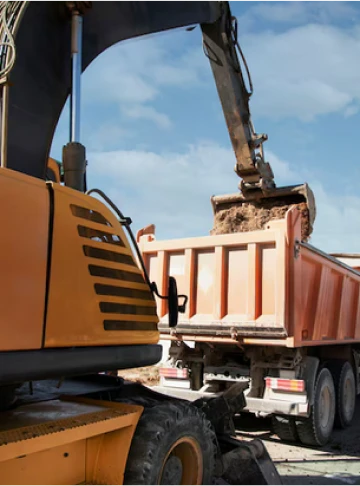
See our range of high-visibility safety mats and markers designed to reduce trip hazards across your site.
 19 September, 2026 | Admin
Saudi Arabia's road and rail infrastructure b
Read more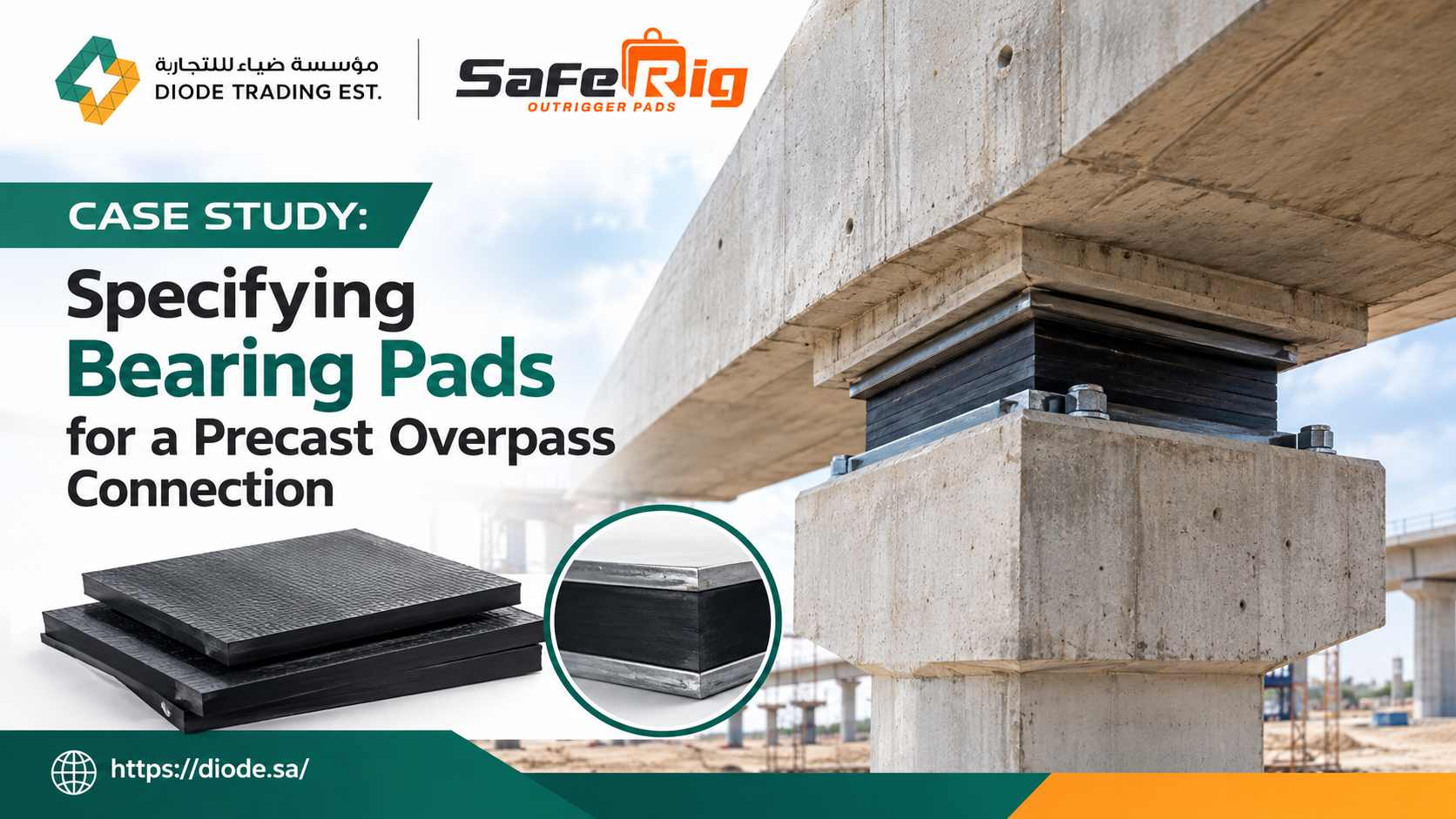 18 September, 2026 | Admin
A structural contractor working on a precast
Read more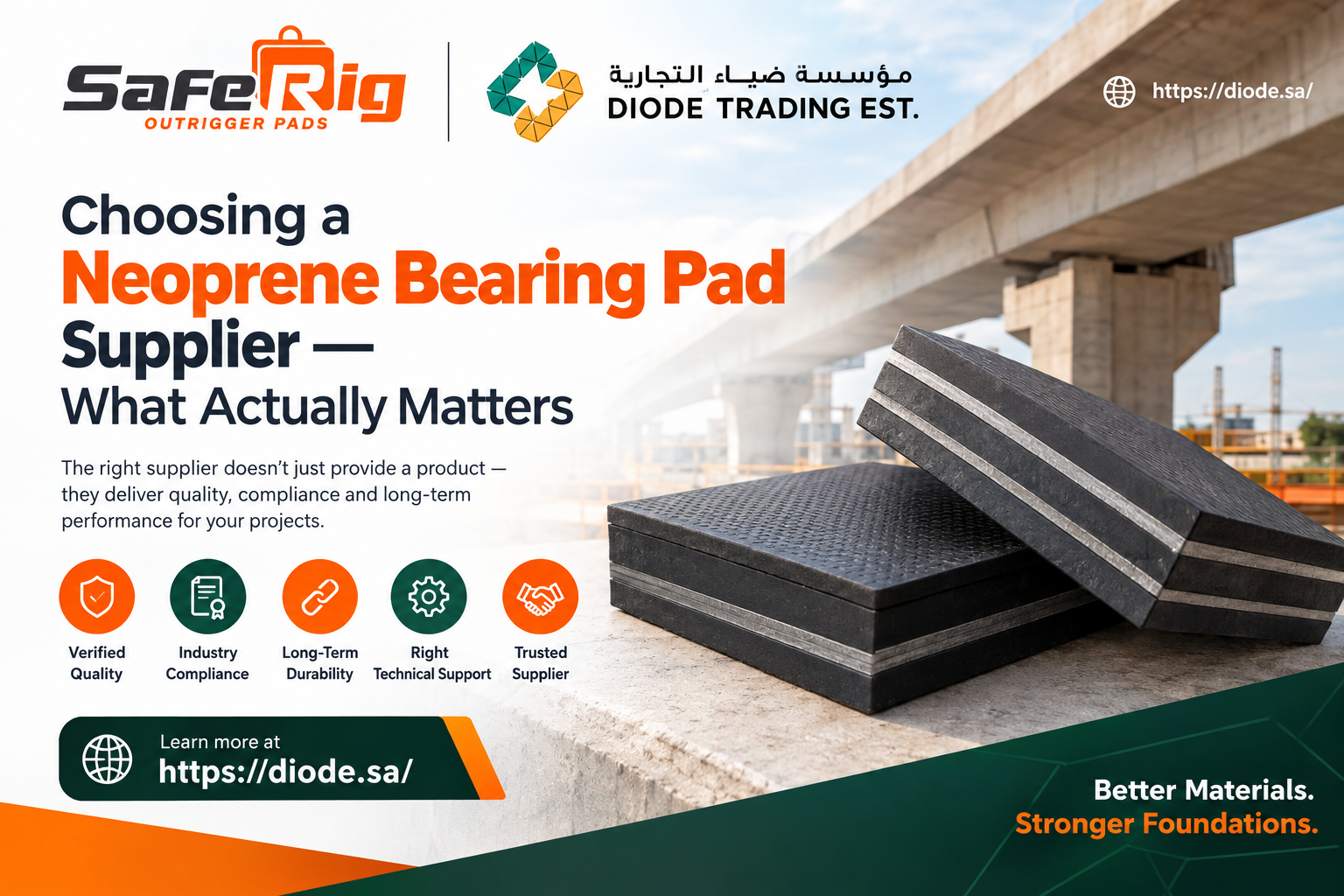 17 September, 2026 | Admin
Neoprene bearing pads are a structural compon
Read more