
 30 October, 2026 |
 Admin
Synthetic Turf in Saudi Arabia
Short answer: Synthetic t
Read more
Enquire Now
 30 October, 2026 | Admin
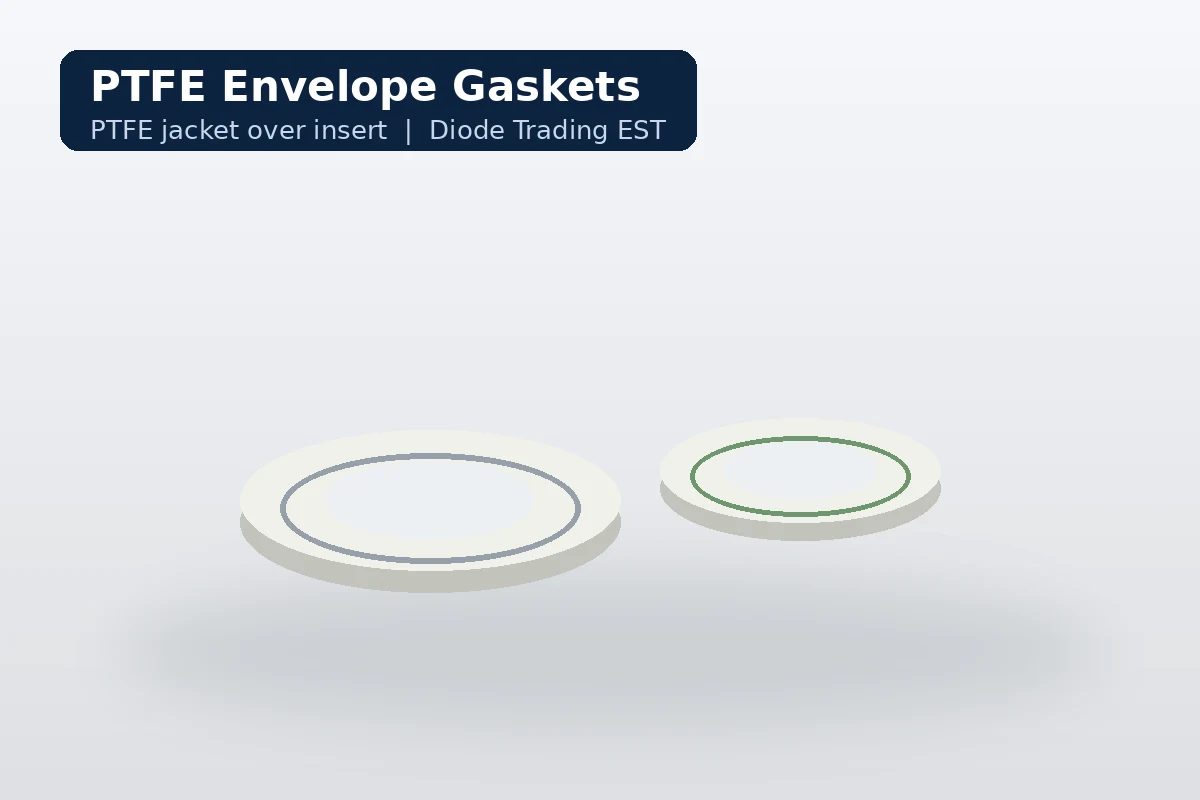
Short answer: A PTFE envelope gasket has a soft
filler (such as a compressible sheet) wrapped inside a PTFE shell. The
PTFE faces the process fluid and resists chemicals, while the filler
gives the gasket its springiness. It is used on chemical flanges that
need both chemical resistance and a good seal.
Plain PTFE gaskets resist chemicals but can flow under bolt load.
Rubber or fibre gaskets are springy but chemicals can attack them. An
envelope gasket combines both: a protective PTFE jacket around a
compressible core.
Free engineering tools
Clean and inspect the flange faces. Centre the gasket. Tighten bolts
in a cross pattern in stages to the recommended torque. Do not reuse
used gaskets, and re-check bolts after the first thermal cycle if the
procedure calls for it.
Flange standard, size, pressure class, medium, temperature, and
quantity. Diode Trading EST supplies gasket materials across Saudi
Arabia, with a Material Test Certificate on every order. request a quote
After the first heat cycle, check for weeping at the joint. If a
joint is retorqued, follow the gasket maker’s instruction. Mark the date
and flange on removed gaskets during a shutdown so you can learn how
they aged, and tell us if a particular joint keeps leaking so we can
look at the style and the flange condition together.
Which filler is inside the envelope, and what temperature and
pressure limit does it set? Is the envelope machined or folded? Does the
style cover the bore, which is the face the fluid touches? Can a drawing
or dimension sheet be provided for approval?
What is an envelope gasket? A compressible filler
wrapped in PTFE.
Are envelope gaskets better than plain PTFE gaskets?
For many flanges, yes, because the filler improves sealing and
recovery.
Can envelope gaskets be reused? No. Replace them at
every flange opening.
Do they suit high pressure? They suit moderate
service. For severe duty, consider other gasket types.
Related: PTFE Gasket Types · PTFE Sheet Guide ·
Ready-Cut Gaskets
See our range of high-visibility safety mats and markers designed to reduce trip hazards across your site.
Diode Trading EST supplies these Rubber Sheets, Gaskets & Seals from stock in Dammam, with delivery across Saudi Arabia and the GCC.