 10 October, 2026 |
  Admin
Admin
Crane Hire and Outrigger Pads
Planning a crane lift in Qatar means solvi
Read more
Enquire Now
 07 October, 2026 | Admin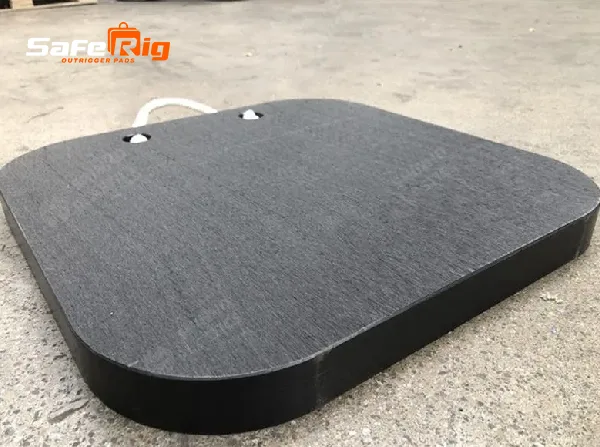
Short answer: boom trucks and truck-mounted cranes work from outriggers on roadsides, yards and building sites, often on ground nobody has tested. Size your outrigger pads for a boom truck from the leg load in the manufacturer’s chart, then use the ground-pressure formula. Do not set up on bare outrigger floats.
Reference allowable pressures used in this guide:
| Ground | Indicative allowable pressure |
|---|---|
| Rock or compacted aggregate | 300 kPa |
| Compacted fill | 200 kPa |
| Sandy ground | 120 kPa |
| Sabkha, soft or reclaimed | 75 kPa |
A boom truck weighs 18 tonnes and lifts 5 tonnes, a total of 23 tonnes. With no load chart figure to hand, use the 60% planning assumption: 23 × 0.60 = 13.8 tonnes on the worst leg. The ground is compacted fill (200 kPa) and the safety factor is 1.5.
Replace the 60% assumption with the real leg load before the lift. For the full method and a free Excel template, see Crane Outrigger Load Calculation.
For a boom truck that moves between jobs daily, a light UHMWPE pad is easier to carry and position than timber or steel. See Outrigger Pads vs Timber Cribbing and our range of Saferig outrigger pads.
It depends on the leg load and the ground. Use the formula in this guide or our free Outrigger Pad Size Calculator.
For a one-off job, it can be acceptable. For repeat use in hot climates, timber degrades faster and costs more over time.
Yes. Asphalt softens in heat and the load concentration can punch through or deform it. A pad spreads the load.
Only if it passes the area and capacity checks for your heaviest lift on your weakest likely ground. Otherwise size per job.
Related guides: Crane Outrigger Load Calculation · Ground Bearing Pressure for Cranes · How to Choose the Right Outrigger Pad
See our range of high-visibility safety mats and markers designed to reduce trip hazards across your site.
 10 October, 2026 | Admin
Planning a crane lift in Qatar means solvi
Read more