 30 October, 2026 |
 Admin
Synthetic Turf in Saudi Arabia
Short answer: Synthetic t
Read more
Enquire Now
 30 October, 2026 | Admin
Short answer: PVDF (polyvinylidene fluoride) is a
fluoropolymer with excellent chemical resistance, good strength and good
resistance to UV and heat. It costs more than PVC or PP, but outlasts
them in aggressive chemical, high-purity and outdoor service. It is used
for pump and valve parts, tanks, linings and semiconductor
equipment.
PTFE has the widest chemical resistance and the lowest friction but
is soft and creeps. PVDF is stiffer and stronger, welds easily and is
more practical for fabricated tanks and structural parts. PVDF is often
chosen when you need good chemical resistance with real strength.
Free engineering tools
| Application | Why PVDF |
|---|---|
| Chemical process tanks and linings | Resists aggressive chemicals |
| Pumps, valves and fittings | Strength and chemical resistance |
| Semiconductor wet benches | High purity |
| Outdoor chemical equipment | UV and weather stability |
| Filter housings and plates | Dimensional stability |
PVDF machines well and can be hot-gas or extrusion welded with
matching rod. Use sharp tools and avoid overheating. Keep surfaces clean
for high-purity use.
If the chemical is mild and temperature is low, PVC or PP will be
cheaper. If chemicals are aggressive, hot or the part is outdoors, PVDF
is worth considering. Always check the chemical resistance chart for
your fluid and concentration.
Form, thickness or diameter, size, chemical, concentration,
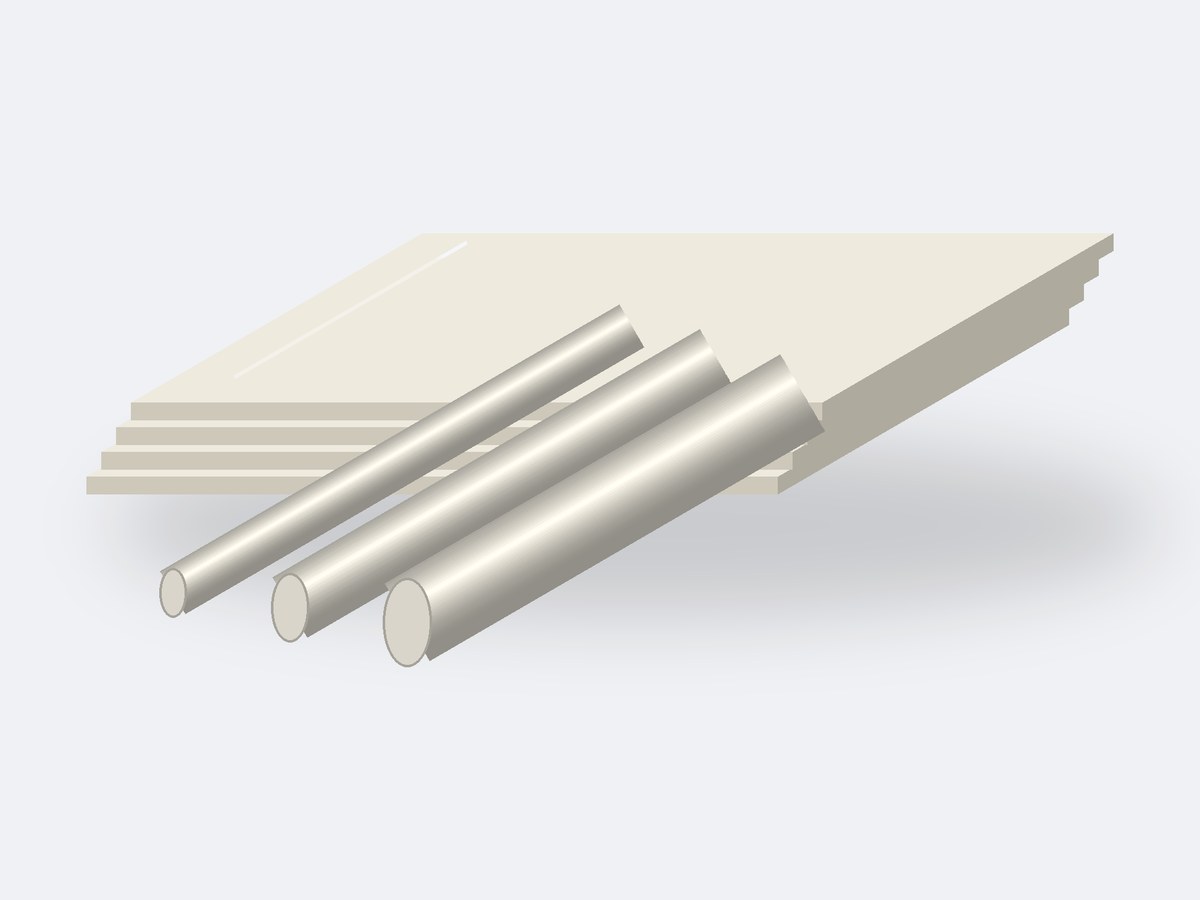
temperature and quantity. Diode Trading EST supplies PVDF sheets and
rods in Saudi Arabia, and every order ships with a Material Test
Certificate. request a quote
A chemical dosing skid may use PVDF fittings and plates, a wet bench
may use PVDF panels, and an outdoor acid tank may use PVDF-lined sheet
for UV resistance. Share your fluid, concentration and temperature for a
recommendation.
Send a short brief with your sizes, quantity, and delivery location
in Saudi Arabia, and we will reply with availability, lead time and a
quotation. If you are unsure of the right grade, describe the working
conditions and we will help you choose.
Is the PVDF virgin homopolymer or a copolymer? Is it suitable for
high-purity use, and what evidence supports that? What is the
temperature limit for the grade? Is matching welding rod available? What
is the thickness tolerance?
PVDF is priced well above PVC and PP, but a tank or pipe in
aggressive chemicals can fail early if made from a cheaper plastic, and
replacement means downtime and cleaning. In hot, strongly acidic or
outdoor chemical service, the longer life often outweighs the higher
price. For mild, cold chemicals, the cheaper plastic remains the
sensible choice.
Typical uses include chemical dosing parts, acid tanks and linings,
filter plates, wet-bench components, pump bodies and valve parts, and
outdoor tanks exposed to sunlight. In each case, the combination of
chemical resistance, strength and easy welding is what makes it
attractive.
What is PVDF used for? Chemical-resistant tanks,
linings, pump and valve parts, and high-purity equipment.
Is PVDF better than PVC? For aggressive chemicals,
heat and UV, yes, at a higher cost.
Can PVDF be welded? Yes, with PVDF filler rod.
PVDF or PTFE? PVDF is stronger and easier to
fabricate; PTFE resists more chemicals and has lower friction.
Related: PVC Sheets · PTFE Guide ·
Polypropylene Sheets

See our range of high-visibility safety mats and markers designed to reduce trip hazards across your site.
Diode Trading EST supplies these Engineering Plastics from stock in Dammam, with delivery across Saudi Arabia and the GCC.