 14 September, 2026 |
  Admin
Admin
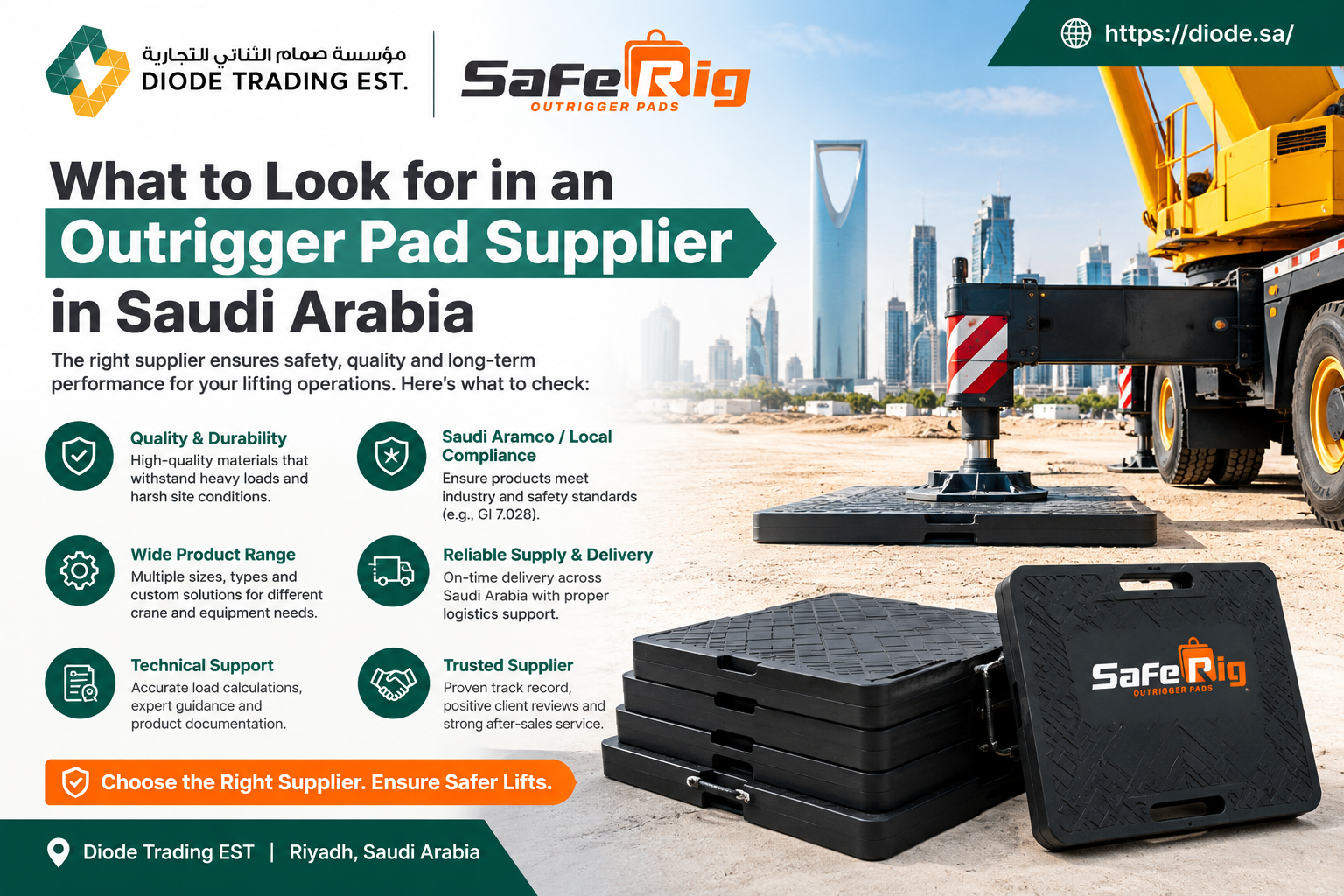
What to Look for in an Outrigg
Most Read more

 08 September, 2026 | Admin
Outrigger pads Europe buyers increasingly look outside the region for UHMWPE suppliers, since Middle Eastern manufacturers like Diode Trading EST combine lower per-unit costs with the same load-bearing standards used on Saudi Aramco and GCC job sites. This guide walks through what a European buyer needs to check before placing an export order.
Timber dunnage and steel plates remain common on European sites, but both have drawbacks: timber splits and absorbs water, while steel is heavy to move by hand and can mark paving. UHMWPE outrigger pads are lighter per unit area, resist chemicals and moisture, and can be stacked and reused across multiple projects, which is why plant hire firms and crane owners increasingly specify them.
Outrigger pads for Europe shipped from Gulf manufacturers typically arrive through major container ports such as Rotterdam in the Netherlands, Hamburg in Germany, or Felixstowe in the UK, with onward road or rail transport to the final site. A supplier familiar with the commercial invoice and packing list formats accepted by EU customs authorities, and able to confirm CE-relevant load documentation where a project specifies it, reduces the chance of a shipment being delayed at the port of entry. Buyers sourcing outrigger pads Europe-wide across several countries should also confirm which national customs office handles clearance at each intended port.
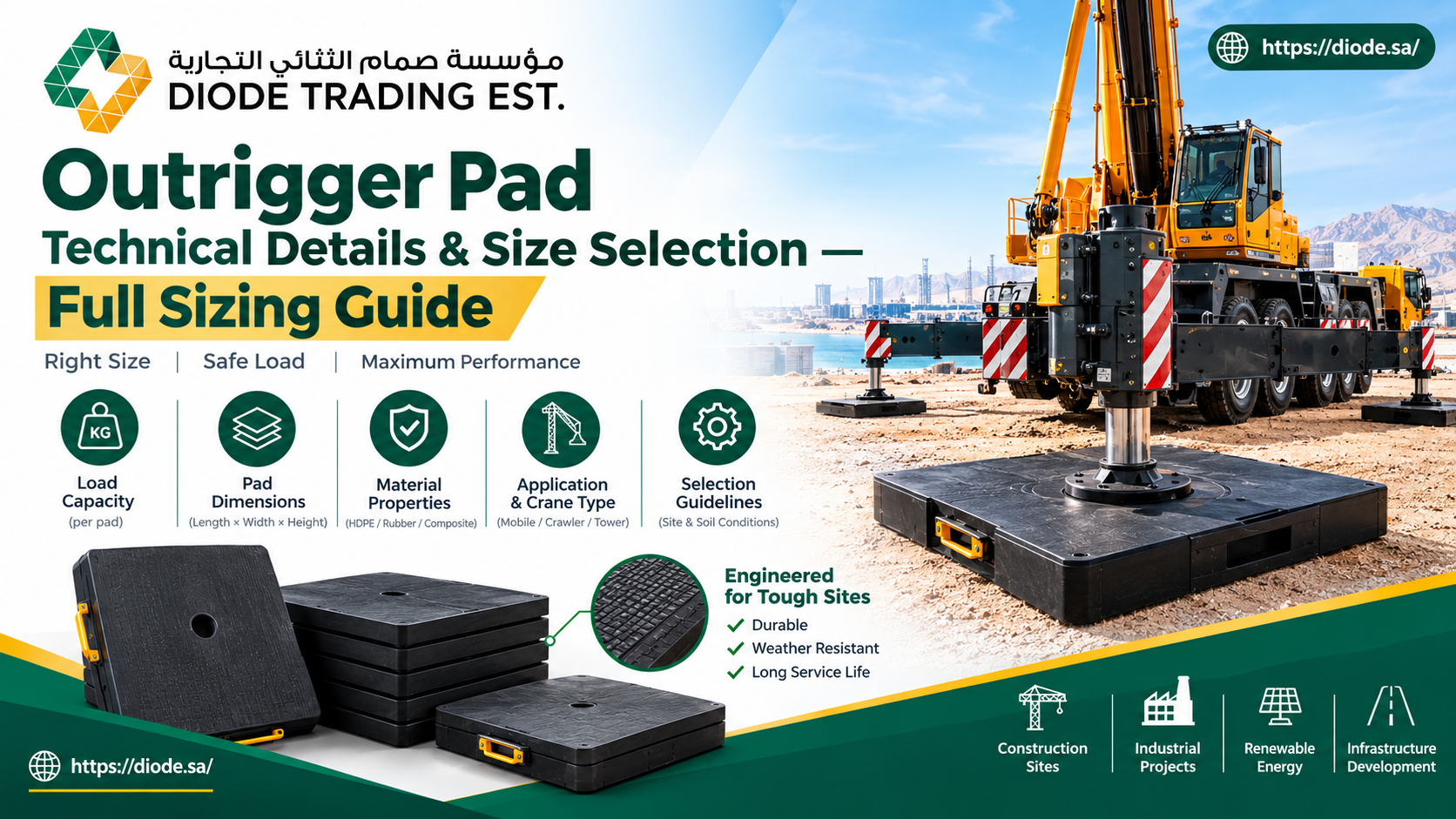
Rather than ordering based on a previous project’s specification, it helps to check the actual pad size needed for the crane and ground conditions in question. The outrigger pad size calculator gives a quick starting size once you know the maximum outrigger reaction load from the crane’s load chart and an estimate of ground bearing pressure at the site, which is particularly useful when a European plant hire firm is specifying pads for a crane class it hasn’t used before.
Timber dunnage is widely available across Europe but tends to absorb moisture and split faster in the wet, freeze-thaw conditions common across much of Northern Europe, shortening its usable life compared to drier climates. UHMWPE pads resist water absorption and hold up better across repeated freeze-thaw cycles, which is one of the reasons plant hire firms in the UK, Netherlands, and Germany increasingly specify them over timber for winter work.
Once pad sizes and quantities are confirmed, production and export documentation typically take a short lead time, followed by several weeks of sea transit to most European ports. Ordering early in the project schedule avoids delays to the lifting operation itself.
Diode Trading EST manufactures Saferig UHMWPE outrigger pads in Al Khobar, Saudi Arabia, and exports them by sea and air freight to European ports, with Material Test Certificates included on every order. See our outrigger pads Europe page for technical specifications, sizing, and to request an export quote.
Plant hire firms and crane owners operating across several European countries often find it more efficient to consolidate outrigger pad orders into fewer, larger shipments rather than ordering separately per country, spreading the fixed cost of sea freight and customs clearance across a larger volume of pads. Standardizing on a single approved pad specification across depots also makes it easier for crews moving equipment between countries to know what ground protection to expect on arrival.
See our range of high-visibility safety mats and markers designed to reduce trip hazards across your site.
 12 September, 2026 | Admin
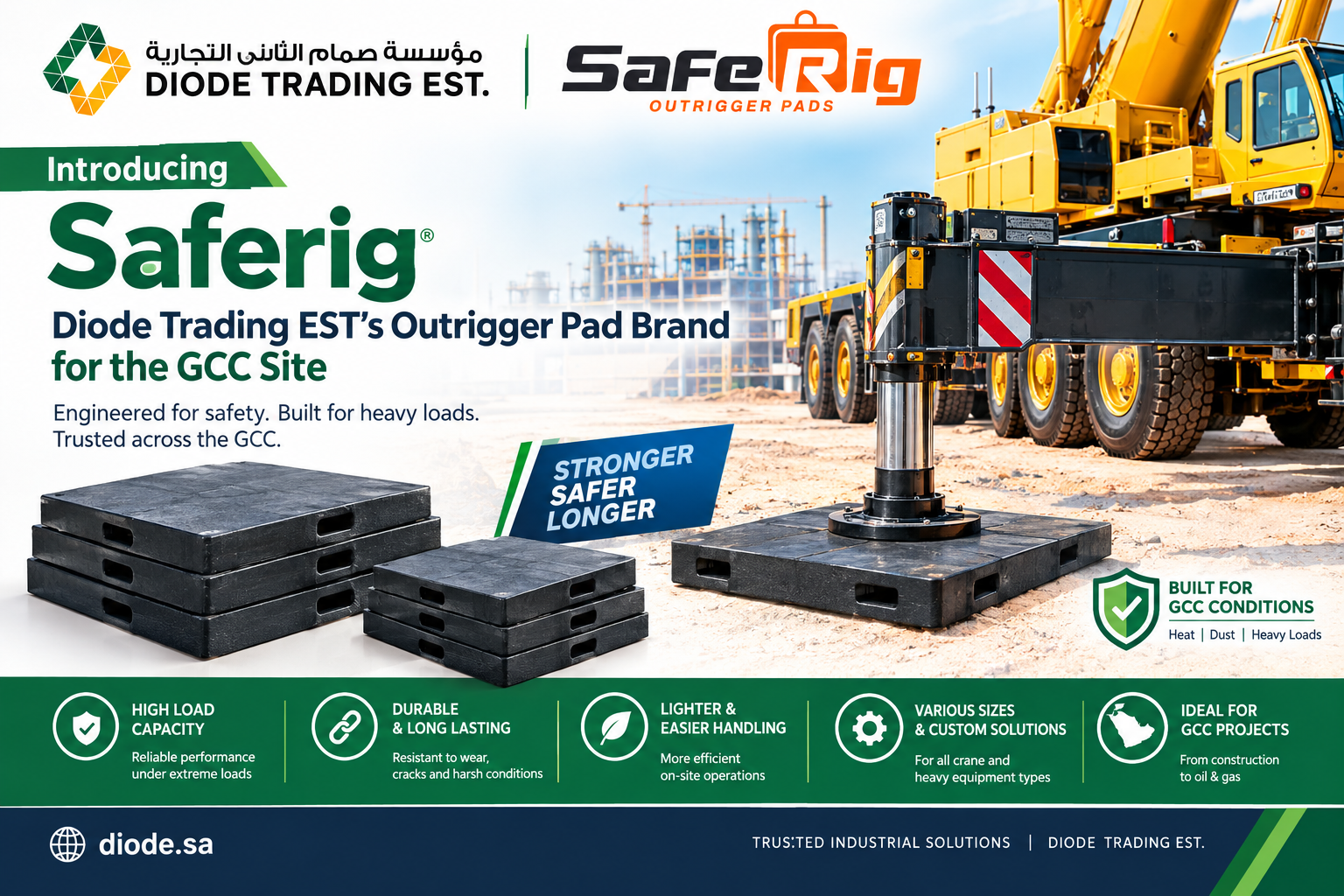
Saferig is Diode Trading EST's outrigger pad
Read more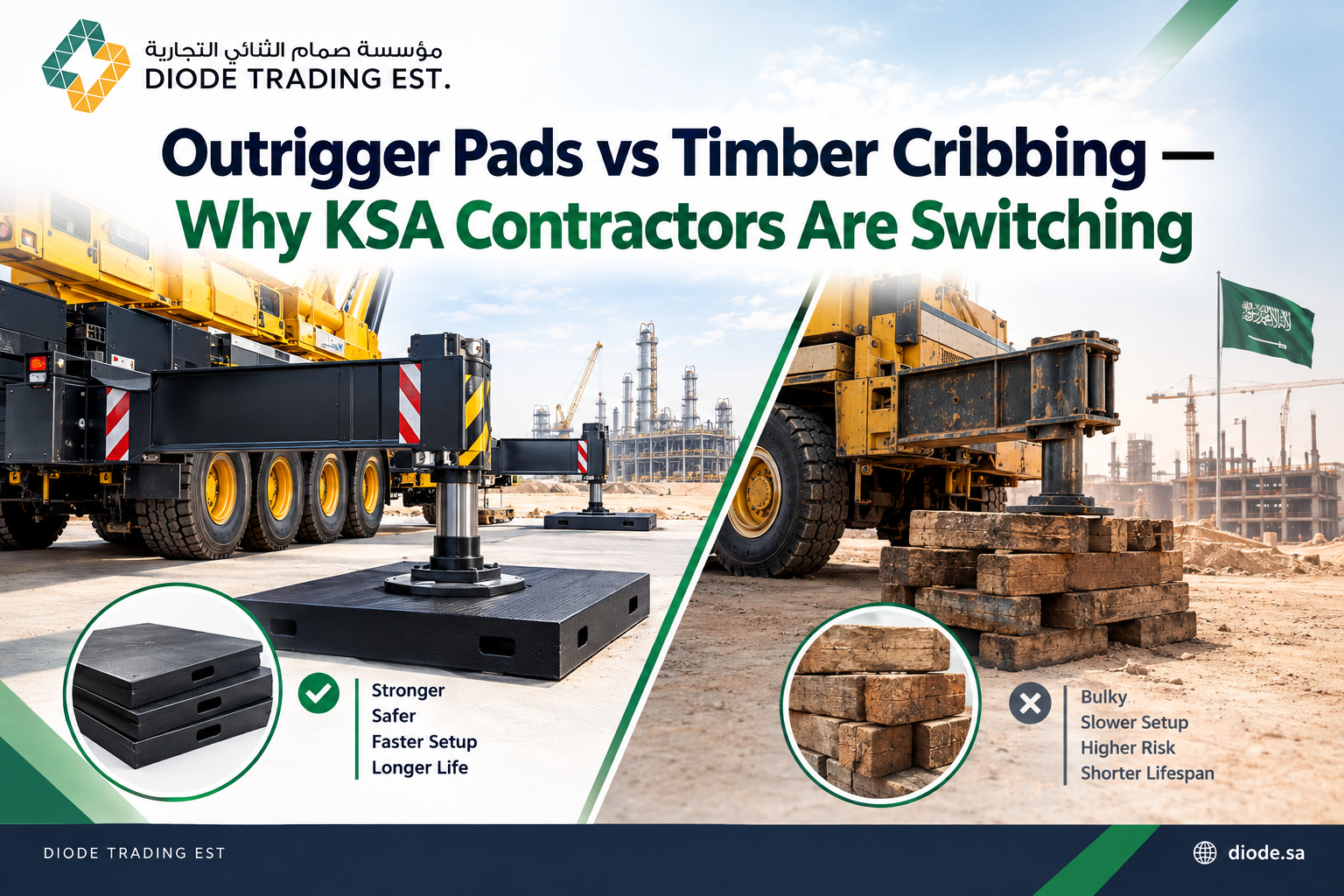 12 September, 2026 | Admin
Timber cribbing was the default for decades.
Read more