Short answer: Entrance mats stop dirt, dust and moisture at the door. Cleanroom mats are tacky or controlled-surface mats that pick up particles from shoes and trolley wheels before people enter a clean area. Logo mats are branded entrance mats that clean shoes and show your company identity. Choose by how clean the area must be, the traffic and the look you need.
Cleanroom mats
Dirt carried on shoes and wheels is a major source of contamination in pharmaceutical, electronics, food and laboratory areas. Cleanroom mats are used at the entrance to remove particles. Common forms include:
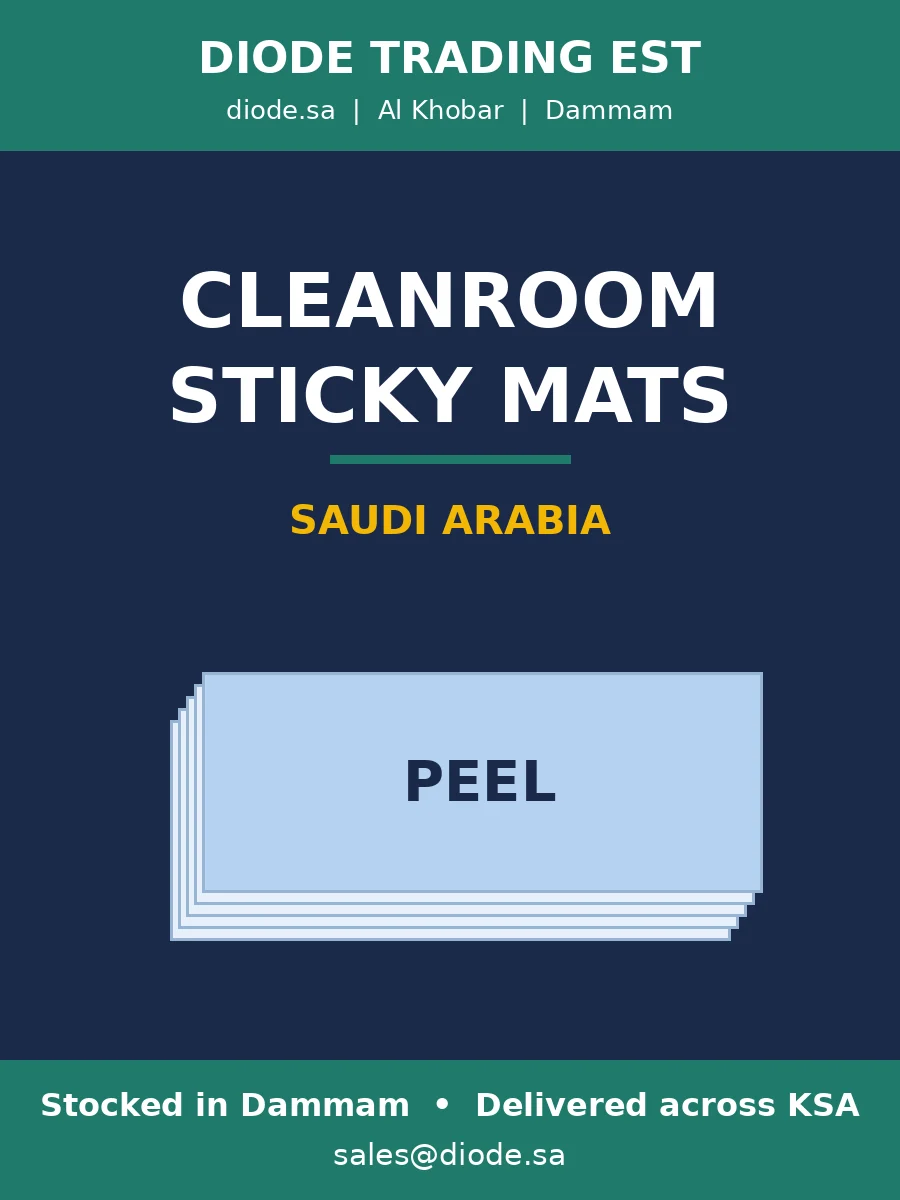
- Tacky (sticky) mats: a pad of sheets with adhesive surface. Each sheet picks up dirt, and when it is dirty you peel it off to expose a clean layer.
- Contamination control mats: washable or replaceable mats with surfaces designed to trap particles.
- Wheel and trolley mats: sized so trolley wheels pass over them.
How clean the area must be, and the standard it follows, determines the product. Check your facility’s cleanliness procedures and ask your supplier for the product that fits.
Logo mats
A logo mat combines function and brand. The surface traps dirt and moisture, and the printed or woven design shows your name or logo. They are used at the entrances of offices, hotels, showrooms, shops, banks and hospitals. They can be made in standard sizes or to custom sizes and designs.
Material choices
- Nylon or polyester carpet-type surface: attractive, good at trapping dirt and moisture; can be printed or woven with a logo.
- Rubber backing: keeps the mat from slipping and stops moisture reaching the floor.
- Rubber or vinyl scraper mats: for outdoor or heavy dirt zones.
- Tacky sheet pads: for cleanrooms.
Choosing the mat
- Location: inside entrance, outside entrance, cleanroom door, or corridor.
- Traffic: pedestrians only, or trolleys and wheelchairs. Choose a mat that is flat and has bevelled edges.
- Size: long enough for several steps to clean shoes.
- Moisture: choose absorbent mats in wet weather areas, or drainage mats outside.
- Design: for logo mats, send the artwork and colours.
- Safety: mats must lie flat and not curl at edges, to avoid trips.
Care
Vacuum or shake out dust regularly. Wash mats where the product allows. Replace tacky sheets before they are full. Replace mats when edges curl or the surface is worn.
Common mistakes to avoid
- using a decorative mat where a cleanroom mat is needed
- choosing a mat that is too short to clean shoes
- ignoring curling edges that cause trips
- not replacing tacky sheets on time
- sending low-resolution artwork for a logo mat
Questions to ask your supplier
What sizes are available? Can logos and colours be customised? What is the minimum order for custom mats? Is the mat suitable for trolley traffic? What backing is used?
Diode Trading EST supplies cleanroom and logo mats across Saudi Arabia, and every order ships with a Material Test Certificate. Request a quote.
Placement and sizing
Put the mat where people have to walk over it, not beside the path. A longer mat cleans more because more steps land on it. For outside doors use a scraper mat first and then an absorbent mat inside, which removes grit and moisture in stages. For cleanrooms, place the sticky mat directly at the threshold and make it wide enough that no one steps around it.
For general product standards in the Kingdom, see the Saudi Standards, Metrology and Quality Organization (SASO).
Frequently asked questions
What is a cleanroom mat?
A mat that picks up particles from shoes and wheels at the entrance to a clean area.
How often should tacky sheets be changed?
When the top sheet is dirty. Peel it to expose a fresh one.
Can I get my logo on a mat?
Yes. Send the artwork and size.
Can mats be washed?
Many can. Check the product details.
Related guides: ESD Mats · Rubber Mats and Tiles · PVC Interlocking Tiles
Explore the product range: Cleanroom Mats · Logo Mats
Need a price or lead time? Request a quote with sizes, quantity and delivery city in Saudi Arabia.



 03 November, 2026 |
 Admin