 10 October, 2026 |
  Admin
Admin
Crane Hire and Outrigger Pads
Planning a crane lift in Qatar means solvi
Read more
Enquire Now
 07 October, 2026 | Admin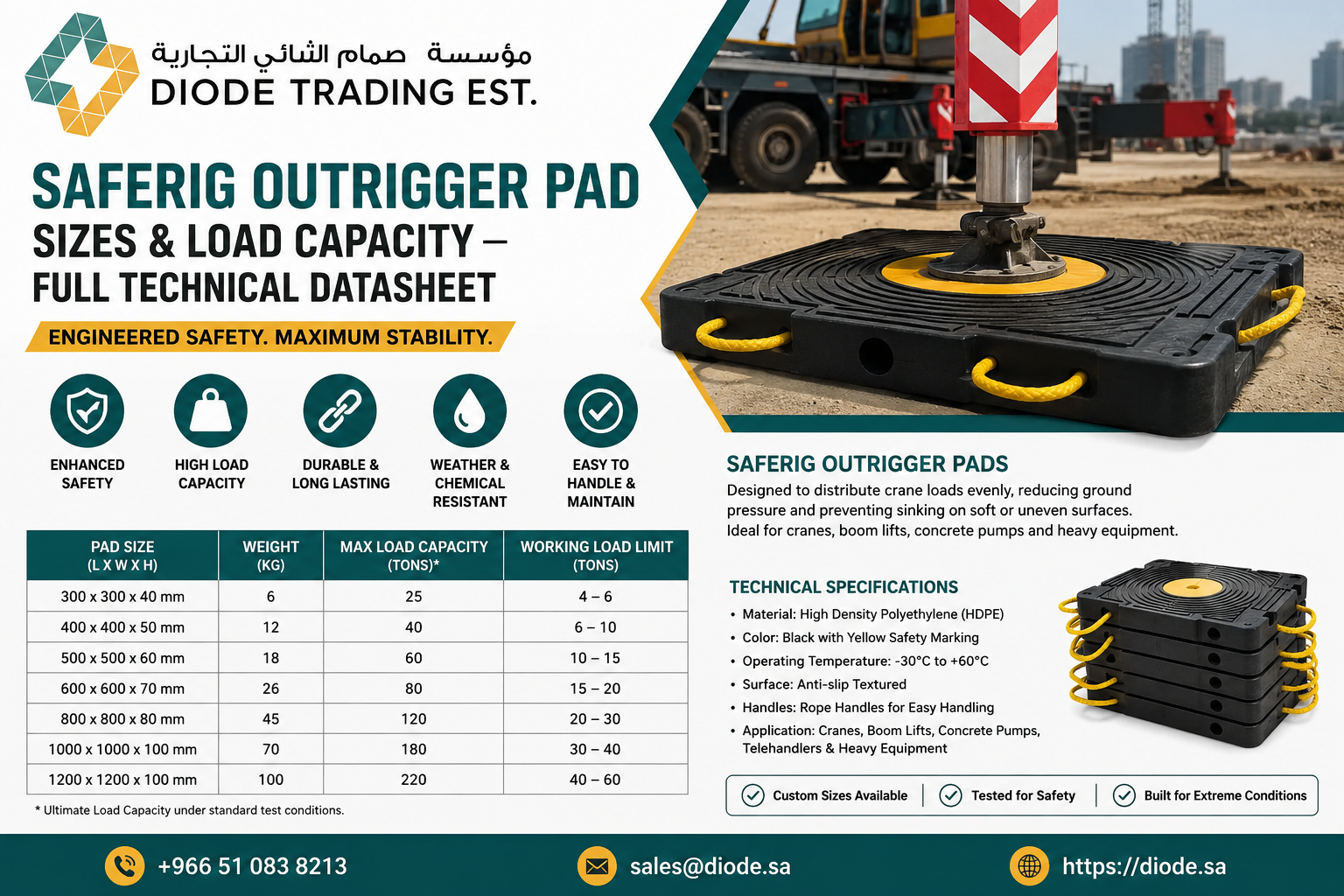
Short answer: the starting point for any crane outrigger load calculation is the outrigger reaction printed in your crane’s load chart. Multiply it by 9.81 to get kilonewtons, apply a safety factor, divide by the ground’s allowable pressure, and you have the minimum pad area. Where no load chart figure is available, a conservative planning estimate is about 60% of the crane, load and rigging weight on the single worst-loaded leg. That 60% is a planning assumption, not a standard. Replace it with the manufacturer’s figure as soon as you have it.
| Input | Where it comes from | Unit |
|---|---|---|
| Outrigger reaction (leg load) | Crane load chart or manufacturer’s data, worst case across your planned radius and boom angle | tonnes |
| Allowable ground pressure | Geotechnical report, or a conservative reference value for the ground type | kPa |
| Safety factor | 1.5 as a default, up to 2.0 on uncertain or soft ground | none |
Leg load (kN) = leg load (tonnes) × 9.81
Minimum pad area (m²) = leg load (kN) × safety factor ÷ allowable ground pressure (kPa)
Then check two things on whichever pad you pick: its area is at least the minimum, and its rated capacity is at least the leg load.
| Ground | Indicative allowable pressure |
|---|---|
| Rock or compacted aggregate | 300 kPa |
| Compacted fill | 200 kPa |
| Sandy ground | 120 kPa |
| Sabkha, soft or reclaimed | 75 kPa |
These are reference values for early planning only. Critical lifts need site-specific geotechnical data. If you are unsure which category applies, take the weaker one.
A mobile crane’s load chart gives a maximum outrigger reaction of 20 tonnes. The site is compacted fill (200 kPa) and you use a safety factor of 1.5.
The lesson: a pad that misses by 2% still fails. Round up to the next size.
A crane weighs 24 tonnes and the load and rigging weigh 6 tonnes, so the total is 30 tonnes. The ground is sandy (120 kPa) and the safety factor is 1.5.
Use this only to size a quote or plan a budget. Before the lift, the lift planner must confirm the leg load against the manufacturer’s data.
The largest standard Saferig pad is 3000 × 1000 mm (3.00 m²). If your minimum area is above that, a single pad is the wrong tool. Options include interlocking ground protection mats, a geotechnical assessment that supports a higher allowable pressure, or moving the crane to firmer ground.
We built a template that does this calculation for you, using the real Saferig size table. Enter the leg load (or the crane, load and rigging weights if no chart figure exists), choose the ground type and safety factor, and it returns the minimum area, the smallest standard pad that passes both checks and the resulting ground pressure.
Download the Outrigger Load and Pad Size Template (Excel)
Prefer a browser tool? Use our free Outrigger Pad Size Calculator.
Take the maximum outrigger reaction from the crane’s load chart for your working radius, in tonnes, and multiply by 9.81 for kilonewtons. This is the figure you size the pad against.
Ask the crane owner or operator for it. For rough budgeting only, many planners assume a large share of total weight on one leg. This guide uses 60% of crane plus load plus rigging as a conservative planning assumption. It is not a substitute for manufacturer data.
1.5 is a common default. Use 2.0 where the ground is uncertain, soft or reclaimed.
No. It is an indicative sizing method. Critical, heavy or unusual lifts need site-specific geotechnical data and engineering approval.
Related guides: Outrigger Pad Sizing Guide · Ground Bearing Pressure for Cranes · How to Choose the Right Outrigger Pad · Outrigger Pad Size Calculator
See our range of high-visibility safety mats and markers designed to reduce trip hazards across your site.
 10 October, 2026 | Admin
Planning a crane lift in Qatar means solvi
Read more