Ground Protection for Wind Turbine Installation Saudi Arabia
 08 September, 2026 |
  Admin
Admin
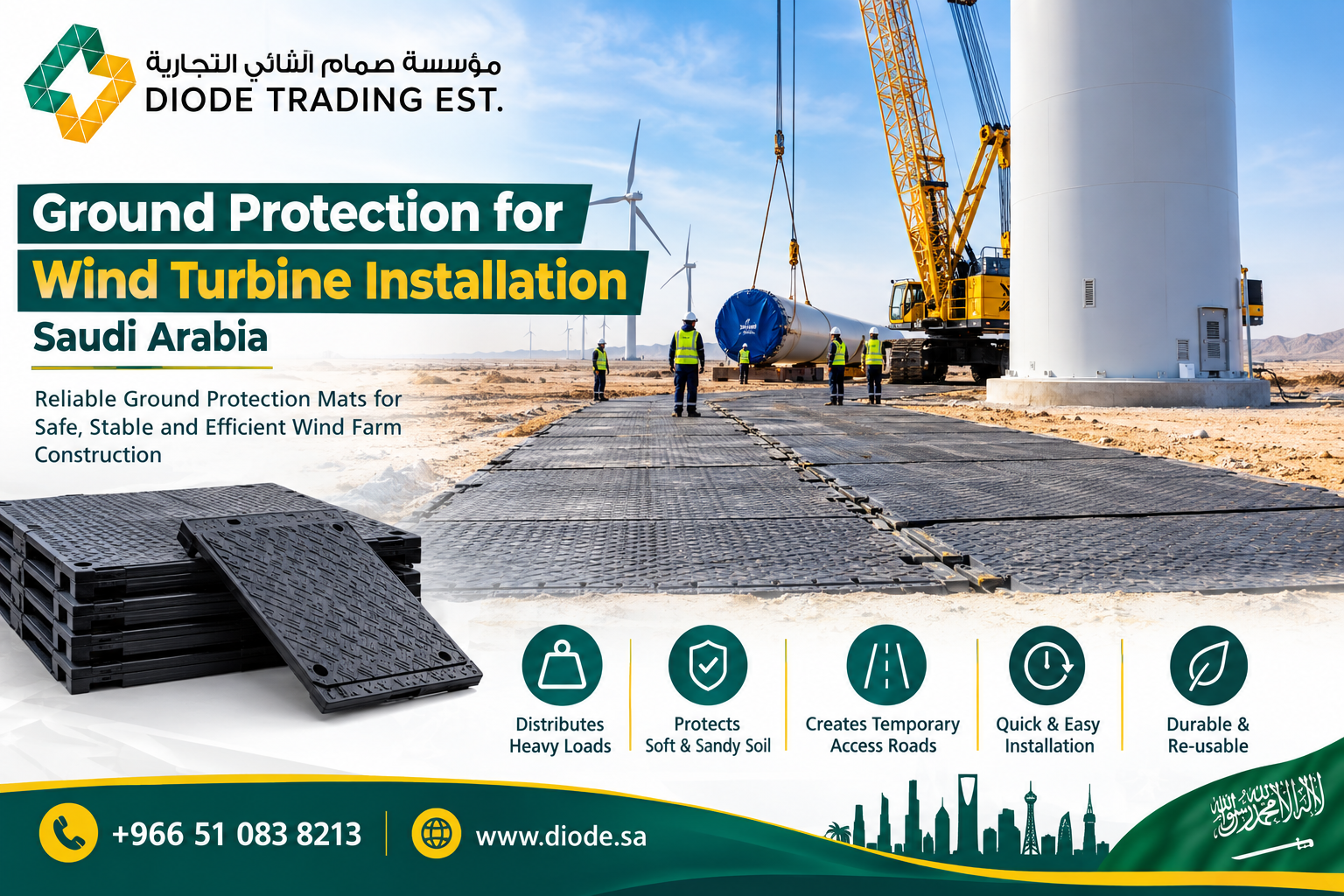
Crane pads wind farm Saudi Arabia contractors specify need to handle some of the heaviest point loads found on any land-based lifting job. Crawler cranes used to erect turbine towers and nacelles routinely exceed 500 tonnes, and every square metre of pad has to spread that load safely across the ground beneath the crane’s tracks or outriggers.
Why Wind Turbine Cranes Need Specialized Ground Protection
Wind farm sites are often located on ground that was never intended to carry crane loads — open desert, graded earthworks, or reclaimed land at the base of each turbine location. The combination of very high point loads and inconsistent, sometimes untested ground conditions is exactly the scenario ground protection mats and crane pads are designed for. Without adequate matting, a crawler crane’s tracks can sink unevenly, which risks destabilizing the crane during a heavy tower or blade lift.
What Tends to Get Specified
- Interlocking ground mats for crawler crane track areas, spreading track load across a wider footprint than the tracks alone
- Temporary access road matting between turbine locations, since wind farm sites often span large areas with limited existing hardstanding
- Standard outrigger pads for support cranes and site vehicles working alongside the main erection crane
- Site-specific pad thickness based on a geotechnical assessment of each turbine foundation location, since ground bearing capacity can vary significantly across a single wind farm
Ground Preparation and Load Considerations
Before crane pads wind farm contractors specify arrive on site, most projects carry out a ground-bearing assessment at each planned crane position, since soil conditions can change meaningfully even within the same site. Matting is typically sized to the crane’s maximum track or outrigger pressure at full load radius, not an average figure, because that maximum condition is when ground protection matters most. Drainage also matters on wind farm sites — matting placed over poorly draining ground can trap water underneath, softening the bearing surface over the course of a multi-week erection program.
Crane Pads Wind Farm Saudi Arabia: Material Options
UHMWPE crane pads are the most common choice for wind farm work because they combine high load-bearing capacity with resistance to the UV exposure and temperature swings typical of open desert sites. Timber and steel mats remain in use on some projects but are heavier to transport and position across large wind farm layouts. Using the outrigger pad size calculator alongside your crane’s load chart helps confirm pad footprint before mobilization, rather than relying on a generic size across every turbine position.
Working With an Experienced Supplier
Because wind farm erection schedules are tightly sequenced across dozens of turbine positions, it helps to work with a supplier who can deliver outrigger pads and ground matting in the volumes a multi-turbine program needs, rather than sourcing pads position by position. Confirming that matting and pad products meet recognized load-testing benchmarks, consistent with general crane safety guidance from OSHA’s crane and derrick standards, gives site supervisors a defensible basis for sign-off before each major lift.
Planning Matting Needs Across a Full Wind Farm
A typical Saudi wind farm project involves dozens of turbine positions spread across several kilometres, so crane pads wind farm logistics teams plan for need to account for mat and pad relocation time between positions, not just the total quantity on site. Building a rotation plan — where matting is picked up from a completed position and moved ahead to the next one — often reduces the total pad inventory needed compared to purchasing enough for every position simultaneously. Coordinating this rotation with the crane crew’s erection sequence helps keep matting available exactly where and when the next lift needs it, without slowing down the overall program.
Diode Trading EST supplies crane pads wind farm Saudi Arabia projects rely on for turbine erection, with stock sizes ready for fast delivery and custom cutting for less common outrigger footprints. Whether you’re sourcing crane pads wind farm Saudi Arabia contractors need for a single turbine position or coordinating matting across an entire program, our team can confirm load ratings and delivery timelines before your crawler crane mobilizes to site.
FAQ
For the complete square and round pad range, verified load capacity chart, and full technical documentation, see our Outrigger Pads Saudi Arabia page.
Recent Posts


High Visibility Reduce Trip Hazards
See our range of high-visibility safety mats and markers designed to reduce trip hazards across your site.
Related Blogs