 10 October, 2026 |
  Admin
Admin
Crane Hire and Outrigger Pads
Planning a crane lift in Qatar means solvi
Read more
Enquire Now
 07 October, 2026 | Admin
PEEK (polyetheretherketone) is one of the highest-performing thermoplastics available as stock shapes. PEEK rods are machined into parts that must keep their strength at high temperatures, resist aggressive chemicals and wear, and replace metal where weight, corrosion or electrical insulation matter. In Saudi Arabia, PEEK is used in oil and gas, petrochemical, power, aerospace and semiconductor equipment.
Highest toughness and elongation, natural beige colour. It suits seals, insulators and general parts.
Higher stiffness and dimensional stability with lower thermal expansion. It is used for structural parts and insulators, but is more abrasive to mating surfaces.
Very high stiffness and strength with good thermal conductivity. It is used for highly loaded structural components.
Combines carbon fibre, graphite and PTFE for low friction and wear. It suits bushes, thrust washers, seal rings and wear rings under high PV (pressure-velocity) conditions.
PTFE offers lower friction and broader chemical resistance, while PEEK offers far greater strength, stiffness and creep resistance. Many seal designs use both. Read our PEEK vs PTFE comparison. Where temperature and load are moderate, POM or nylon may be more economical. See our engineering plastics comparison.
Specify grade, diameter, length and quantity, or send a drawing for machined parts. Because PEEK is a premium material, confirm the grade against operating temperature, load and chemical exposure before ordering. Every order from Diode is supplied with a Material Test Certificate.
Related products: PEEK Sheets & Rods and Engineering Plastics.
PEEK costs considerably more than most engineering plastics, so it should be specified where its properties are needed. It earns its place when a part must hold strength above about 150°C, survive steam or hot hydrocarbons, or replace a metal component that corrodes or wears too fast. Downtime and replacement labour often matter more than material price, so a longer-lasting PEEK part can be the cheaper option over its service life. Where temperature and chemicals are moderate, start with POM, nylon or filled PTFE and move to PEEK only if needed.
PEEK is typically rated for continuous use around 250°C, with short-term exposure higher depending on load.
Bearing-grade PEEK, which contains carbon fibre, graphite and PTFE, offers the lowest friction and wear.
Yes. PEEK has excellent hydrolysis resistance and tolerates repeated steam exposure.
For precision parts, use stress-relieved stock and consider annealing between rough and finish machining.
Send the PEEK grade, diameter, length and quantities, or your drawings, to our Al Khobar team for a quotation.
See our range of high-visibility safety mats and markers designed to reduce trip hazards across your site.
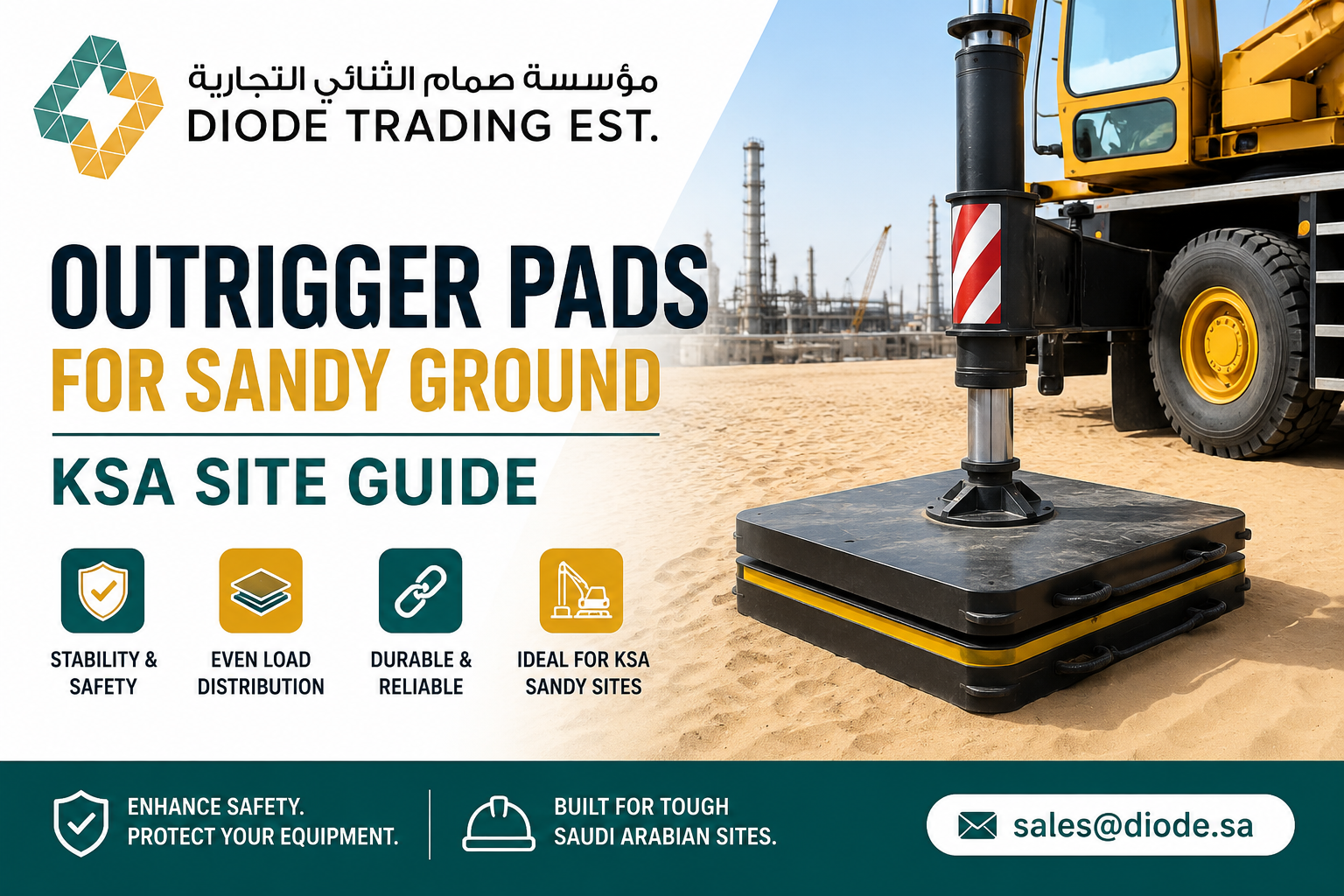 10 October, 2026 | Admin
Planning a crane lift in Qatar means solvi
Read more