Search for “best gym flooring” and you will find confident answers that all disagree with each other. The reason is simple: they are answering different questions. A boxing gym, a hotel fitness room, a padel-adjacent training area and a CrossFit box do not need the same surface, and no single material wins everywhere.
This guide compares the four materials most often considered for gyms and sports facilities in Saudi Arabia, and explains where each one earns its place. Diode Trading EST supplies rubber tiles, PU sports flooring and synthetic turf, so this comparison is about fit, not about pushing one product.
Rubber: the impact specialist
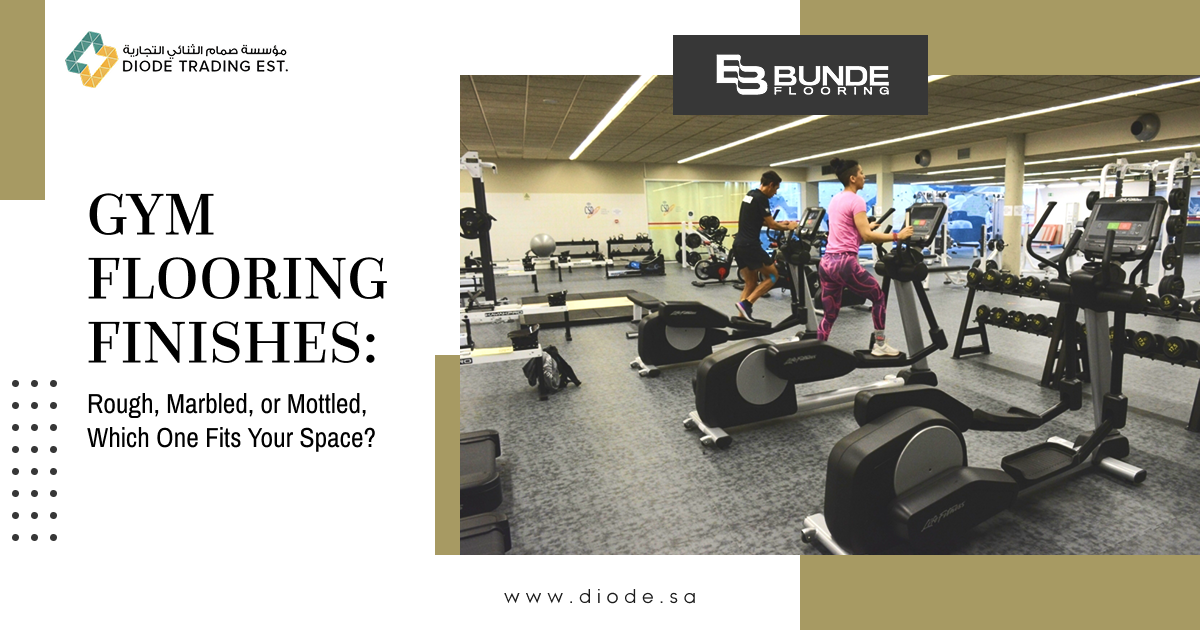
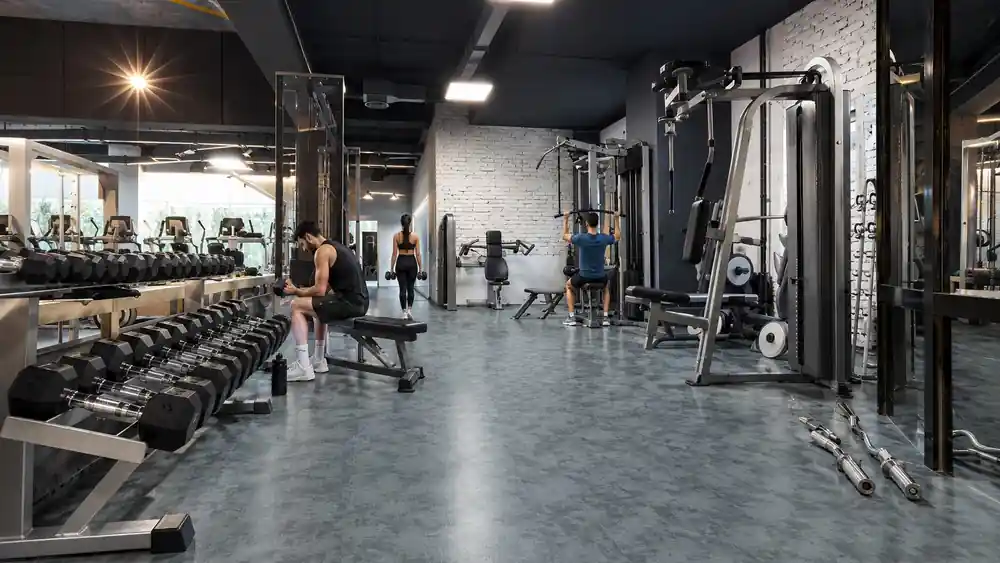
Rubber, particularly EPDM-topped and recycled-rubber tile systems, is the default for any area where weights are handled. It absorbs impact, resists damage from equipment, and when paired with a dedicated underlay it controls the noise and vibration that dropped weights create. The trade-offs are weight, which makes it heavier to move and install than thin sheet products, and a visual language that was historically industrial. Marbled and mottled finishes have closed much of that aesthetic gap in premium spaces.
PU sports flooring: the performance surface
Polyurethane sports surfaces are associated with multi-sport halls, courts and running or agility areas where consistent surface behaviour matters. They are typically chosen where athletic performance, not dropped weights, is the primary demand. For a facility that offers both lifting and court-based activity, PU often covers the court side while rubber covers the weight side.
PVC (vinyl): the studio and light-use option
PVC and vinyl sheet or tile systems are lighter and usually lower in cost, and they suit group-exercise studios, aerobics rooms and reception-adjacent zones. Their limit is heavy impact. They are rarely the right answer under free weights or drop zones, and specifiers generally avoid them there.
Artificial turf: the functional training lane
Synthetic turf has become a staple of functional training: sled pushes, lunges, agility drills and prowler work. It gives a distinctive, high-energy look and grip that suits dynamic movement. It is a zone surface, not a whole-gym surface, and it is normally installed alongside rubber rather than instead of it. See our synthetic turf range.
How premium facilities actually combine them
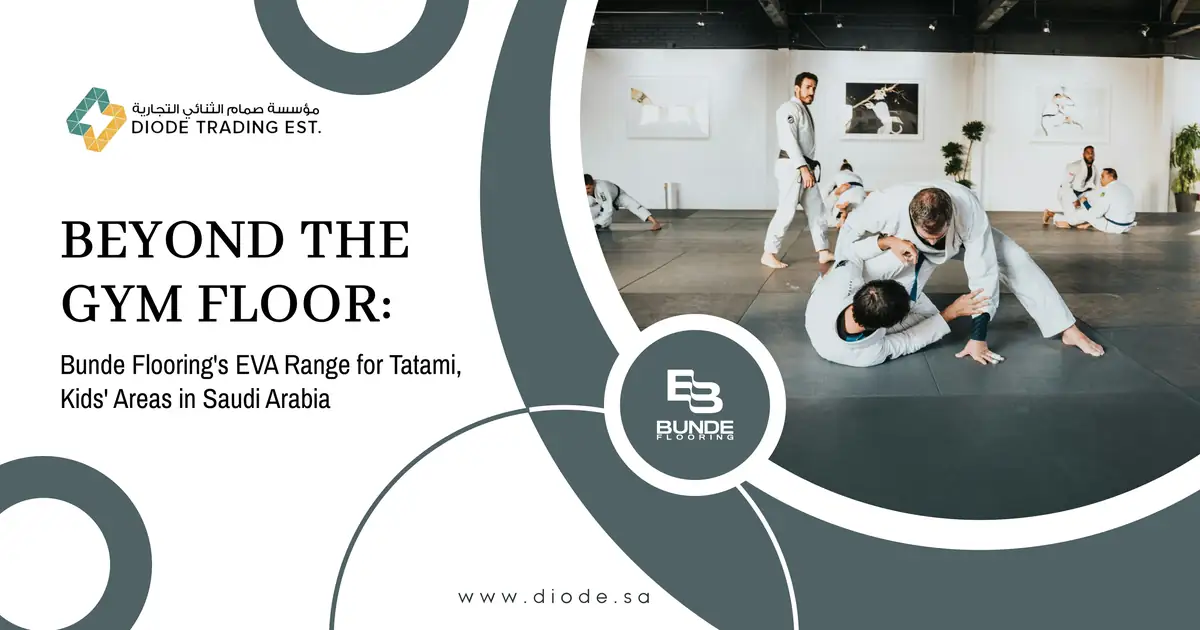
The best-looking and longest-lasting facilities are zoned. A typical high-end layout might use marbled 7mm rubber across the main floor, a SonicBase underlay beneath the heavy-lifting corner, thick ErgoTile for a drop zone, a turf lane for sleds, and a softer EVA surface for stretching and martial arts. Each material does the one job it is best at.
Side-by-side summary
| Material |
Best for |
Weak at |
| Rubber |
Weights, machines, drop zones, acoustic control |
Weight of material, limited bright colour range |
| PU |
Courts, agility and performance zones |
Heavy dropped weights |
| PVC |
Studios, light group exercise |
Heavy impact |
| Turf |
Sled lanes, functional drills |
Whole-facility use, dropped weights without a base |
Which is the best gym flooring for each zone
Start from the activity, not the material. List every zone, note the heaviest realistic impact in each, and only then pick surfaces. If one supplier can provide rubber, PU and turf together, specification, delivery and sample-matching become much simpler.
Diode Trading EST supplies all three across Saudi Arabia, with a Material Test Certificate on every order. View our rubber gym flooring range or talk to our team about a zoned specification for your facility in Riyadh, Jeddah, Dammam or Al Khobar.
There is no single best gym flooring for every facility. The best gym flooring for a commercial gym is usually a combination: rubber where weights are dropped, PU or PVC where classes and court sports run, and turf for sled lanes and functional drills. Planning the floor zone by zone, rather than choosing one material for the whole space, is what premium facilities do. If you are unsure which is the best gym flooring for your layout, send us your floor plan and our team will recommend a material for each zone. For background on the materials, see the overviews of polyurethane and artificial turf.
Frequently asked questions
Which is better for a gym, rubber or PVC?
Rubber is better wherever weights are used because of its impact absorption. PVC suits light-use studios and group-exercise rooms.
Can I use more than one flooring material in the same gym?
Yes, and premium facilities usually do. Zoning by activity gives better performance and better value than one material everywhere.
Is artificial turf suitable for dropping weights?
Turf is designed for movement drills like sled pushes. Weight-drop areas should stay on rubber with an appropriate underlay.




 03 November, 2026 |
 Admin