 10 October, 2026 |
  Admin
Admin
Crane Hire and Outrigger Pads
Planning a crane lift in Qatar means solvi
Read more
Enquire Now
 07 October, 2026 | Admin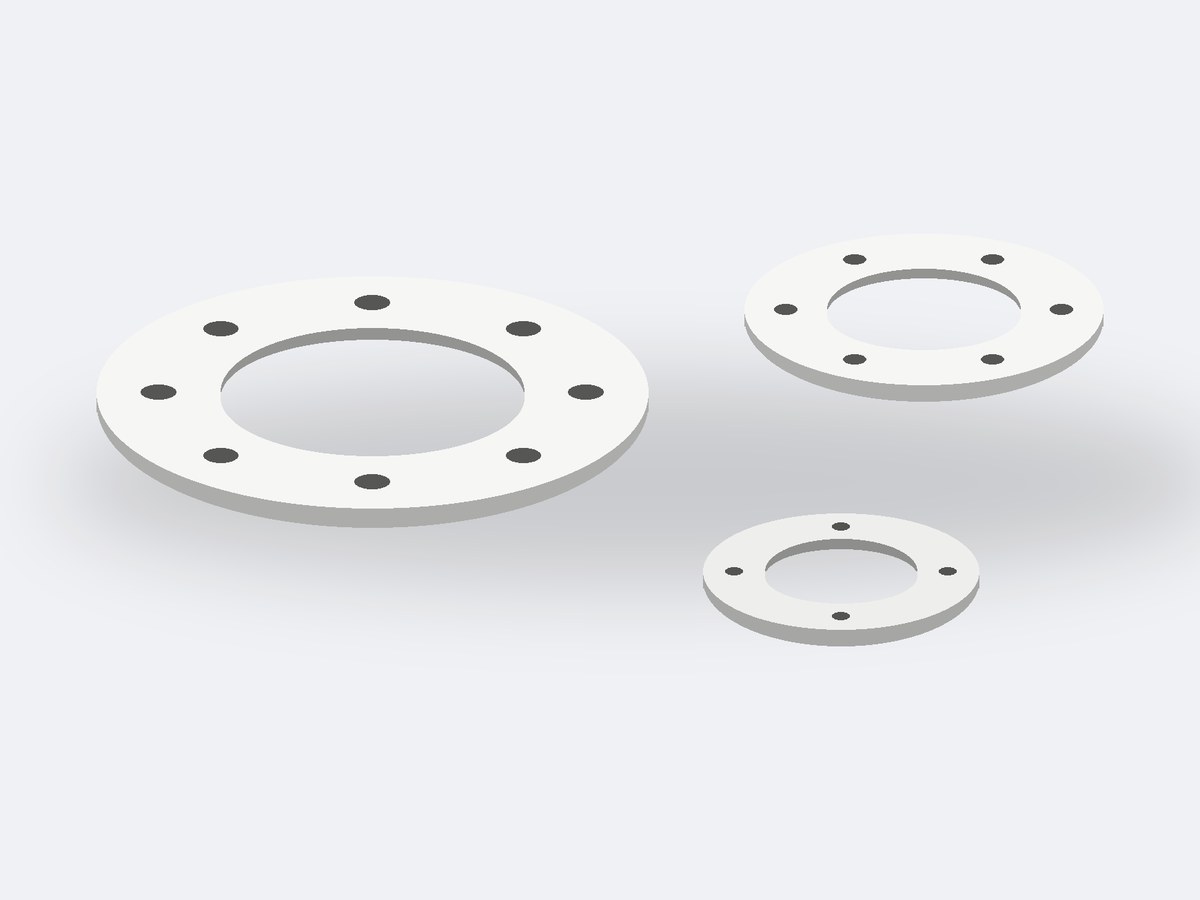
Short answer: a PTFE gasket is a seal cut or moulded from polytetrafluoroethylene (PTFE, often sold as Teflon). It is used between flanges and joints where chemicals, high purity or a wide temperature range rule out rubber and fibre gaskets. The main choices are virgin PTFE, filled PTFE, expanded PTFE and envelope gaskets.
PTFE gasket means a gasket made from polytetrafluoroethylene. “Teflon gasket” is the same thing under the brand name.
| Type | What it is | Best for | Watch out for |
|---|---|---|---|
| Virgin PTFE | Pure PTFE sheet | Highest chemical purity, food and pharma | Creeps (cold flows) under bolt load |
| Filled PTFE (glass, carbon, graphite, silica, barium sulphate) | PTFE with a filler | Better creep resistance and strength than virgin | Check the filler against the fluid |
| Expanded PTFE (ePTFE) | Soft, porous PTFE | Uneven or delicate flanges, glass-lined equipment, low bolt load | Check pressure rating |
| Envelope gasket | PTFE jacket over a compressible core | Cost-effective chemical sealing with better recovery | Core and envelope design must suit the service |
| Modified PTFE | Improved creep and sealing behaviour | Demanding chemical service | Confirm grade with supplier |
PTFE gasket sheet is the raw material from which gaskets are cut. It is sold by thickness, commonly in the range of 1.5 to 3 mm, and in different grades. Use PTFE sheet when you need custom shapes, non-standard flanges or small runs. Use ready-cut gaskets for standard flanges. Our guide to ready-cut vs custom PTFE gaskets explains the trade-off.
Diode Trading EST supplies PTFE sheet and PTFE gaskets from Al Khobar. Send us the flange size, standard and fluid and we will recommend a grade. Every order from Diode Trading EST is supplied with a Material Test Certificate. Request a quote.
A gasket made from polytetrafluoroethylene, used to seal flanges where chemical resistance matters.
None in practice. Teflon is a brand name for PTFE.
Sheet material cut into gaskets, available in virgin and filled grades and in several thicknesses.
Virgin gives the highest purity. Filled grades resist creep better. Choose based on the fluid and bolt load.
Up to about 260 °C for the material. The working limit of the gasket also depends on pressure and design.
Related guides: What Is PTFE? · PTFE Thread Seal Tape Guide · PTFE Coating Guide
See our range of high-visibility safety mats and markers designed to reduce trip hazards across your site.
 10 October, 2026 | Admin
Planning a crane lift in Qatar means solvi
Read more