How to Calculate Outrigger Pad Size: 3 Formulas
 10 September, 2026 |
  Admin
Admin
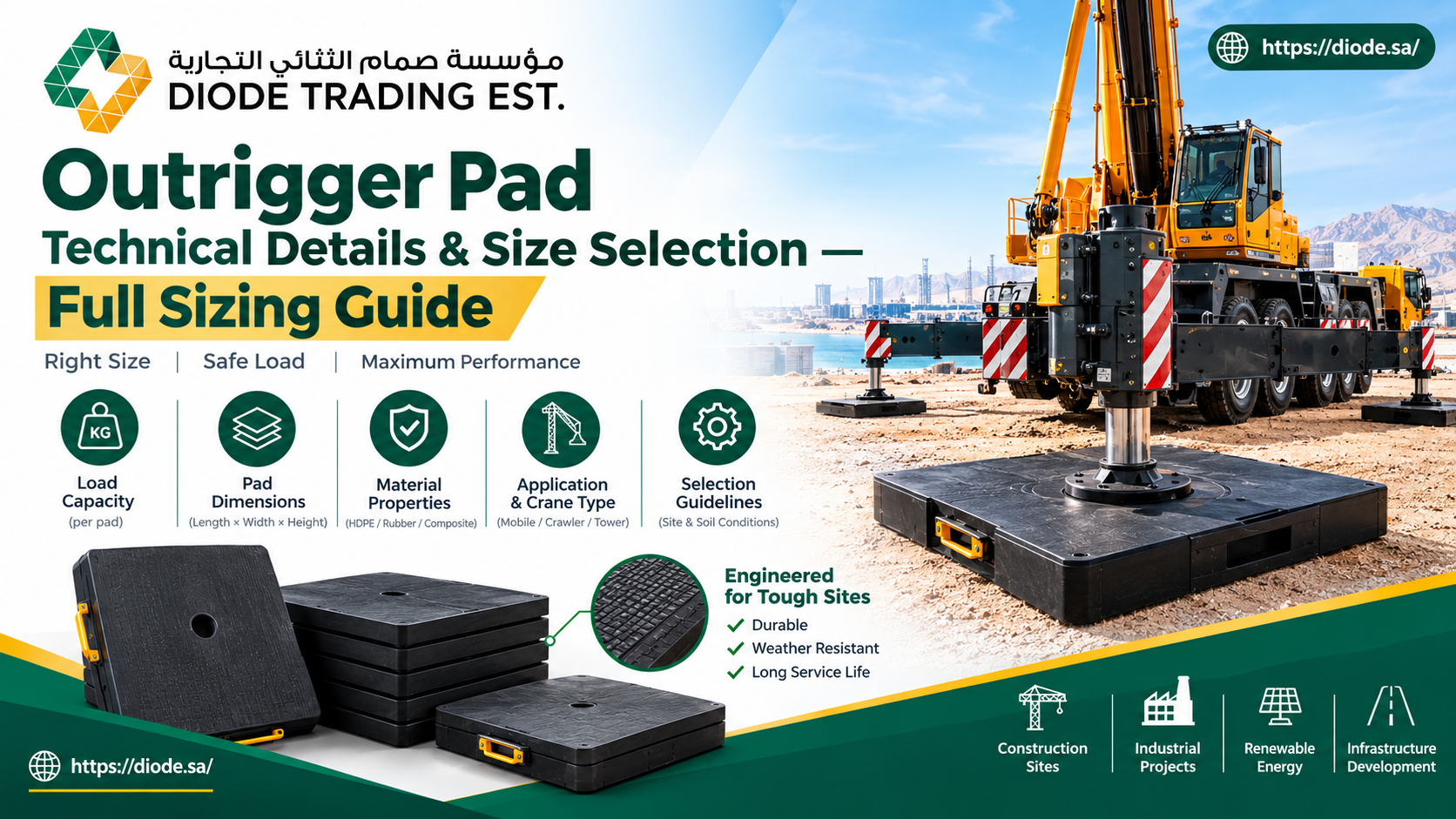
Calculating outrigger pad size comes down to one core relationship: the load being applied, divided by the pad’s contact area, has to stay below what the ground underneath it can safely bear. Everything else — crane brand, outrigger configuration, ground type, and safety margin — feeds into that one calculation.
Want the answer without the manual math? Use our free Outrigger Pad Size Calculator, then read on to understand the three formulas behind it.
The core formula
Required pad area (m²) = (Outrigger load × safety factor) ÷ allowable ground bearing pressure. Load is taken from your crane’s load chart in tonnes (converted to kN by multiplying by 9.81), and ground bearing pressure is typically expressed in kPa.
Typical ground bearing pressure references
| Ground Type | Typical Bearing Pressure (kPa) | Notes |
| Rock / compacted aggregate | ~300 kPa | Indicative only — confirm on site |
| Compacted fill | ~200 kPa | Indicative only — confirm on site |
| Sandy / loose soil | ~120 kPa | Indicative only — confirm on site |
| Sabkha / soft / reclaimed | ~75 kPa | Indicative only — confirm on site |
Why the safety factor matters
A safety factor (typically 1.25–2.0×) accounts for uncertainty in the actual ground conditions, dynamic loading during a lift, and the consequences of getting it wrong. Outrigger Pad Calculator Standard practice for most jobs is 1.5×; less-understood or higher-risk ground conditions warrant the higher end of that range.
Try the Outrigger Pad Size Calculator
We’ve built a free sizing calculator that runs this exact formula — enter your outrigger load and ground condition, and it returns a recommended starting pad size from the Saferig range. It’s a sizing reference, not a substitute for engineering sign-off on critical lifts.
How to Use the Outrigger Pad Size Calculator
Running the outrigger pad size calculator only takes a few inputs. Start with the maximum outrigger load shown on your crane’s load chart for the configuration and radius you plan to use, then convert it to kilonewtons if it is given in tonnes. Next, identify the ground bearing pressure for your site from a geotechnical report where available, or use the indicative references above as a starting point. Enter both figures along with your chosen safety factor, and the calculator returns a minimum required pad area and a recommended starting pad size from the Saferig range. Always treat the result as a starting reference point rather than a final engineering answer, especially on soft or variable ground.
Common Outrigger Pad Sizing Mistakes to Avoid
The most frequent mistake is using a generic ground bearing pressure figure instead of confirming actual site conditions, which can undersize a pad on soft or reclaimed ground. Another common error is applying the safety factor to the pad area instead of the load, which produces a smaller and less conservative result than intended. Crews sometimes also forget that the outrigger pad size calculator assumes a level, stable base, so pads set on packed ice, standing water, or an uneven surface need additional preparation regardless of what the calculator returns. For lifts near ground bearing capacity limits, or on ground types not covered by the indicative table above, it is worth having a geotechnical engineer confirm bearing pressure before finalizing pad size, consistent with the general lift-planning guidance in OSHA’s crane and derrick safety standards. Pairing a correctly sized pad with a proven product, such as the UHMWPE outrigger pads supplied across Saudi Arabia and the GCC, gives crews a reliable safety margin on most job sites.
If you are unsure which pad size to start with, our team can review your crane’s load chart and site ground conditions directly and recommend a Saferig pad size that matches both the load and the safety factor you need for the job, so you are not relying on the calculator alone for a critical lift.
FAQ
What safety factor should I use for a standard construction lift?
1.5× is standard practice for most jobs on reasonably well-understood ground. Increase to 2.0× for less-
certain ground conditions or higher-consequence lifts.
Recent Posts


High Visibility Reduce Trip Hazards
See our range of high-visibility safety mats and markers designed to reduce trip hazards across your site.
Related Blogs