


Bridge Bearing Pads in Saudi Arabia
Technical Specification
Overview
Diode Trading EST is famous for supplying high-quality bridge bearing pads that provide structural load support, control movement, reduce vibration, and ensure long-term sustainability. We offer a variety of bridge bearing pads, including neoprene rubber pads, steel pads, and PTFE sliding bearings. Reinforced elastomeric bearings are useful for buildings, heavy infrastructure applications, and bridge construction.
Advantages & Features
1. Horizontal & high vertical load bearing capacity
2. Absorb vibration & reduce noise.
3. Manage rotation & thermal expansion.
4. Excellent weather resistance, UV protected, and chemical resistance
5. Higher service life with a low maintenance process
6. Prevention of wear by removing metal-to-metal contact
7. Custom shapes and sizes
Product Variety
Neoprene Rubber Bearing Pads
Top-notch chloroprene rubber (CR) manufacturers offer high-quality neoprene pads known for outstanding vibration absorption, structural stability, and load distribution. For horizontal and vertical loads, shear deformation, and thermal expansion, neoprene pads offer excellent accommodation.
PTFE Sliding Bearing Pads
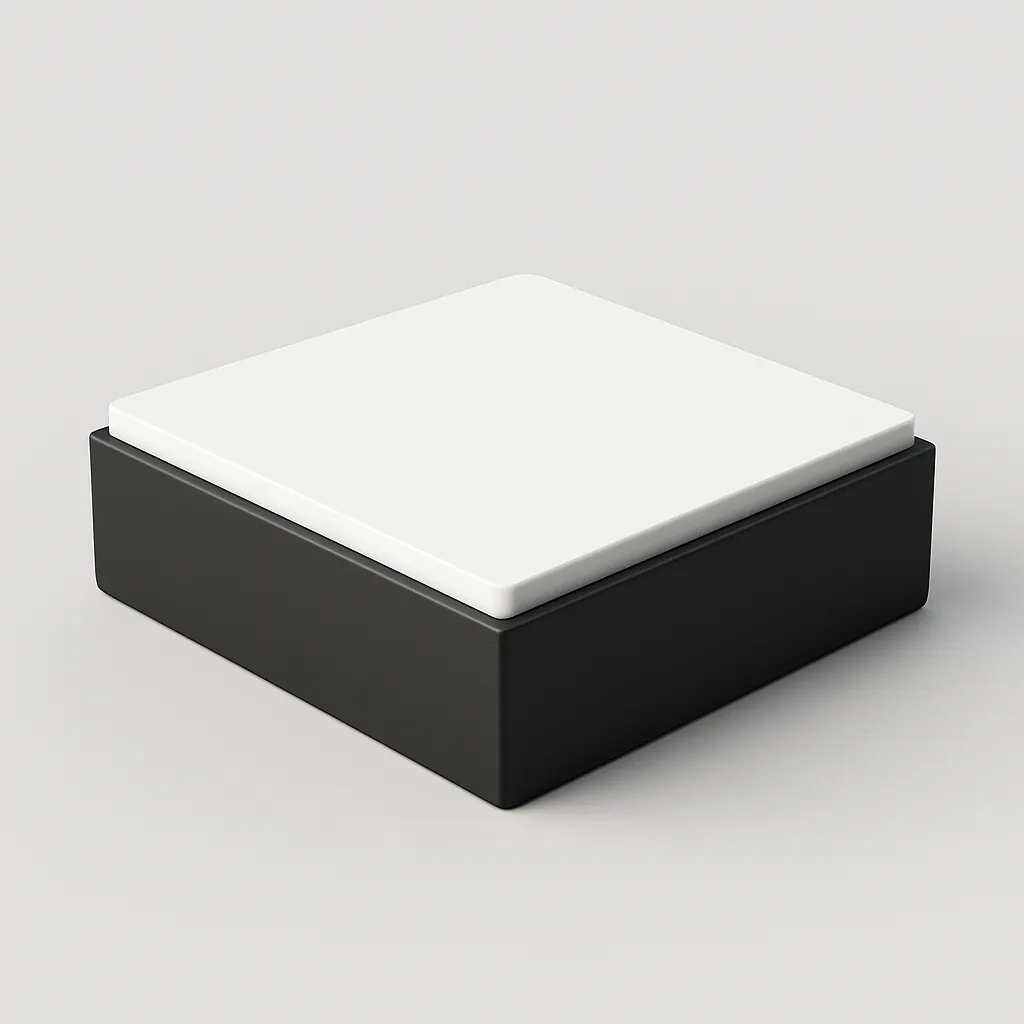
For structural design with large horizontal displacement, PTFE sliding pads are combined with an elastomeric support featuring a low-friction PTFE layer. It allows smooth sliding under heavy load-bearing capacity.
Steel-Reinforced Elastomeric Bearings
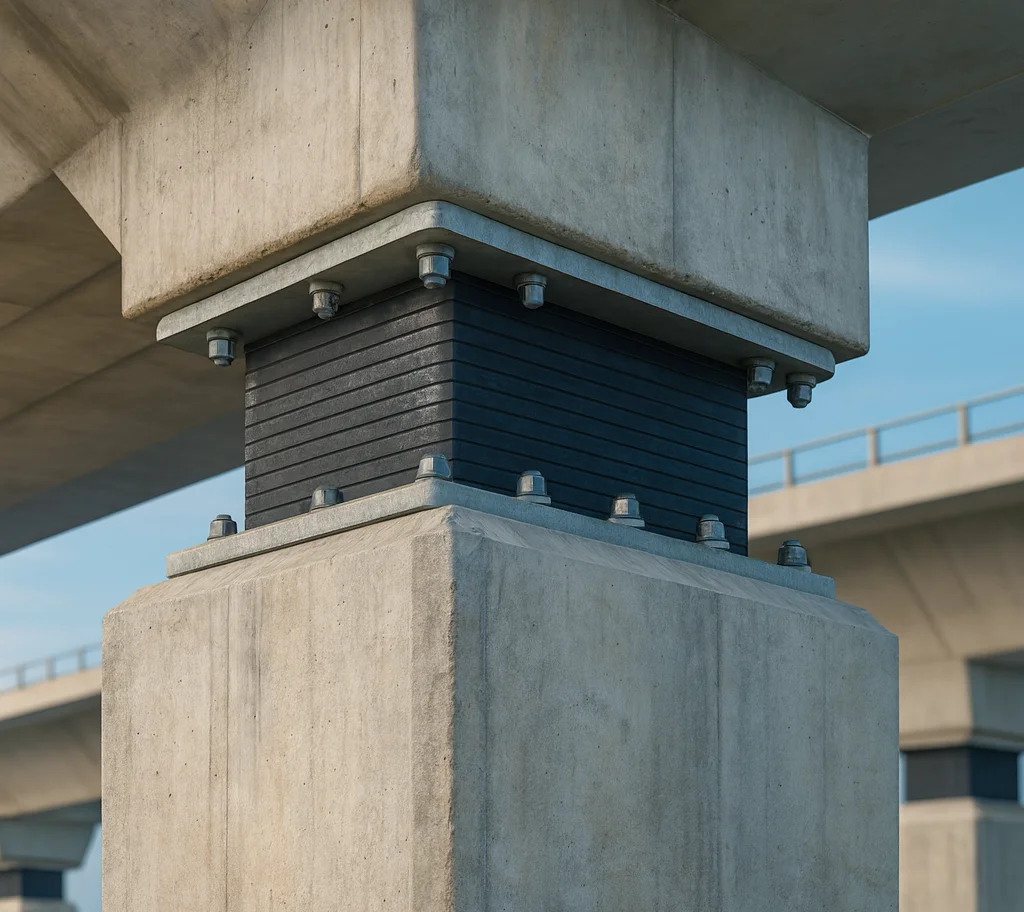
Embedded steel laminations are the base of steel-reinforced elastomeric bearings. These bearings offer superior load-bearing capacity, ensure high rotational performance, and are resistant to dynamic and seismic forces.
Comparison of all bearing pad types:
| Specification | Neoprene Bearing Pad | PTFE Sliding Pad | Steel-Reinforced Pad |
|---|---|---|---|
| Material | Chloroprene Rubber (CR) | Rubber + PTFE Layer | Rubber + Steel Laminations |
| Load Capacity | High | High (Low Friction) | Very High |
| Movement Capability | Thermal + Rotation + Shear | Large Sliding Movement | Thermal + Seismic Movement |
| Durability | UV, Weather, Chemical Resistant | Abrasion + UV Resistant | Extreme Structural Durability |
| Shapes | Rectangular / Circular / Custom | Rectangular / Custom | Rectangular / Square |
| Best Use | Standard & Highway Bridges | Long-Span Bridges | Heavy-Load Structures |
Elastomeric Bridge Bearings Supplier Saudi Arabia
Diode Trading EST supplies elastomeric bridge bearings, steel-laminated neoprene bearing pads and PTFE sliding bearings for bridges, overpasses and buildings in Saudi Arabia. Elastomeric bearings carry vertical loads from the deck while allowing the small rotations and movements caused by traffic, temperature and shrinkage.
Neoprene Laminated Bearing Pads Supplier
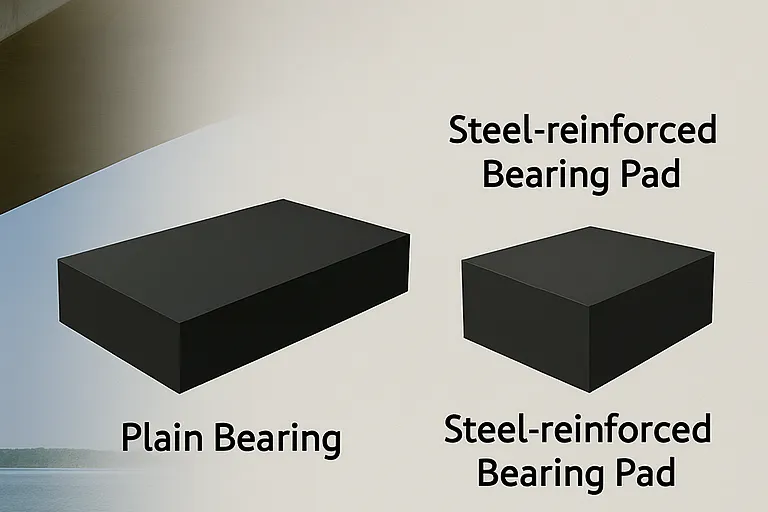
Neoprene laminated bearing pads are made from layers of chloroprene rubber bonded to steel plates. The steel layers limit bulging so the pad can carry higher loads, while the rubber allows shear movement and rotation. Plain neoprene pads are used for lighter loads and smaller movements. See the specification table on this page for the pad types we supply.
Structural Bearings Saudi Arabia
Beyond bridges, structural bearings are used under precast beams, steel structures, industrial platforms, marine and port structures and building expansion joints. We supply pads cut to the size and thickness shown on your drawings.
PTFE Sliding Bridge Bearings Supplier
Where the deck must slide over larger distances, a PTFE sliding surface is added to the elastomeric bearing. The low friction of PTFE (Teflon) against a polished stainless steel plate lets the structure move freely. See our PTFE bridge bearing slide plates.
Choosing a Bearing Pad: Load, Movement and Standards
To specify a bearing pad, the designer needs the vertical load, the expected horizontal movement and rotation, and the design standard used for the project, such as the AASHTO M251 requirements shown on this page. Send us the bearing schedule or drawings and we will confirm the pad type, size and thickness. Every order ships with a Material Test Certificate (MTC).
Bridge Bearing Guides and Case Studies
- Case Study: Bridge Bearing Supply for a Multi-Span Overpass Project
- Elastomeric Bridge Bearing Suppliers — What to Compare in Saudi Arabia
- Bridge Bearing Pads — Diode’s Elastomeric Bearing Solutions for KSA Infrastructure
- Case Study: Specifying Bearing Pads for a Precast Overpass Connection
- Neoprene Bearing Pads Saudi Arabia — Bridge & Structural Applications
Applications
- Bridges
- Metro railways
- Pedestrian bridges
- Flyovers
- Marine & port structures
- Industrial platforms
- Structural building supports
Industries Served
- Infrastructure & transportation
- Civil Engineering
- Industrial Construction
- Marine & Port Engineering
- Government & Public Works
Ordering / Inquiry Information
- Essential bearing (Neoprene, PTFE, Steel Reinforced)
- Loading conditions and structural types
- Need constant movement & rotation
- Environmental exposure
- Applicable design standard (EN 1337, AASHTO, BS 5400)
- Delivery and quantity timeframe
Bridge Bearing Pads – Design Standards, Materials, and Related Products
Our Bridge Bearing Pads are manufactured to recognised structural bearing standards, including EN 1337 and AASHTO bridge bearing design requirements, covering elastomeric, PTFE-faced, and steel-reinforced bearing types for highway bridges, metro railways, and marine structures.
Diode Trading EST manufactures the Neoprene, PTFE, and steel-reinforced components used in our Bridge Bearing Pads in-house. See our PTFE Products range for the low-friction sliding surfaces used in PTFE bearings, and our Rubber and Polyurethane Product range for the elastomeric compounds used in laminated bearing pads.
Every Bridge Bearing Pads order is engineered to the client’s specified loading conditions, movement and rotation requirements, and environmental exposure, with full documentation for structural engineers and contractors across Saudi Arabia and the GCC. Our quality team verifies compression set, shear modulus, and bond strength on every production batch before dispatch, so structural engineers can specify Bridge Bearing Pads with confidence for critical infrastructure projects.
Elastomeric Bearing Pad Technical Specification
Our neoprene and steel-reinforced elastomeric bearing pads are manufactured to meet AASHTO M251 material property requirements across all three standard hardness grades:
| Property | Grade 50 (Shore A) | Grade 60 (Shore A) | Grade 70 (Shore A) |
|---|---|---|---|
| Shear Modulus (G) @ 23°C | 0.66-0.90 MPa | 0.90-1.38 MPa | 1.38-2.07 MPa |
| Minimum Tensile Strength | 15.5 MPa | 15.5 MPa | 15.5 MPa |
| Minimum Ultimate Elongation | 450% | 400% | 300% |
| Maximum Compression Set (ASTM D395 Method B, 22hr @ 70°C) | 25% | 25% | 25% |
| Ozone Resistance | No cracking | No cracking | No cracking |
Figures shown are the AASHTO M251 standard requirement ranges for elastomeric bridge bearings; our quality team verifies shear modulus, tensile strength, and compression set against these on every production batch. In addition to EN 1337, AASHTO, and BS 5400, we can manufacture and document bearings to IRC:83 (Indian Roads Congress) and UIC 776-3R (European rail bearing) requirements on request for export and multi-standard projects.
Steel-Laminated vs. Plain Elastomeric Bearing Pads
A plain elastomeric pad is unreinforced rubber (or rubber + PTFE layer) suited to lighter loads and shorter spans, where cost and simplicity matter more than load capacity. A steel-laminated bearing pad embeds thin steel plates between rubber layers, which restrains the rubber’s lateral bulging under compression — this lets it carry substantially higher vertical loads and perform reliably under dynamic and seismic forces, at a higher unit cost. As a rule of thumb: plain pads suit pedestrian bridges, minor culverts, and light industrial platforms; steel-laminated pads suit highway bridges, metro viaducts, and any span carrying heavy or seismic loading.
Sizing a Bridge Bearing Pad by Span and Load
Bearing pad plan size and thickness scale with three project-specific inputs rather than a fixed span chart: the vertical load being transferred, the horizontal movement and rotation the joint must accommodate (thermal expansion, live-load rotation, seismic displacement), and the allowable bearing stress on the substructure. Our engineering team sizes each bearing pad from your structural drawings and loading schedule — share your span length, reaction loads, and movement requirements with our team for a pad recommendation and quote specific to your project.
Bridge Bearing Pads FAQs
Q1. What types of bridge bearing pads does Diode Trading EST supply?
A. We supply neoprene rubber bearing pads, steel bearing pads, and PTFE sliding bearings, including reinforced elastomeric bearings for bridges, buildings, and heavy infrastructure.
Q2. What is the purpose of a bridge bearing pad?
A. Bridge bearing pads provide structural load support, control movement between structural sections, and reduce vibration to ensure long-term structural sustainability.
Q3. What industries and applications use bridge bearing pads?
A. Bridge bearing pads are used in bridge construction and heavy infrastructure projects requiring reliable load transfer, movement control, and vibration reduction.
Bridge Bearing Pads PRODUCT GALLERY






BRANDS WE TRUST


