


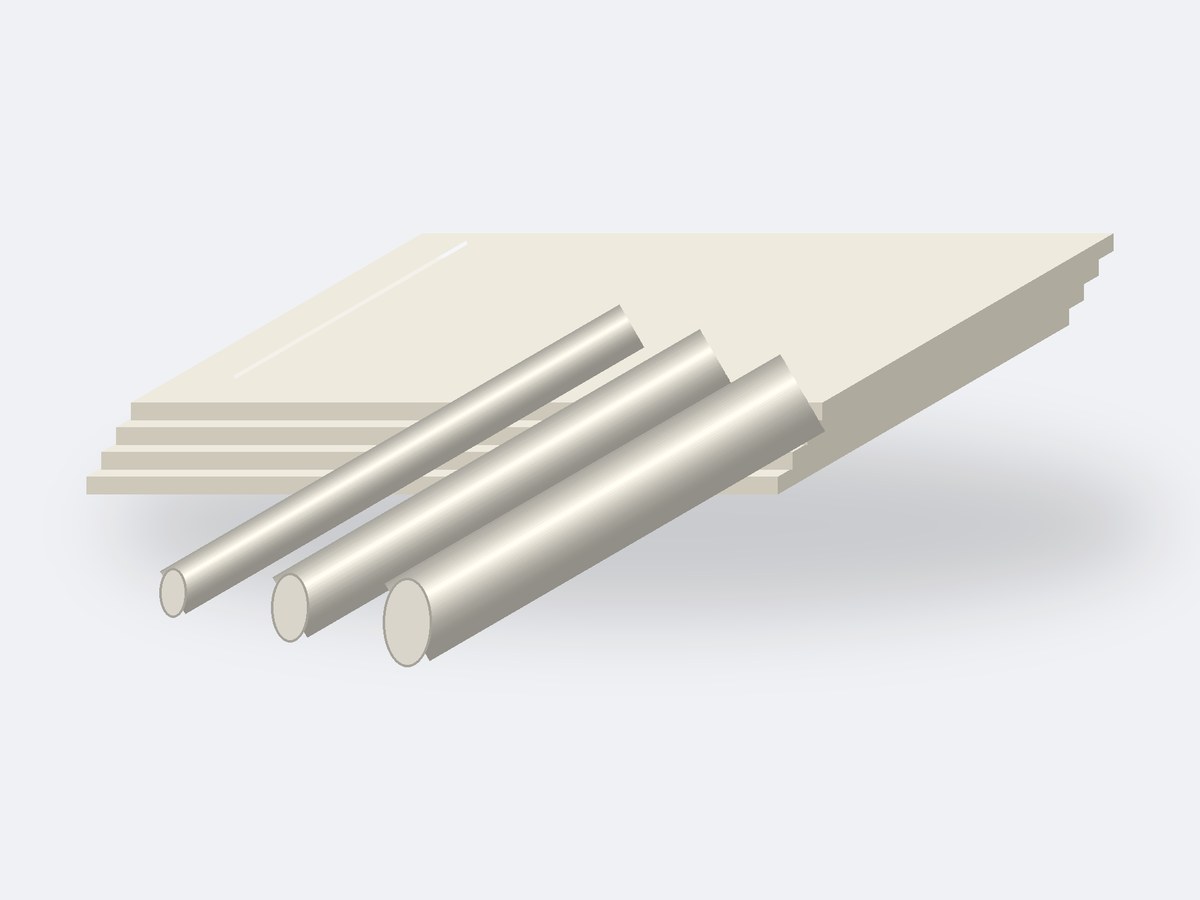
PVDF Sheets, Rods & Machined Parts
Technical Specification
| Also Known As | Polyvinylidene fluoride, PVF2 |
|---|---|
| Form | Sheets, Rods, Machined parts |
| Key Properties | Excellent chemical resistance to acids, salts and halogens; high purity; good UV resistance; continuous use up to around 140–150°C; higher strength and rigidity than PTFE |
| Typical Uses | Chemical tank linings, pump and valve parts, piping components, semiconductor and high-purity water systems |
| Supply | Full sheets, cut pieces, or CNC-machined parts as per drawing |
Key Benefits of PVDF
PVDF is a fluoropolymer that sits between general plastics and PTFE — very chemically resistant, but stiff and strong enough to machine into structural parts. Key benefits include:
- Broad Chemical Resistance: Handles most acids, salts, oxidisers and halogens.
- Mechanical Strength: Stiffer and stronger than PTFE, so it holds tight tolerances in machined parts.
- High Purity: A common choice for high-purity water and process systems.
- UV and Weather Resistance: Suitable for outdoor installations under the Gulf sun.
For even wider chemical resistance at higher temperatures, see our PTFE products.
Common Applications of PVDF
PVDF is used wherever aggressive chemicals meet mechanical load, including:
- Chemical storage and process tank linings
- Pump housings, impellers and valve components
- Piping, fittings and flange parts for chemical lines
- Desalination and high-purity water treatment components
- Scrubber and fume-handling parts
PVDF Products We Supply
- PVDF sheets — for linings and fabricated parts
- PVDF rods — for machined components
- Machined PVDF parts — made to your drawing
PVDF vs PTFE vs PP
PP is the economical choice for moderate chemicals and temperatures. PVDF adds much wider chemical resistance and higher temperature capability while staying rigid and weldable. PTFE offers the widest chemical and temperature range but is softer and cannot be welded in the same way.
Send us your drawing, sizes and quantities and our Al Khobar team will confirm availability, lead time and a quotation for delivery anywhere in Saudi Arabia and the GCC.
Frequently Asked Questions
Q1. What temperature can PVDF handle?
A. PVDF is typically used continuously up to around 140–150°C, depending on the grade and load. Confirm your process conditions with us before ordering.
Q2. Is PVDF the same as PTFE?
A. No. Both are fluoropolymers, but PVDF is stiffer and stronger, while PTFE has wider chemical and temperature resistance and lower friction.
Q3. Can PVDF be machined?
A. Yes. PVDF machines well into precise parts such as valve seats, pump components and fittings.
Q4. Do you supply PVDF in Saudi Arabia?
A. Yes. Diode Trading EST supplies PVDF sheets, rods and machined parts across Saudi Arabia and the GCC from our Al Khobar base.
BRANDS WE TRUST


