
 05 October, 2026 |
  Admin
Admin
PTFE Components for Food &
Food and beverage processing equipment needs
Read more
Enquire Now
 28 September, 2026 | Admin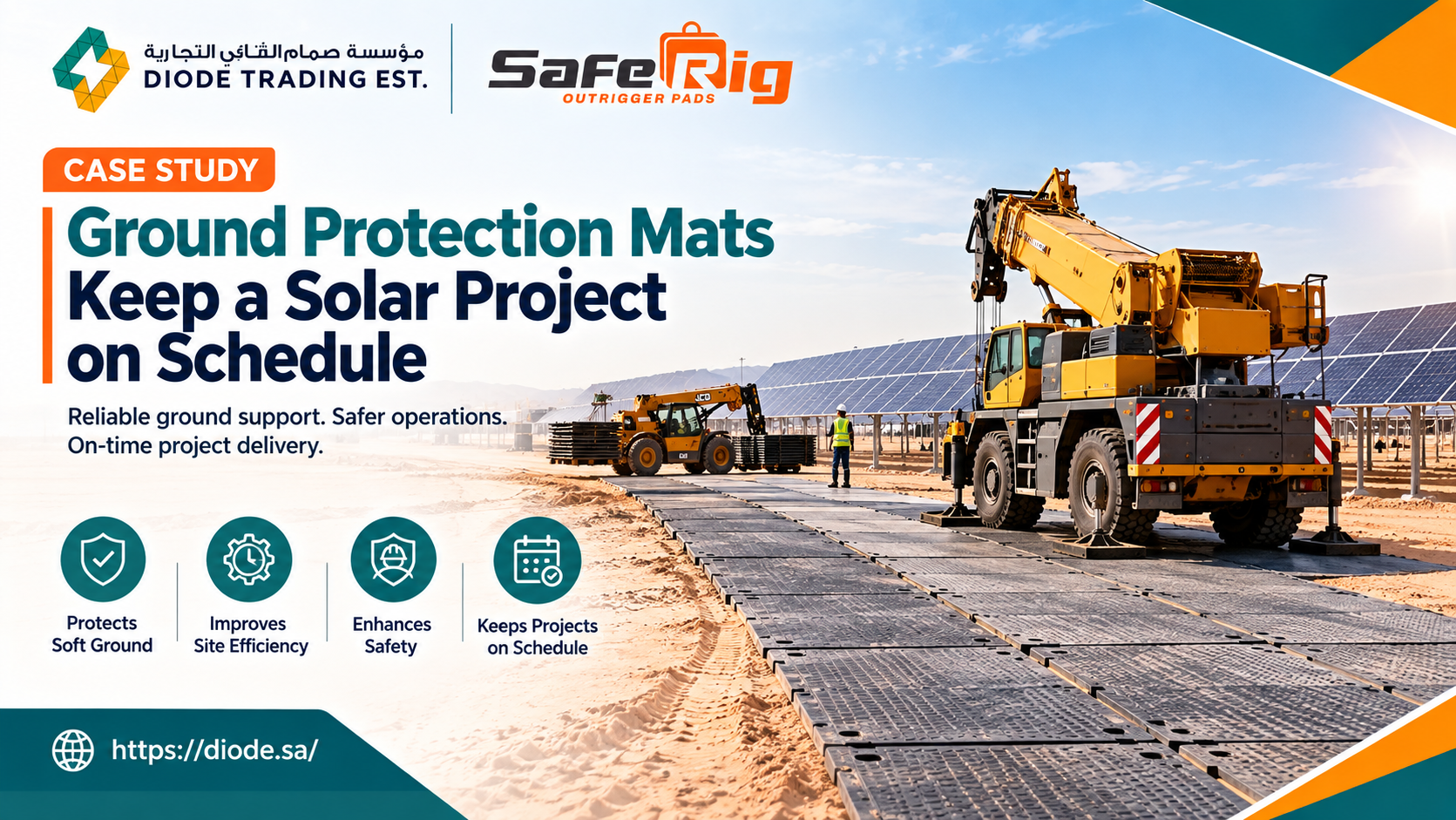
This ground protection mats case study looks at how one utility-scale solar farm construction team solved a familiar desert-site problem: their delivery trucks and pile-driving equipment were struggling on loose sand access routes between racking rows, slowing the installation schedule.
Loose desert sand across the site’s internal access routes was reducing vehicle traction and, on a few occasions, requiring equipment recovery — both directly costing installation time on a schedule with limited slack. The contractor needed a solution that could move with the work, since the active construction zone shifted across the site every few weeks as racking installation progressed.
Interlocking ground protection mats were laid across the main internal access routes rather than just at fixed equipment positions, giving trucks and pile-driving rigs a stable surface to move across the site progressively as work advanced. Because the mats interlock and lift out cleanly, the crew could pick up completed sections and relay them ahead of the next work zone instead of ordering new coverage for every stage of the project.
Vehicle access delays dropped once the mats were in place, and the mat sections were relocated as installation progressed across different zones of the site — the kind of flexible, reusable ground protection that fits how solar construction actually moves across a large footprint. The contractor avoided the recovery downtime that had been eating into the schedule, and the same mat sections are now budgeted for reuse on the next phase of the project. No specialist equipment or additional labor was required to relocate the matting between zones, which kept the site team’s existing workflow largely unchanged.
Desert solar sites share the same core problem: loose sand that cannot reliably support repeated heavy vehicle traffic, especially during the pile-driving and racking phase when trucks are moving constantly. Planning matting coverage before mobilization, rather than reacting once trucks start getting stuck, is consistently the cheaper and faster path on projects of this size. This ground protection mats case study is a useful reference for any contractor budgeting temporary access solutions in Saudi Arabia, since reusable matting is typically far cheaper over a multi-phase project than repeated ground stabilization or recovery costs. For general background on temporary ground protection methods used on construction sites, see this overview of ground protection matting. If you are planning site logistics for a solar or utility-scale project, talk to Diode’s team about matting options before mobilization.
See our range of high-visibility safety mats and markers designed to reduce trip hazards across your site.
 05 October, 2026 | Admin
Food and beverage processing equipment needs
Read more 05 October, 2026 | Admin
Pharmaceutical manufacturing environments dem
Read more 04 October, 2026 | Admin
Semiconductor and electronics manufacturing p
Read more