
 23 October, 2026 |
 Admin
How to Choose Materials for Co
Wear from any contact betw
Read more
Enquire Now
 23 October, 2026 | Admin
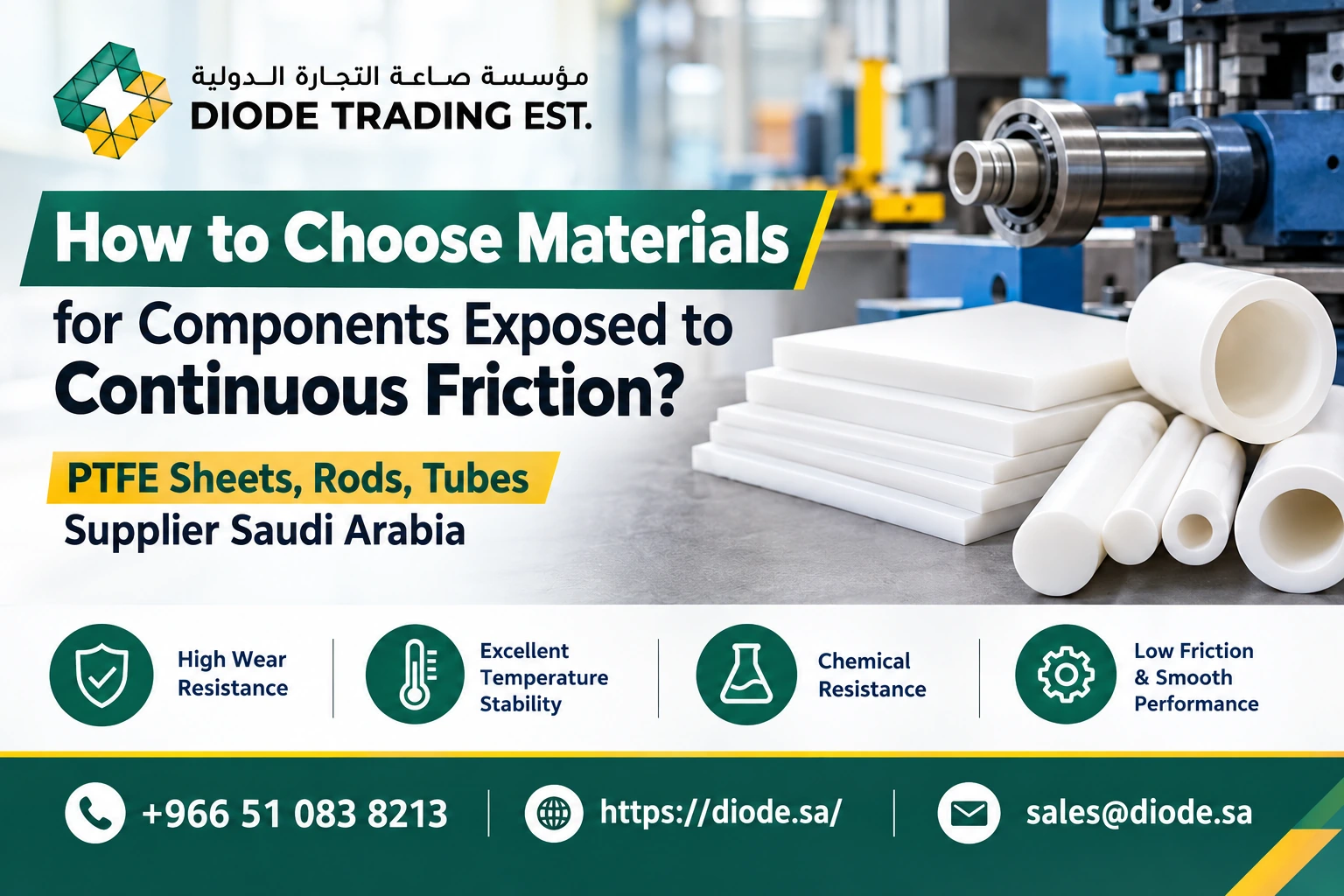
Wear from any contact between surfaces can result in some of the most serious engineering problems when accumulated over a long period of time. The choice of material for shafts, bearings, seals, guides, and other moving components is not simply about choosing a hard surface but also includes considerations such as friction, temperature, load, speed, exposure to chemicals, and maintenance environment. Engaging the services of a reputable PTFE sheets, rods, and tubes supplier in Saudi Arabia can assist in choosing appropriate PTFE types and grades.
The selection of proper material for machinery operating continuously is crucial. Frequent replacement of the parts may lead to higher expenses related to maintenance as well as to additional downtime. PTFE, engineering plastics, composites, metals, and special materials each have unique advantages. Material selection is greatly influenced by the environment under which machines run. Knowledge about material behavior when subjected to pressure, temperature, friction, and lubrication improves part design.
Friction, if continuously present, may wear off even those components that have been designed carefully. Selecting the appropriate material can help to minimize friction and prevent wear.
Choice of materials needs to start with the working conditions of the part. How much load is it going to support? How fast are the surfaces moving? How frequently are they coming into contact with each other? How many hours will the machine be operating? Good material for a slow guide may not be good for a high-speed bearing.
There are several variations of PTFE, and what works best will depend on the type of application and the exact specifications. Virgin PTFE sheets, rods, and tubes in Saudi Arabia could be used in situations where the chemical resistance, low friction, and nonstick properties of virgin PTFE would be useful. In mechanical uses, however, one should take a look at both virgin and reinforced PTFE.
The existence of low friction does not automatically mean that the materials are durable. Materials should be able to tolerate rubbing and not wear out. While evaluating materials for their wearing capacity, there are different considerations which should be taken into account. These include the load on the material, its kind of motion, surface finish, and the temperature under which it works.
Heat will develop fast if the surface remains in motion. All materials have a certain temperature range within which they retain their mechanical characteristics. PTFE has been noted to have a wide range of temperatures, but one needs to look at the specific grade used and not presume that all PTFE components work the same.
There are some frictional applications that require lubrication to work properly, whereas some applications require their components to work without any lubrication. In cases where lubrication cannot be easily added or is undesirable for some reason, then the use of a low-friction material becomes very effective.
Material selection for continuous friction parts requires the proper balance between friction, wear, loads, temperatures, and the chemistry involved. An ideal choice of material would be beneficial for efficiency, durability of parts, and lowering of maintenance cost.

See our range of high-visibility safety mats and markers designed to reduce trip hazards across your site.