
 23 October, 2026 |
 Admin
Neoprene vs Natural Rubber vs
Choosing the rubber
Bearing pads
Read more
Enquire Now
 23 October, 2026 | Admin
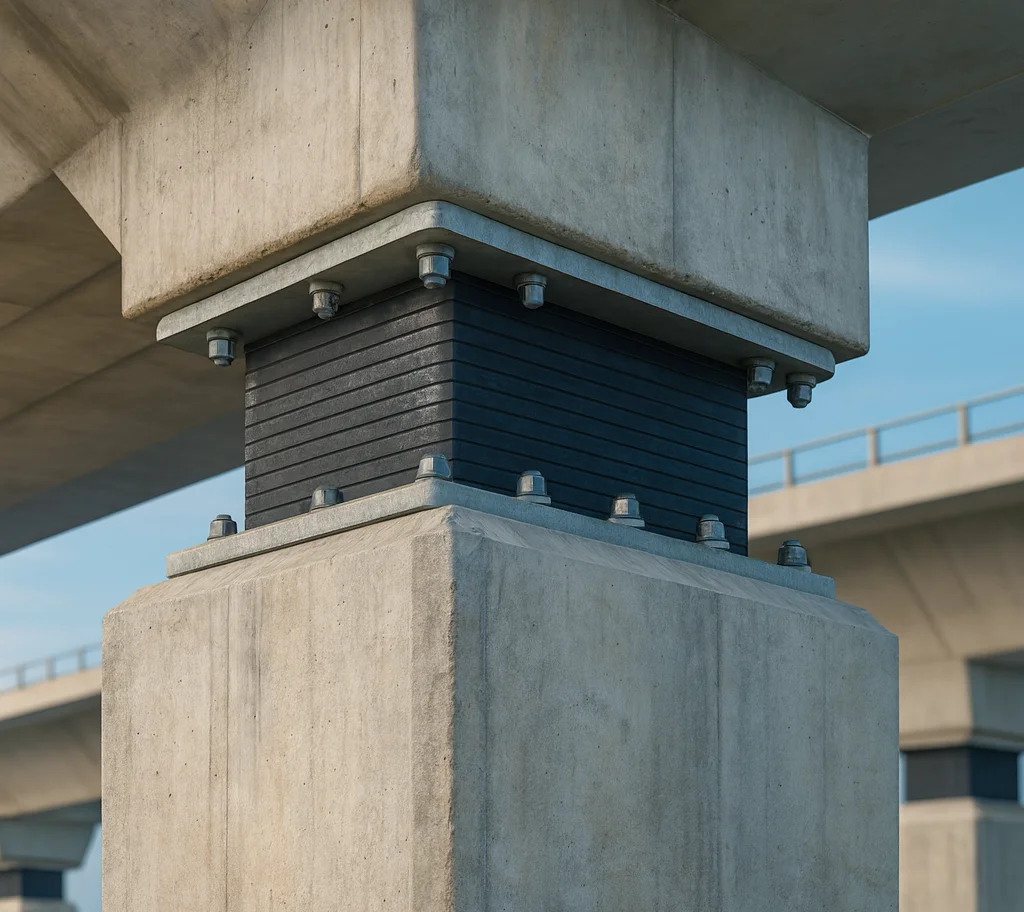
When a consultant reviews a neoprene bearing pad submittal, the question is simple: does the material meet the specification? Most bridge and heavy structural projects in the Gulf reference AASHTO M251, the American standard for plain and laminated elastomeric bridge bearings. Understanding what it asks for helps you submit the right documents the first time and avoid rejected materials.
This article explains the main requirements in plain language. The project specification always governs, so check your own documents before ordering.
M251 sets the requirements for the elastomer used in bearings, which can be natural rubber or neoprene (polychloroprene), along with the testing needed to show the material complies. It covers plain pads and laminated bearings with steel or fabric reinforcement.
Hardness (Shore A). M251 defines grades at Shore A 50, 60 and 70. Harder rubber is stiffer and carries more load, while softer rubber accommodates more movement. Shore A 60 is the most commonly specified for bridge work, with the grade ultimately selected by the designer.
Tensile strength. The standard requires a minimum tensile strength of 15.5 MPa across the hardness grades. This is the property most often quoted in supplier datasheets.
Elongation at break. Minimum elongation depends on the grade, with softer rubber required to stretch further. For Shore A 60 the minimum is 350 percent.
Compression set. This measures how much the rubber fails to recover after being held under compression at elevated temperature. M251 limits compression set to 25 percent maximum, which protects against permanent flattening in service.
Ozone resistance. Pads are tested for cracking under ozone exposure to ASTM D1149. This is one reason neoprene is preferred in outdoor structures.
Heat aging and low-temperature behavior. The standard also includes oven aging and low-temperature tests so the pad keeps its properties over time and across temperature extremes.
M251 refers to ASTM test methods for each property, for example D2240 for hardness, D412 for tensile and elongation, D395 for compression set, and D573 for heat aging. When a test report lists these methods, the consultant can check each result against the limits.
A strong bearing pad submittal typically contains:
At Diode Trading EST, we provide a Material Test Certificate with every order and can support compliance matrix responses on project submittals.
Diode Trading EST supplies neoprene bearing pads to AASHTO M251 and ASTM D2000 requirements from our Dammam warehouse, with delivery across the Kingdom. Share your project specification and we will confirm the grade and documentation we can provide. New to the topic? Start with what neoprene bearing pads are.
Request a Quote | See the Neoprene Bearing Pads product page or download technical documents

See our range of high-visibility safety mats and markers designed to reduce trip hazards across your site.