 16 October, 2026 |
 Admin
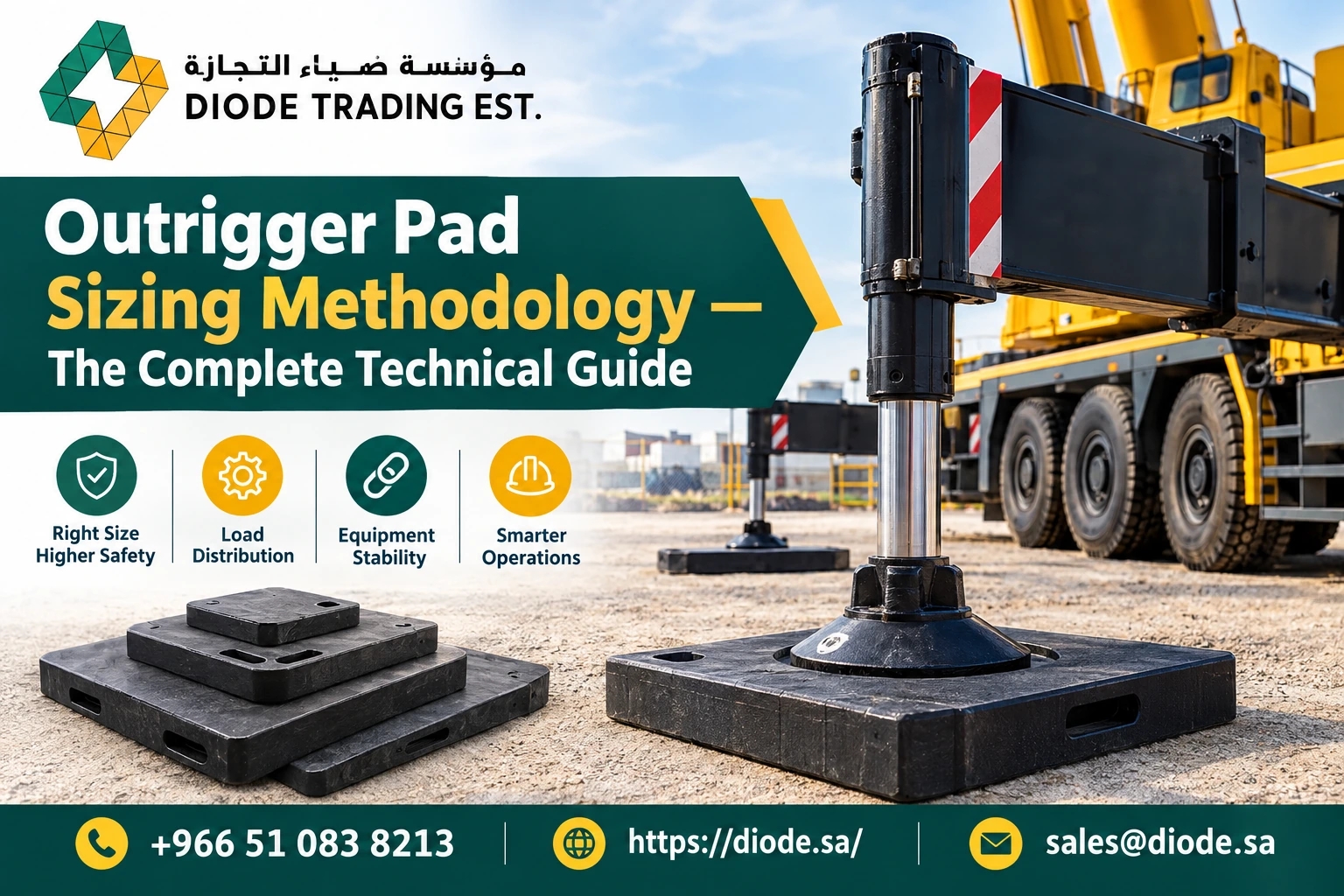
Outrigger Pad Sizing Methodolo
Read more

Enquire Now
 15 October, 2026 | Admin
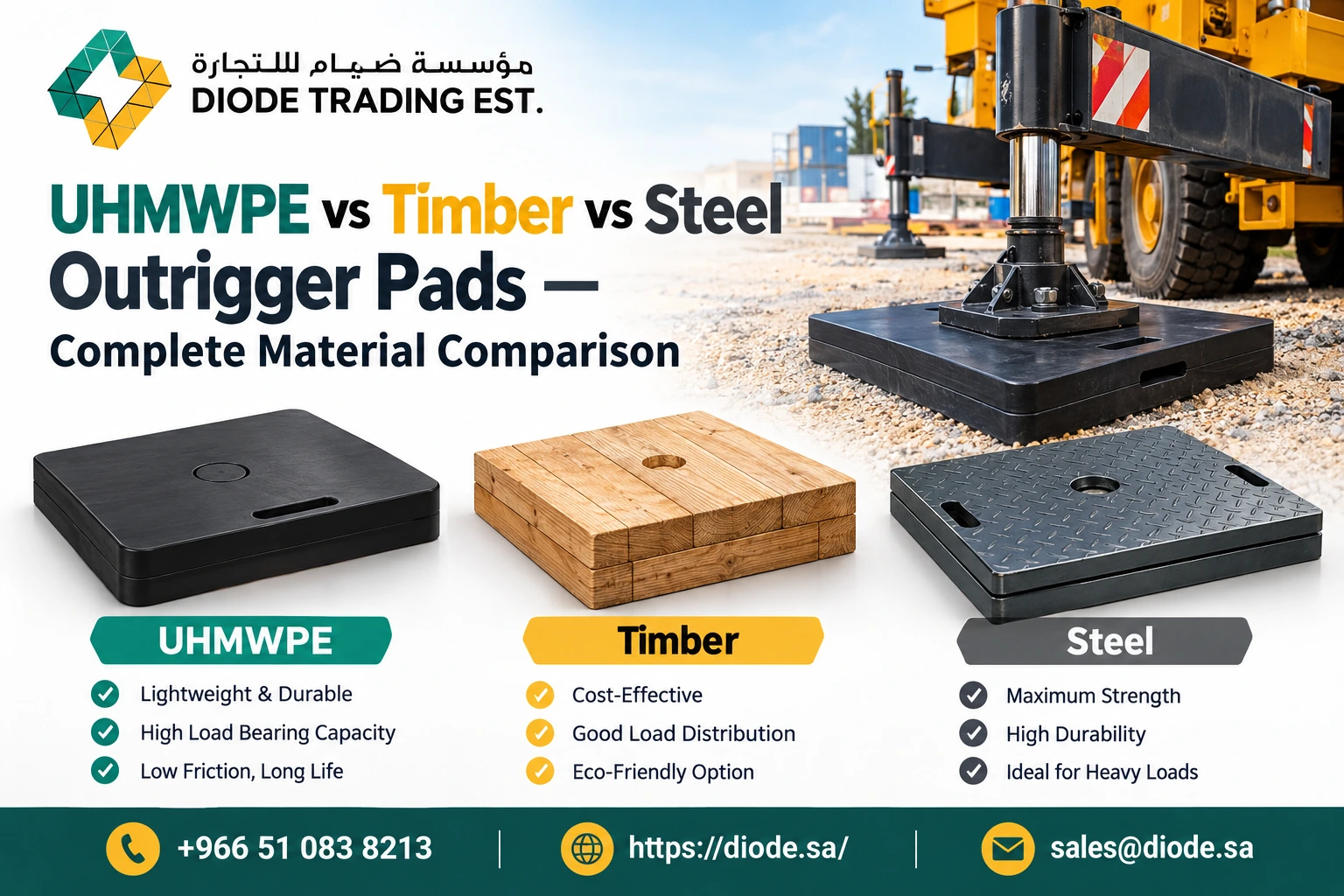
Three materials dominate the outrigger pad market: UHMWPE (a high-performance plastic), timber, and steel. Each has a genuinely different profile, and the right choice depends on how often you’ll use the pad, what it’ll be exposed to, and how much weight you’re willing to carry.
| Factor | UHMWPE | Timber | Steel |
| Weight | Light | Heavy | Very heavy |
| Upfront cost | Moderate-high | Low | High |
| Lifetime cost (repeat use) | Low | High (frequent replacement) | Moderate |
| Heat resistance | Excellent | Poor — dries, cracks, splits | Excellent |
| Chemical/moisture resistance | Excellent | Poor | Good, but corrodes over time |
| Load capacity per unit weight | Very good | Fair | Excellent |
| Handling/setup speed | Fast — single piece, light | Slow — often stacked/cribbed | Slow — heavy, needs equipment to move |
| Typical lifespan (repeat commercial use) | Years, minimal degradation | One season or less in harsh heat | Long, if corrosion is managed |
UHMWPE has become the default choice for commercial outrigger pad use, and the reasons are mostly about total cost of ownership rather than upfront price. It resists heat, chemicals, and UV exposure far better than timber, doesn’t corrode like steel, and is light enough that one person can carry and position a mid-size pad without equipment.
Where UHMWPE wins:
Where it’s a weaker fit:
Timber cribbing was the traditional default for decades, and it’s still in use — mainly because it’s cheap and universally available. The tradeoff is durability: timber dries and splits under sustained heat, absorbs water and swells, and degrades faster under repeated loading than either UHMWPE or steel.
Where timber wins:
Where it’s a weaker fit:
Steel plates offer the highest load capacity per unit area of the three materials, which makes them relevant for very heavy, concentrated loads. The tradeoffs are weight — steel plates typically need mechanical equipment just to move and position — and long-term corrosion risk, particularly in coastal or humid environments.
Where steel wins:
Where it’s a weaker fit:
1. If you’ll use the pad repeatedly across multiple projects, in a hot climate, and need documentation: UHMWPE.
2. If it’s a genuinely one-off job with a tight budget and no repeat use planned: timber can be acceptable.
3. If your load exceeds what a practical UHMWPE pad size can rate for, or the installation is semi-permanent: steel.
1. Is UHMWPE actually more cost-effective than timber long-term?
For contractors using ground protection repeatedly across multiple jobs, UHMWPE typically works out more cost-effective over time due to its much longer service life, even though the upfront cost per unit is higher than timber.
2. Can steel outrigger pads rust and become unsafe?
Yes, uncoated or poorly maintained steel plates can corrode over time, particularly in coastal or humid environments, which can affect structural integrity. Regular inspection is important for any steel pad in continuous or semi-permanent use.
3. Which material is lightest for manual handling?
UHMWPE is significantly lighter than steel for a comparable load rating, and generally comparable to or lighter than timber, making it the easiest of the three to handle without mechanical assistance.
See our range of high-visibility safety mats and markers designed to reduce trip hazards across your site.