 05 October, 2026 |
  Admin
Admin
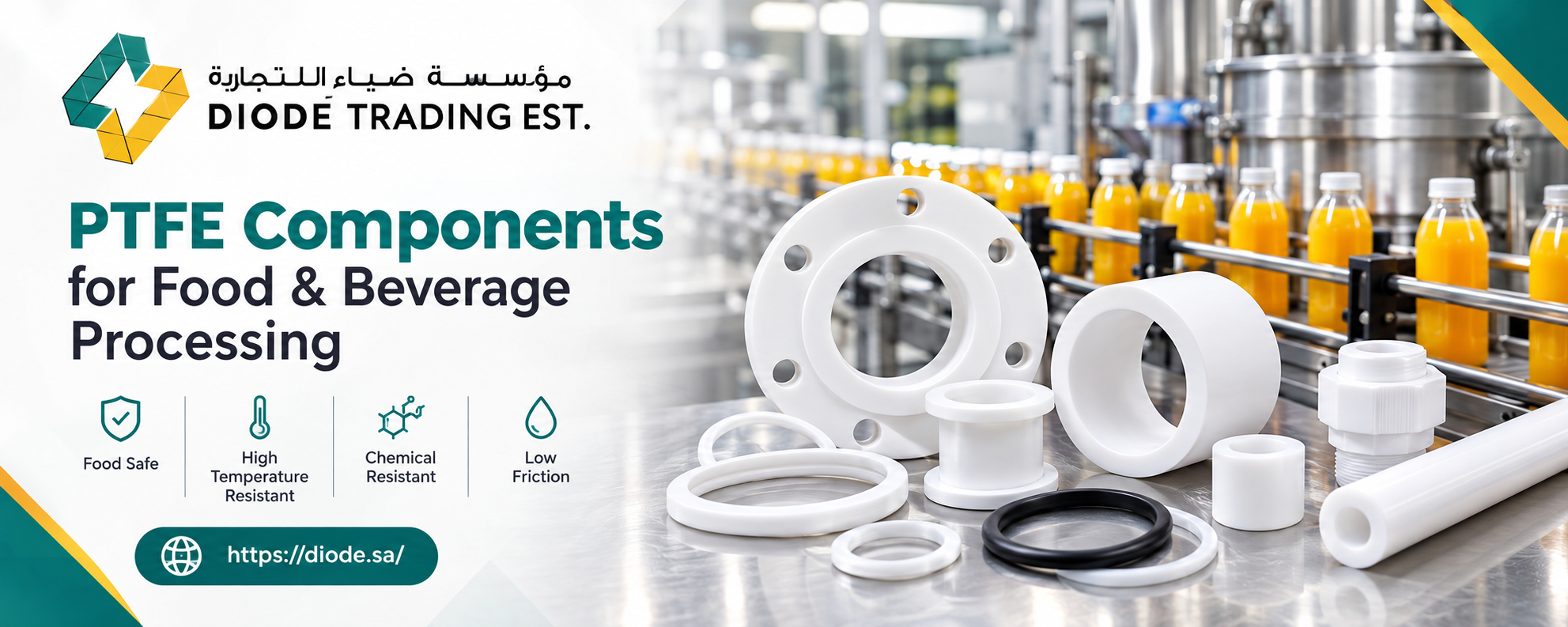
PTFE Components for Food &
Food and beverage processing equipment needs
Read more
Enquire Now
 01 October, 2026 | Admin
Pharmaceutical manufacturing environments demand materials that will not react with, contaminate or absorb the substances they contact. That requirement rules out most general-purpose plastics and rubbers. For buyers sourcing PTFE pharmaceutical Saudi Arabia projects, PTFE is a standard material choice across process equipment, from reactor seals to tablet-press components.
The properties that make PTFE useful in pharma are mainly about purity and cleanliness rather than mechanical strength.
Typical parts are machined from stock forms such as PTFE rods and PTFE sheet, or supplied as seals and rings. Our wider PTFE product range covers the available forms.
Virgin PTFE is the standard default for pharmaceutical applications because of its purity advantage over filled grades. The priority is to minimise any risk of filler material interacting with the process, and this generally outweighs the wear-resistance benefits that filled grades offer in other industries. Our virgin PTFE sheets and rods are the usual starting point. For a comparison of all grades, see the PTFE grades guide.
| Consideration | Virgin PTFE | Filled PTFE |
|---|---|---|
| Purity | Highest; no filler material | Filler present in the material |
| Typical pharma suitability | Default choice | Generally avoided in product-contact areas |
| Wear resistance | Lower | Improved, useful in non-contact mechanical parts |
| Where it fits | Seals, gaskets and product-contact parts | Wear parts away from the process stream |
General guidance only. Final grade selection depends on the process and your quality team’s requirements, and details are confirmed on quotation.
Material requirements differ by application and by regulatory jurisdiction. Before specifying any component, confirm the certification standard your process requires with your quality and compliance team, and tell us the requirement when you send an enquiry so that the right grade and documentation can be discussed.
Requirements vary by specific application and regulatory jurisdiction. Confirm the certification standard required for your process (such as USP Class VI or equivalent) with your quality or compliance team before specifying.
Virgin PTFE is the usual default because it avoids any filler interaction with the process. Filled grades are generally kept for wear parts away from the product stream.
PTFE has a wide temperature tolerance and a cleanable surface, which supports sterilisation and cleaning routines. Confirm the exact cycle temperature and method for your equipment when enquiring.
Send your drawings, sizes, grade requirements and quantities to the Diode Trading EST team in Al Khobar and we will respond with a quotation and technical guidance.

See our range of high-visibility safety mats and markers designed to reduce trip hazards across your site.
 05 October, 2026 | Admin
Food and beverage processing equipment needs
Read more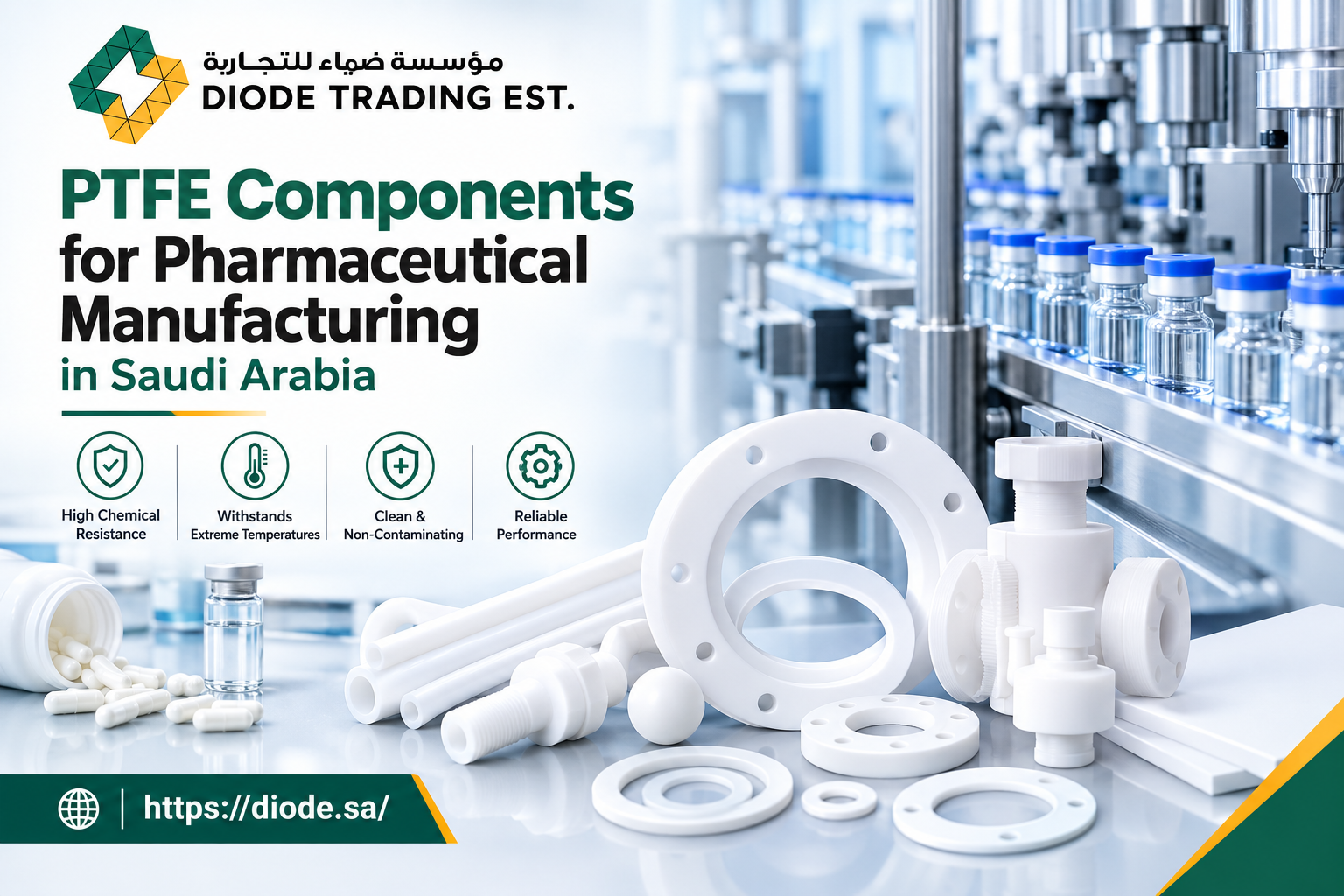 05 October, 2026 | Admin
Pharmaceutical manufacturing environments dem
Read more 04 October, 2026 | Admin
Semiconductor and electronics manufacturing p
Read more