
 19 September, 2026 |
  Admin
Admin
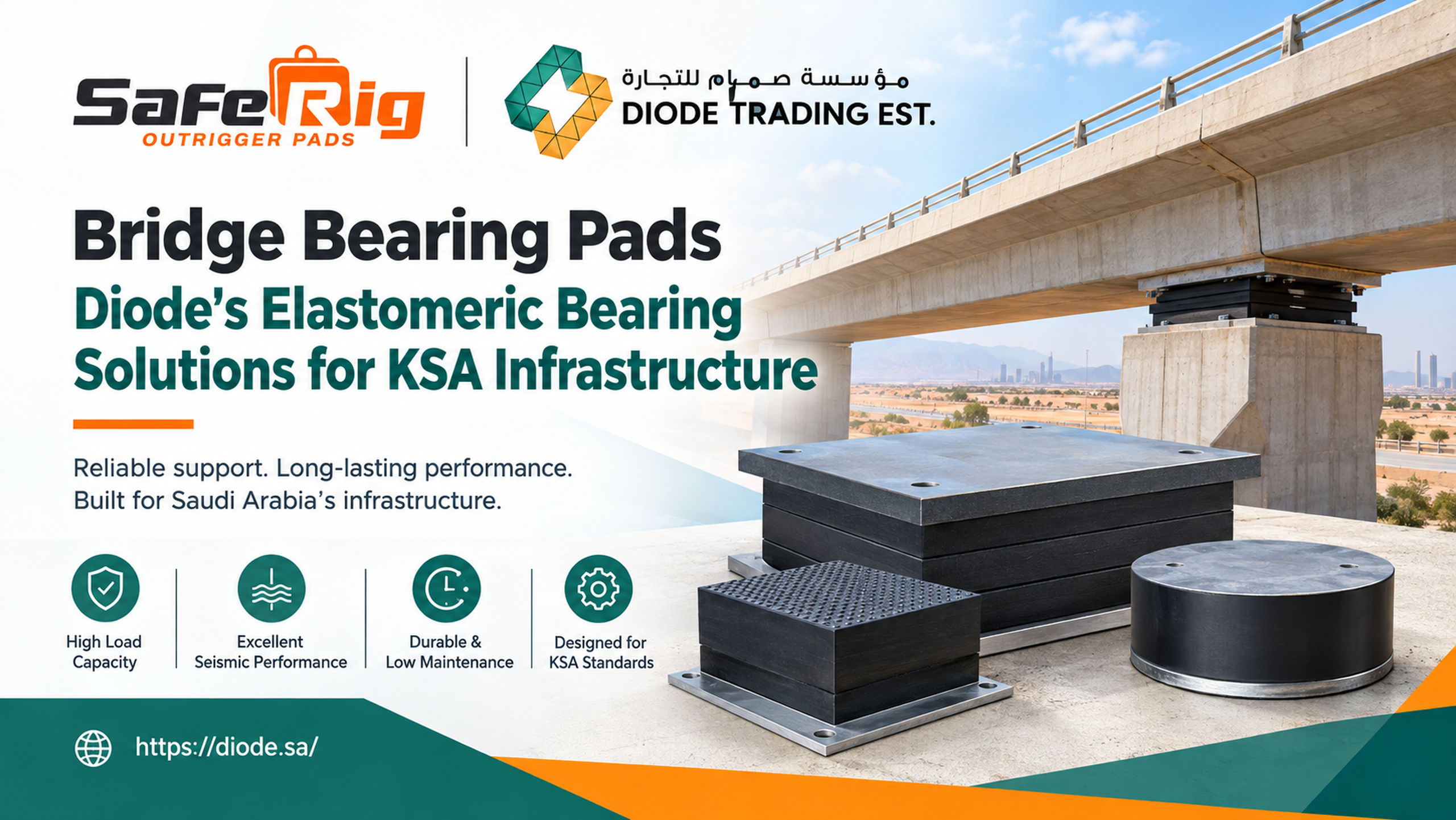
Bridge Bearing Pads — Diode&
Saudi Arabia's road and rail infrastructure b
Read more
Enquire Now
 17 September, 2026 | Admin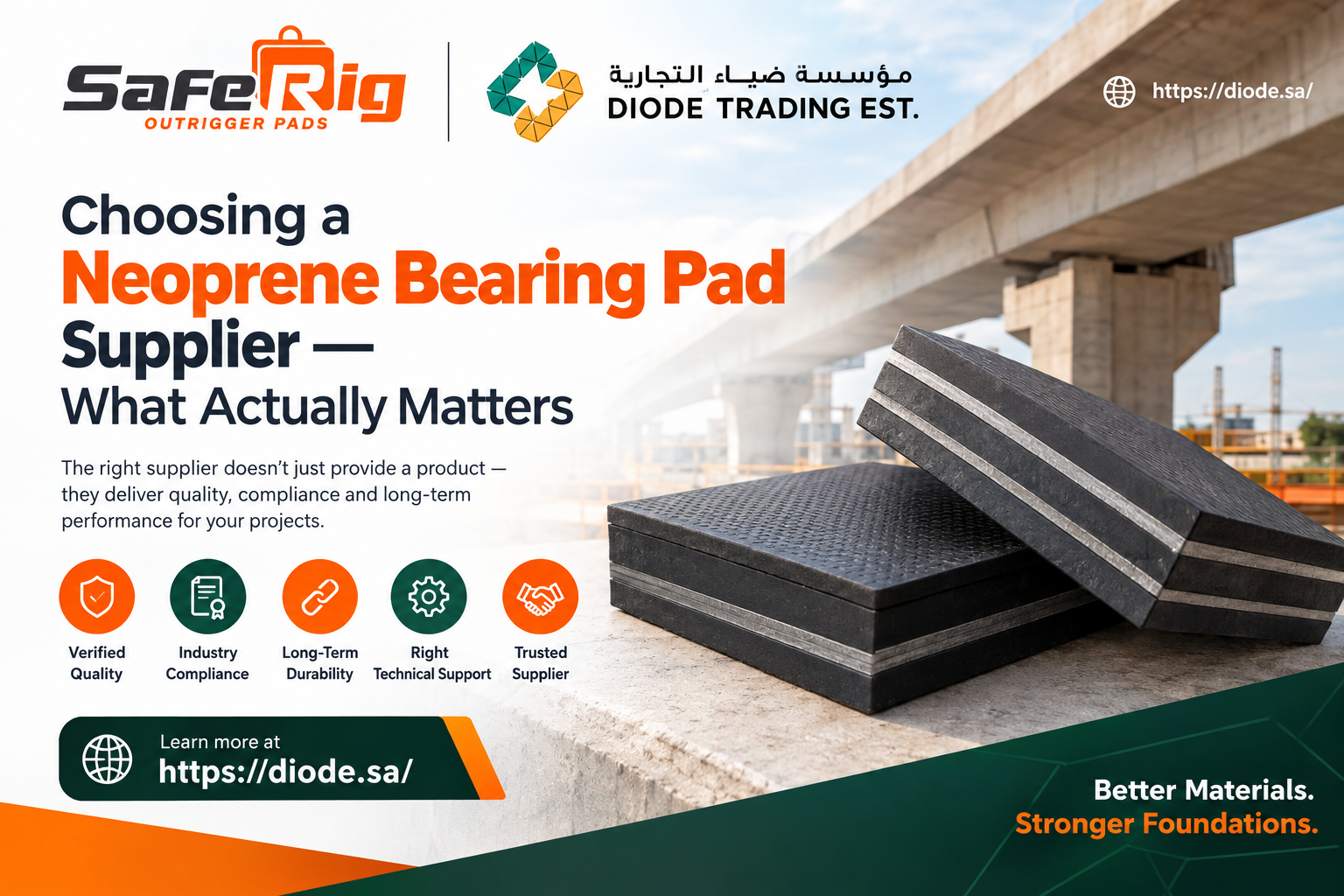
Neoprene bearing pads are a structural component, Outrigger pads Dammam not a convenience item — which means the supplier you choose should be evaluated more like an engineering partner than a catalog vendor.
A neoprene bearing pad’s only job is to sit between two structural elements and manage the load, movement, and vibration transfer between them — quietly, for the life of the structure. When the spec is wrong, the failure doesn’t show up immediately. It shows up years later as cracking at the bearing seat, uneven load distribution, or a bearing that has compressed permanently and can no longer accommodate thermal movement. That’s why the supplier conversation should start with your load case and movement range, not a size chart.
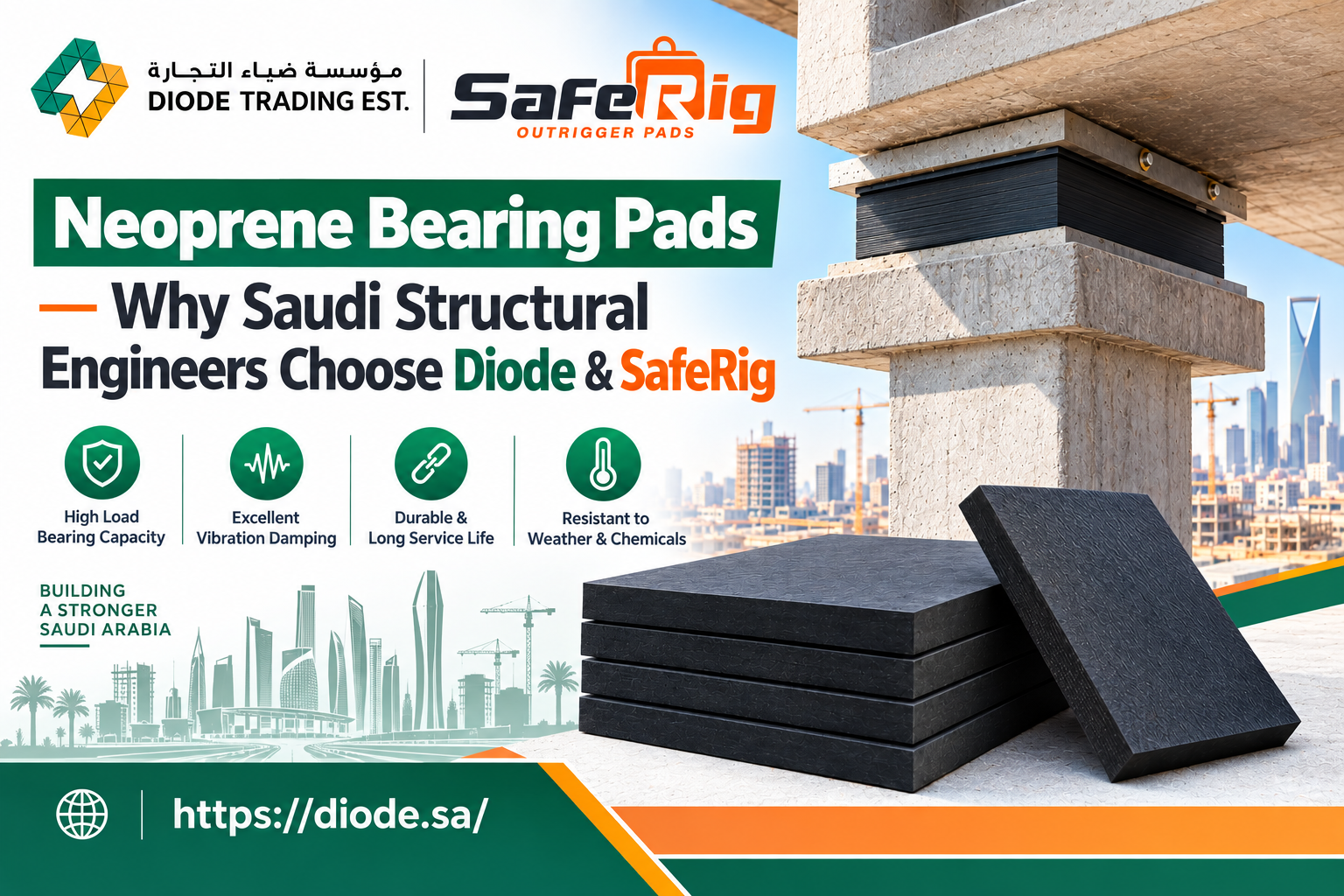
Plain neoprene pads work well for lighter structural applications — precast panel seating, light equipment mounts, and secondary structural connections where load and movement are moderate. Once loads increase, plain neoprene bulges laterally under compression, which limits how much load it can safely carry at a given thickness. Steel-laminated bearings solve this: thin steel plates bonded between neoprene layers restrict that lateral bulging, allowing significantly higher load capacity in the same bearing height. Bridge girder bearings and heavier industrial structural connections in Saudi Arabia typically call for the laminated construction.
For any structural bearing going into a permanent installation — bridges, industrial platforms, precast structures — ask your supplier for material test certificates confirming hardness (Shore A), tensile strength, and compression set values, along with dimensional tolerances on the finished bearing. If the project has a structural QA/QC file, this documentation should be part of it from day one, not requested retroactively after installation. A supplier that can’t produce this documentation on request is a signal to keep looking.
The fastest way to get an accurate neoprene bearing pad quote is to share your load case (dead + live load), required movement range, and any seismic or thermal displacement allowance from your structural drawings. This lets us confirm plain vs. steel-laminated construction and the correct hardness grade before quoting, rather than after a wrong-spec pad has already shipped. See our Bridge Bearing Pads page for elastomeric bearing specifications, or send your structural drawings for a project-specific quote.
See our range of high-visibility safety mats and markers designed to reduce trip hazards across your site.
 19 September, 2026 | Admin
Saudi Arabia's road and rail infrastructure b
Read more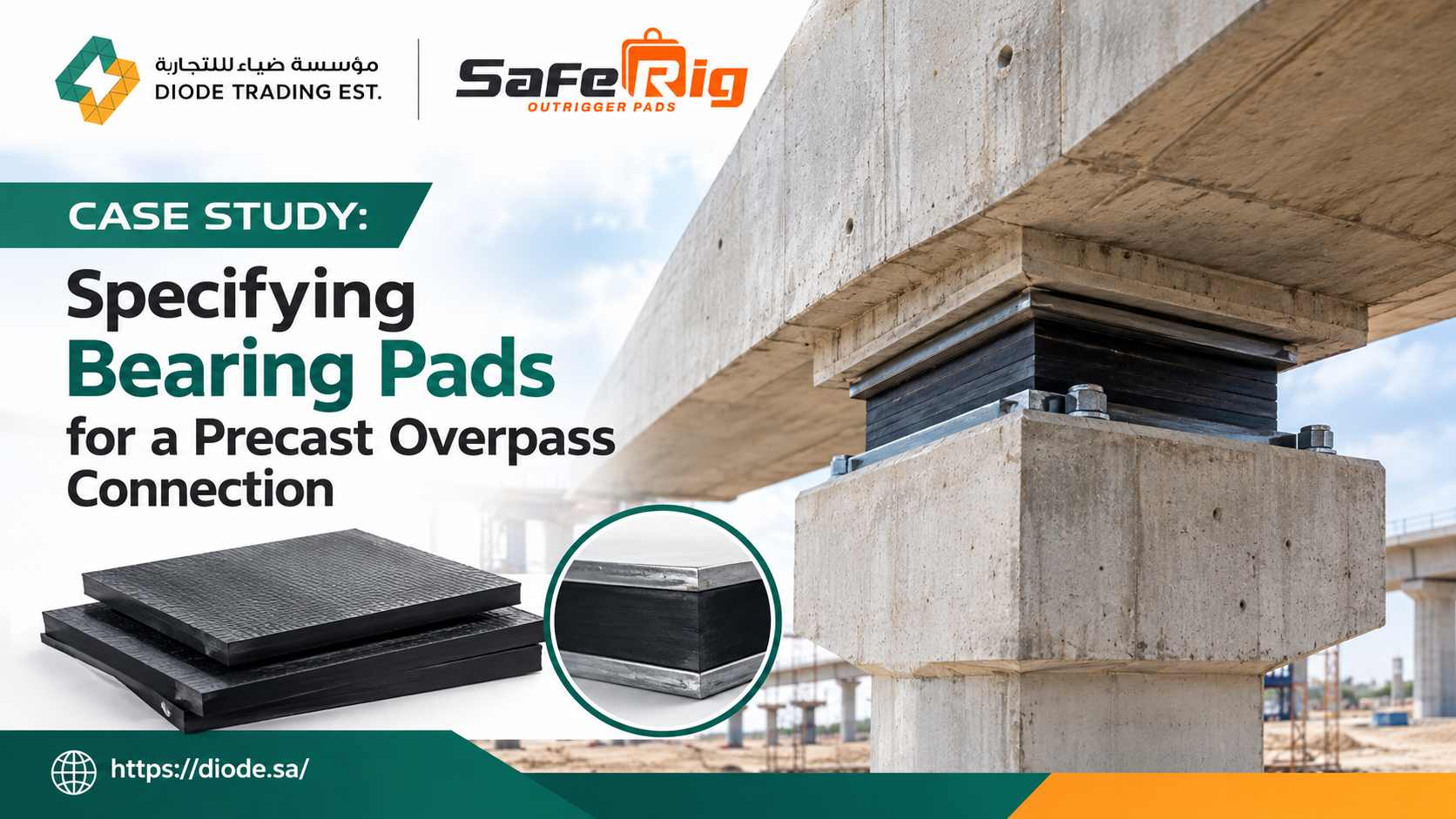 18 September, 2026 | Admin
A structural contractor working on a precast
Read more
17 September, 2026 | AdminNeoprene bearing pads are a structural compon
Read more