 05 October, 2026 |
  Admin
Admin
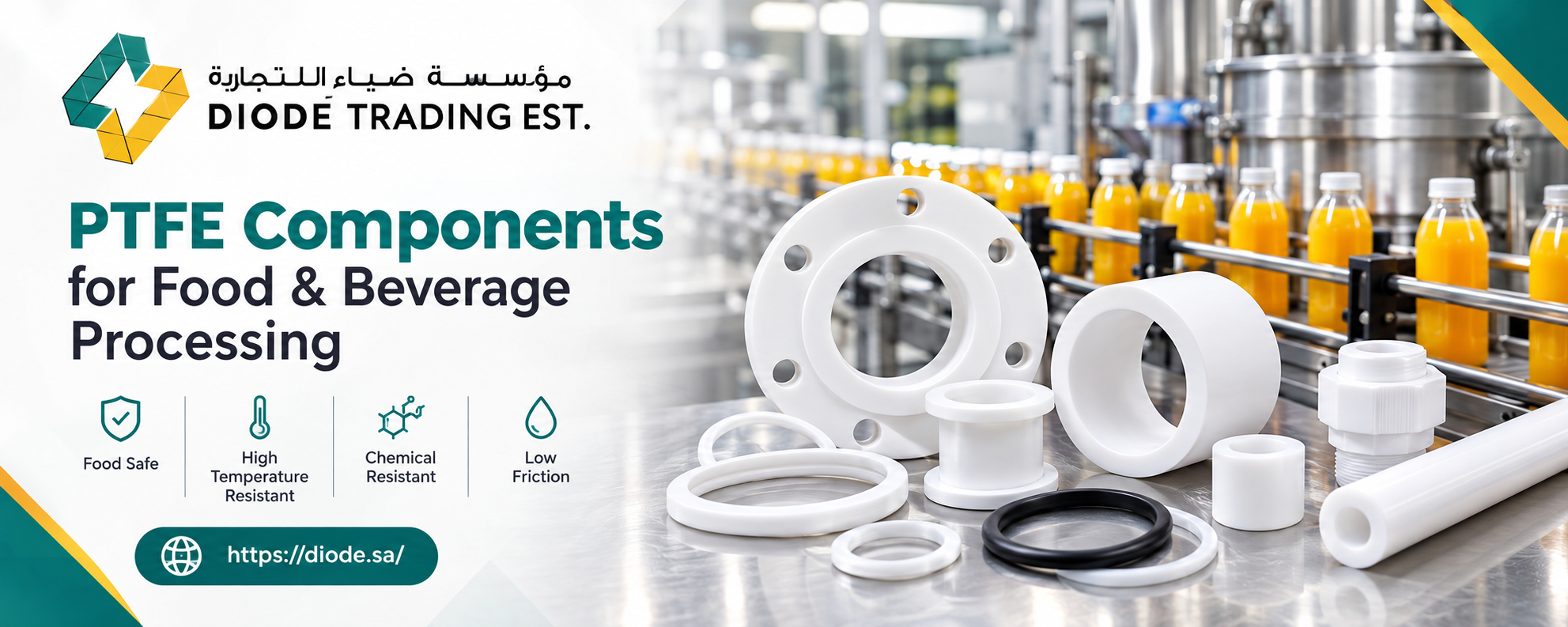
PTFE Components for Food &
Food and beverage processing equipment needs
Read more
Enquire Now
 01 October, 2026 | Admin
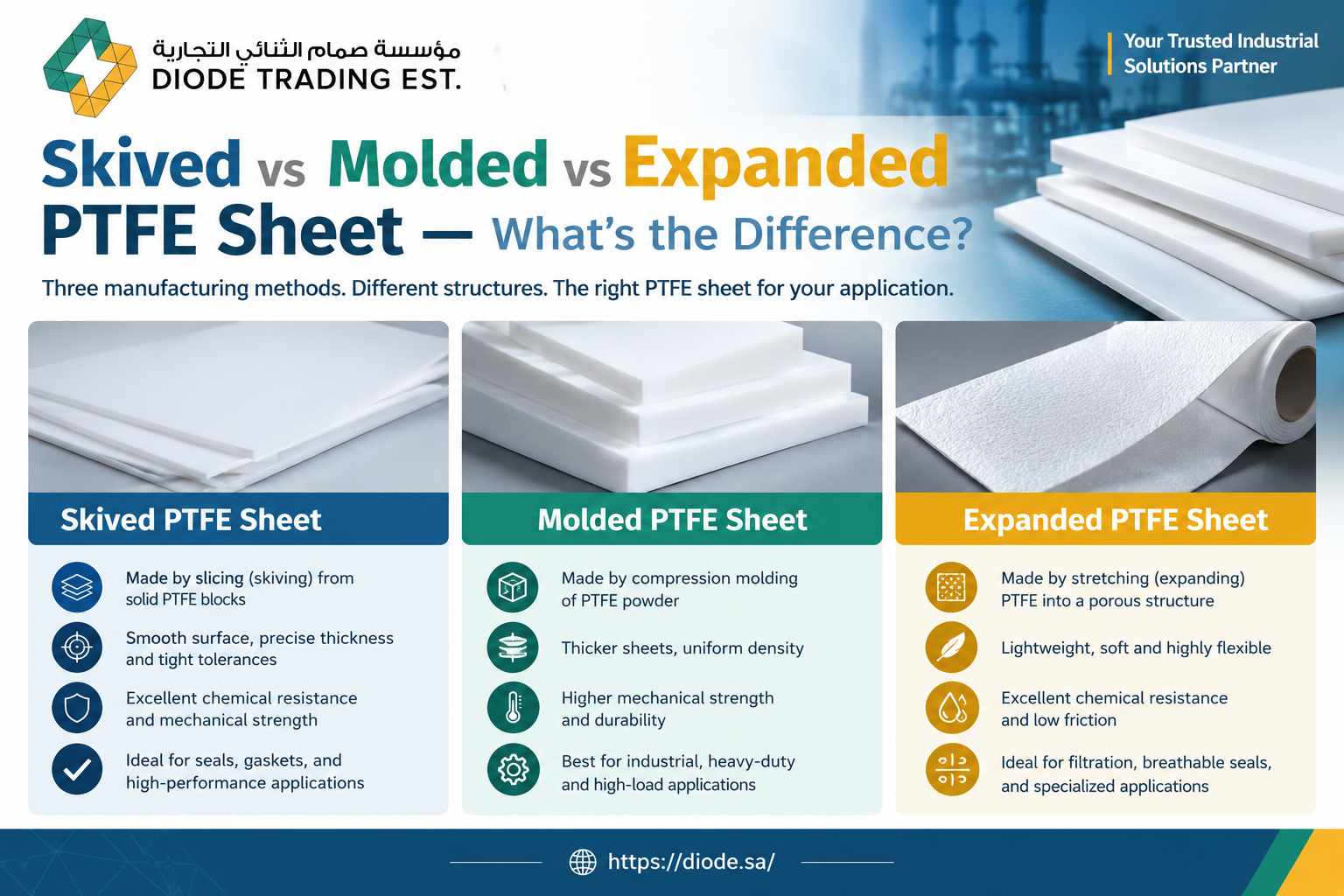
PTFE sheet is not one product. In a skived vs molded PTFE sheet comparison, and when expanded PTFE is added, you are looking at three different manufacturing processes, each giving different mechanical properties even though the base resin is the same PTFE. Understanding the difference helps you avoid ordering the wrong sheet for a gasket, lining or fabricated part.
| Process | How It Is Made | Best For |
|---|---|---|
| Skived | A large PTFE billet is peeled (skived) into thin continuous sheet, like peeling a log for veneer | Large-format, thin, consistent gauge sheet |
| Molded | PTFE is compression molded into a block, then machined or sliced to thickness | Thicker sheet, tighter dimensional tolerance |
| Expanded (ePTFE) | PTFE is mechanically expanded, creating a porous, highly compressible structure | Gasket sheet needing high conformability on imperfect flange surfaces |
Skiving produces continuous, wide-format sheet in consistent thin gauges. It is the common choice for large-area lining and general fabrication stock, where a big continuous sheet is more practical than smaller molded pieces. Because the sheet is cut from a billet, the surface carries a fine tool finish that is usually acceptable for lining, wrapping and general gasket cutting.
Molded sheet is produced in thicker gauges with tighter dimensional control. It is generally used where thickness consistency and dimensional precision matter more than sheet size, such as gasket stock for precision cutting. Molded stock is also the natural starting point for machined parts such as washers, bushes and seats, and is available in virgin and filled grades. See our range of virgin PTFE sheets and rods and PTFE sheet in skived, molded and expanded forms.
Expanded PTFE has a porous, highly compressible structure that conforms readily to imperfect or damaged flange surfaces. This is a real advantage for older piping systems or flanges that are not perfectly flat, where standard skived or molded sheet gaskets might not seal reliably. The trade-off is that ePTFE is a soft, conformable material and is selected for sealing rather than for machining or structural parts.
For flat, well-maintained flanges, a skived or molded sheet cut to a standard shape works well. Where a project needs finished parts rather than raw sheet, consider PTFE gaskets or ready-cut gaskets supplied to your flange size. State the process, thickness, grade and flange condition when you enquire, so the correct sheet is quoted first time.
For flat, well-maintained flanges, skived or molded sheet cut to a standard gasket shape works well. For older or imperfect flange surfaces, expanded PTFE (ePTFE) gasket material's higher conformability often provides a more reliable seal.
They start from the same PTFE resin, but the three manufacturing processes produce different structures and mechanical properties, so they are not interchangeable.
Molded sheet is generally the choice where thickness consistency and dimensional precision matter, such as gasket stock for precision cutting.
Send your required thickness, sheet size, grade and quantity to our Al Khobar team, with flange details if the sheet is for gaskets, and we will recommend and quote the right PTFE sheet.

See our range of high-visibility safety mats and markers designed to reduce trip hazards across your site.
 05 October, 2026 | Admin
Food and beverage processing equipment needs
Read more 05 October, 2026 | Admin
Pharmaceutical manufacturing environments dem
Read more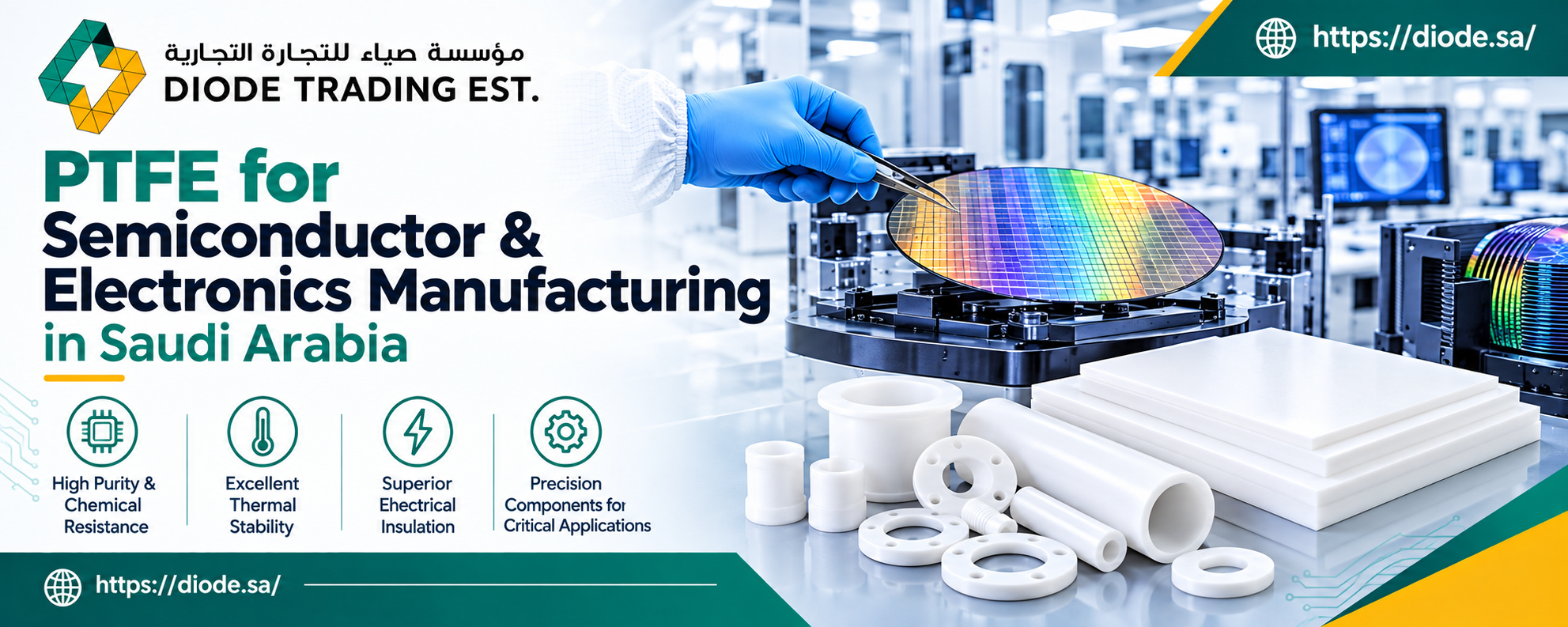 04 October, 2026 | Admin
Semiconductor and electronics manufacturing p
Read more