
 23 October, 2026 |
 Admin
Neoprene vs Natural Rubber vs
Choosing the rubber
Bearing pads
Read more
Enquire Now
 23 October, 2026 | Admin
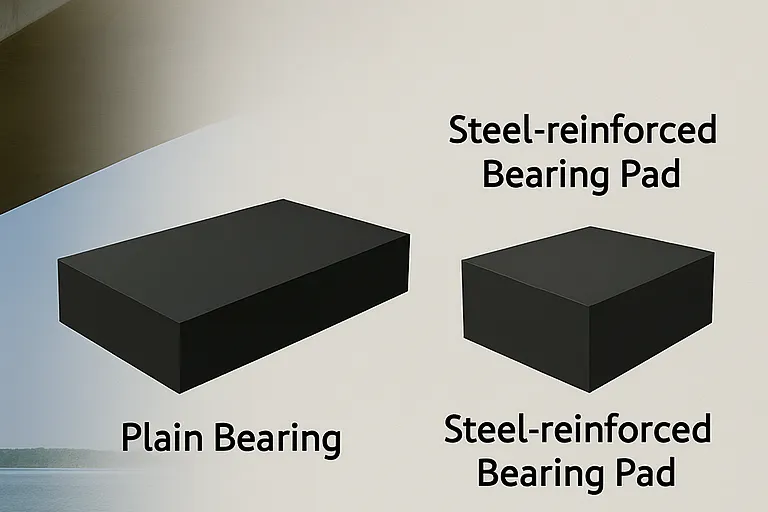
Use plain neoprene pads for light to moderate loads such as precast panels, small beams and equipment supports. Use steel-laminated neoprene pads for bridges, flyovers and any heavily loaded girder. Fabric-reinforced pads sit between the two.
The longer answer is about how each pad behaves under load, which is what actually decides the choice.
When a pad is compressed, the rubber wants to bulge outward at the sides, much like a pressed sponge. The more it bulges, the softer it behaves in compression and the more internal strain it suffers. Engineers describe this resistance with the shape factor, which is the loaded plan area divided by the area free to bulge. A pad with a high shape factor bulges less and carries more load.
A plain pad is one thick block, so its shape factor is relatively low. A steel-laminated pad is built from several thin neoprene layers separated by steel plates. Each thin layer has a high shape factor, so the whole pad is far stiffer in compression while remaining flexible in shear.
Strengths
Limits
Typical uses: precast wall panels, light beams, slab and panel seating, pipe and equipment supports, general leveling under moderate loads.
Strengths
Limits
Typical uses: highway bridges, flyovers, metro and rail viaducts, long-span girders and heavy structural bearings.
Fabric layers restrain the rubber and raise the load capacity above a plain pad, without the cost of steel plates. They suit moderate loads where a plain pad would bulge too much but a full steel-laminated bearing is not required.
| Factor | Plain | Fabric-reinforced | Steel-laminated |
|---|---|---|---|
| Load capacity | Low to moderate | Moderate | High |
| Bulging under load | Highest | Reduced | Lowest |
| Shear movement | Good | Good | Good |
| Relative cost | Lowest | Middle | Highest |
| Typical use | Panels, supports | Moderate structural | Bridges, heavy girders |
Contractors sometimes order by thickness and plan size alone. Two pads with identical dimensions can behave very differently if the hardness grade, reinforcement or layer arrangement differs. Always order against the specification, not just the dimensions.
No. A thicker plain pad has a lower shape factor, so it bulges more and carries less load. Only the structural engineer can approve a change of bearing type.
They are used where loads are moderate. Heavy bridge girders normally use steel-laminated pads, as set out in the bearing schedule.
Diode Trading EST supplies plain, fabric-reinforced and steel-laminated neoprene bearing pads from Dammam, cut to your requirements, with a Material Test Certificate supplied with every order. Send your bearing schedule and we will confirm what can be supplied.
Request a Quote | Related: Bridge Bearing Pads

See our range of high-visibility safety mats and markers designed to reduce trip hazards across your site.