 10 October, 2026 |
  Admin
Admin
Crane Hire and Outrigger Pads
Planning a crane lift in Qatar means solvi
Read more
Enquire Now
 07 October, 2026 | Admin
Metal fasteners corrode quickly in chemical plants, plating shops, laboratories and seawater-exposed equipment. PTFE nuts and bolts offer a corrosion-free, electrically insulating alternative for light-duty fastening in these environments. They are not a replacement for structural steel fasteners, and understanding their limits is the key to using them successfully.
PTFE is soft compared with metals and engineering plastics. Its tensile strength is a small fraction of steel’s, and it creeps under sustained load. In practice, this means:
If a fastener must carry more load while resisting chemicals, consider:
When enquiring, provide thread size and pitch (metric or imperial), length, head style, quantity, and the chemical and temperature environment. Non-standard fasteners can be machined from PTFE rod to drawing. Matching PTFE washers spread the load and protect soft surfaces. Every order from Diode is supplied with a Material Test Certificate.
Related products: PTFE Products and Virgin PTFE Rods & Sheets.
Fasteners are often only part of the solution. PTFE washers sit under metal or plastic nuts to spread load, seal against leakage and isolate the fastener electrically. PTFE spacers and sleeves keep bolts out of contact with the parts they pass through. Together, they form insulating kits used where pipework or equipment of different metals meets, or where stray currents must be blocked. Washers and sleeves can be cut or machined from PTFE sheet, rod and tube to the sizes you need.
No. PTFE bolts are for light-duty fastening only and must not be used for pressure-retaining flange bolting.
Where chemicals would corrode stainless steel, or where electrical insulation or metal-free contact is needed.
PVDF and PEEK are stronger and stiffer while still offering very good chemical resistance.
Yes. We can machine non-standard PTFE screws, nuts and spacers from rod to your drawing.
Send your fastener sizes, quantities and service conditions to our Al Khobar team for a quotation on PTFE nuts, bolts, washers and machined fasteners.
See our range of high-visibility safety mats and markers designed to reduce trip hazards across your site.
 10 October, 2026 | Admin
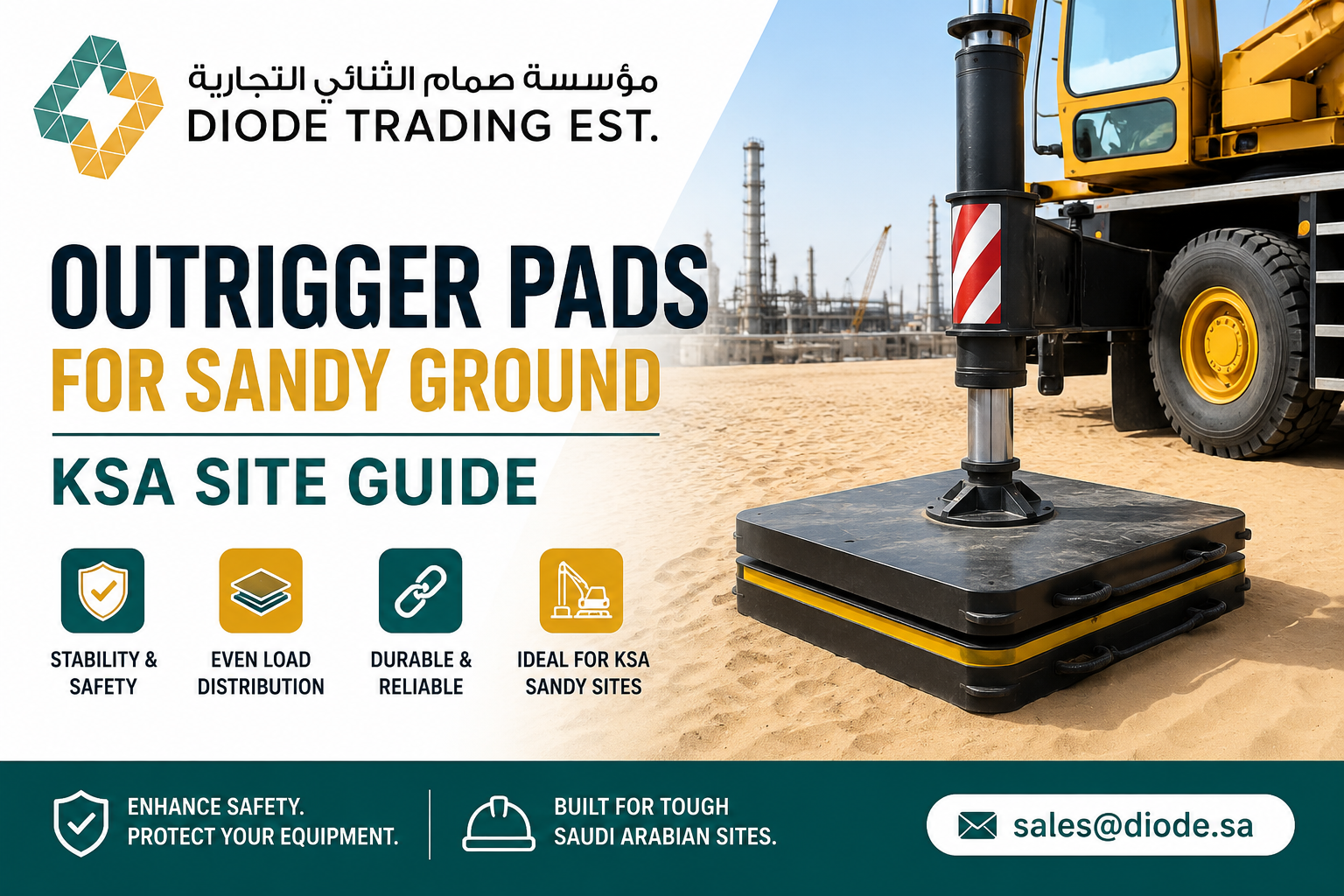
Planning a crane lift in Qatar means solvi
Read more