

 06 October, 2026 |
 Admin
PTFE Components for Water Trea
Water and wastewater treatment systems handle
Read more
Enquire Now
 16 September, 2026 | Admin
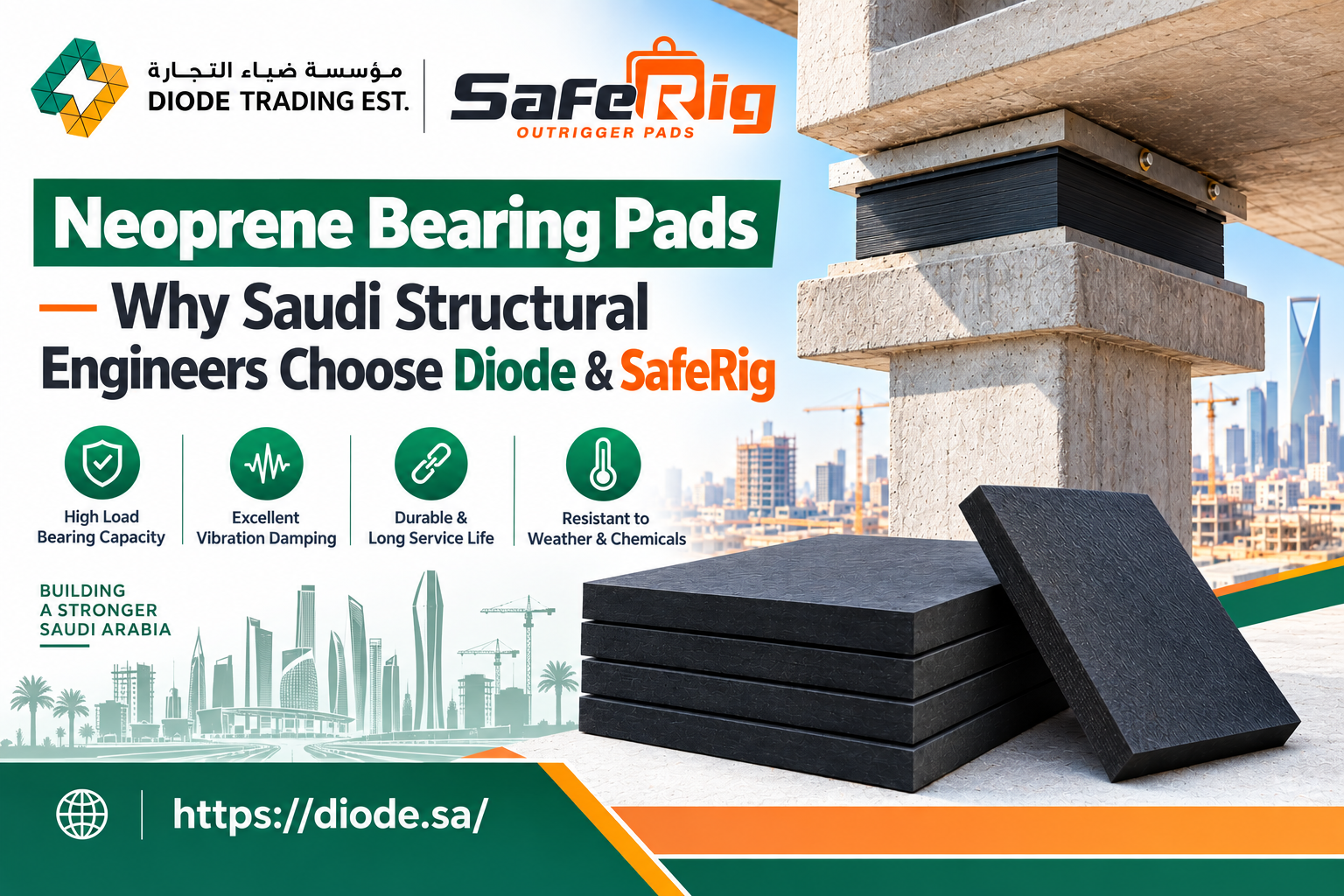
Bearing pads don’t get much attention until a structure starts cracking where it shouldn’t — which is usually when engineers start asking harder questions about who supplied the neoprene and what it’s actually rated for. Neoprene bearing pads in Saudi Arabia’s structural and infrastructure projects need to hold up to that scrutiny from day one.
A bearing pad’s job is invisible when it’s done right — the structure just doesn’t crack. Getting the load, movement range, and hardness spec correct up front is what makes that happen, which is why we work from your structural drawings rather than a generic size chart.
Neoprene bearing pads sit at the connection point between a structure and its support — under bridge girders, at column bases, beneath precast concrete panels, and in industrial equipment mountings across Saudi Arabia’s infrastructure and giga-project sites. Their job is to absorb thermal expansion, seismic movement, and load transfer without transmitting stress concentrations into the concrete or steel above and below them.
Every bridge or structural bearing application has its own combination of dead load, live load, thermal movement range, and seismic displacement allowance. Rather than sizing from a generic catalog list, we review the governing load case and movement range from your structural drawings and specify plain or steel-laminated neoprene accordingly. It’s the same engineering-first approach we apply across Diode’s UHMWPE outrigger pad range — match the product to the actual load case, not the other way around.
For structural bridge bearing applications specifically, see our dedicated Bridge Bearing Pads page for elastomeric bearing specifications and load data.
While bridge girder bearings are the most demanding application, neoprene bearing pads also see regular use in precast concrete panel connections, machinery base isolation to dampen vibration, and expansion joint seating in industrial buildings. Each of these applications has a different balance of load, movement, and vibration-damping requirements — which is another reason a single generic pad size rarely fits every job on a project. Getting the compound hardness and construction type right for the specific application, rather than reusing whatever pad was on hand from a previous job, is what keeps these connections performing for the structure’s full service life.
Diode Trading EST supplies neoprene bearing pads to structural engineers and contractors across Saudi Arabia from local stock in Al Khobar, covering both plain and steel-laminated construction so the right product is available regardless of load class. Every order is reviewed against the project’s structural drawings before it’s confirmed, and material test certificates confirming hardness, tensile strength, and compression set are available on request — the same documentation standard structural QA/QC files typically require for a permanent installation.
See our range of high-visibility safety mats and markers designed to reduce trip hazards across your site.
 06 October, 2026 | Admin
Water and wastewater treatment systems handle
Read more 06 October, 2026 | Admin
Automotive applications push materials throug
Read more 05 October, 2026 | Admin
Food and beverage processing equipment needs
Read more